
Glitter & Sparkle Tulle
Industry Guide & Applications
Glitter and sparkle tulle have become essential materials in bridal, eveningwear, and stage costume design. However, despite their visual appeal, these fabrics often present technical challenges that directly affect wearability, durability, and production stability. This guide explains how glitter tulle behaves in real applications, why common problems occur, and how designers and buyers can make informed sourcing decisions.
Which type of glitter tulle is suited for bridal applications — and which is only appropriate for stage use.
Who Faces These Problems
Glitter tulle performance issues are encountered across multiple segments of the fashion and costume industry. Each application category faces unique challenges, but all share common quality and reliability concerns.
Bridal & Wedding Dress Designers
Require fabrics that remain beautiful and comfortable throughout an entire wedding day, with zero tolerance for shedding or skin irritation.
Eveningwear & Couture Brands
Need controlled sparkle that photographs well and maintains sophisticated elegance under various event lighting conditions.
Stage & Performance Studios
Demand maximum visual impact under spotlights while maintaining durability for repeated use across multiple performances.
OEM Factories
Must deliver consistent quality at scale, managing batch-to-batch variation while meeting international brand specifications.
Different applications face different priorities, but all require a careful balance between sparkle intensity, wearer comfort, and structural performance. Understanding these trade-offs is essential for successful sourcing.
For Bridal Dress Brands
Key Focus Areas
Common Risks
For Evening & Couture Designers
Key Focus Areas
Common Risks
For Stage & Performance Costume Studios
Key Focus Areas
Common Risks
For OEM Factories Supplying Fashion Brands
Key Focus Areas
Common Risks
Identify which segment matches your application. Explore targeted solutions for your specific needs.
View All SolutionsApplication Segmentation
Not all glitter tulle is designed for the same purpose. Application context determines material selection, and choosing the wrong fabric for your use case leads to predictable failures.
"Understanding that different end uses require different fabric characteristics is the first step toward successful glitter tulle sourcing. What works for stage costumes may be entirely inappropriate for bridal applications."
 Bridal
Bridal & Wedding Dresses
The most demanding application category. Fabrics must remain comfortable for 8+ hours of wear while maintaining visual perfection for photography.
 Evening
Evening & Formal Gowns
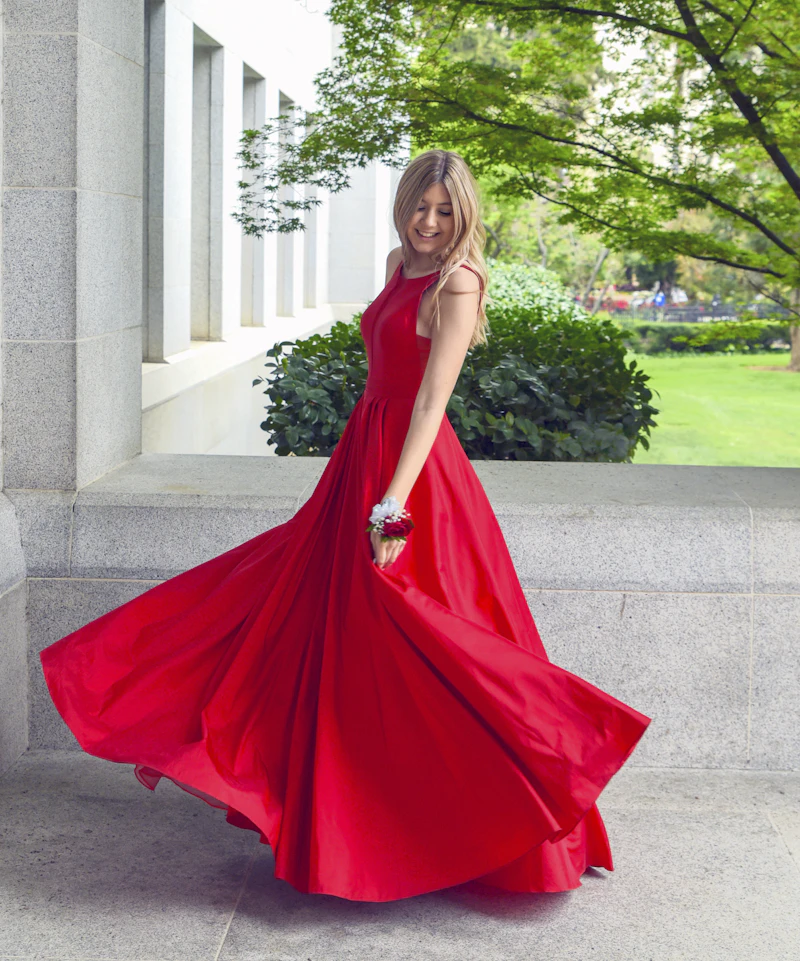
Sophisticated events require fabrics that balance elegance with functionality. Sparkle must enhance rather than overpower the design.
 Stage
Stage
Stage & Performance Costumes
Performance environments demand fabrics engineered for maximum light reflection and durability across repeated use.
 Decorative
Decorative Fashion Layers
Overlay and accent applications require fabrics that complement base materials without adding excessive weight or stiffness.
Misalignment between fabric and application is the root cause of most performance issues. Stage-grade glitter tulle used in bridal applications will likely cause discomfort; bridal-grade materials used on stage may lack sufficient visual impact.
See detailed specifications for each application type. Find the right match for your project.
Explore Application DetailsIndustry Pain Map
Across the glitter tulle industry, buyers and designers repeatedly encounter the same set of challenges. Understanding these problems is the first step toward solving them.
Glitter Shedding During Production & Wear
Particles detach during cutting, sewing, and end use — contaminating workspaces, damaging finished products, and creating customer complaints.
Stiff or Scratchy Hand Feel
Uncomfortable fabrics unsuitable for direct skin contact limit design options and reduce garment wearability for extended periods.
Sparkle Inconsistency Under Lighting
Fabrics that look perfect in showrooms perform unexpectedly under photography, daylight, or stage conditions — leading to customer disappointment.
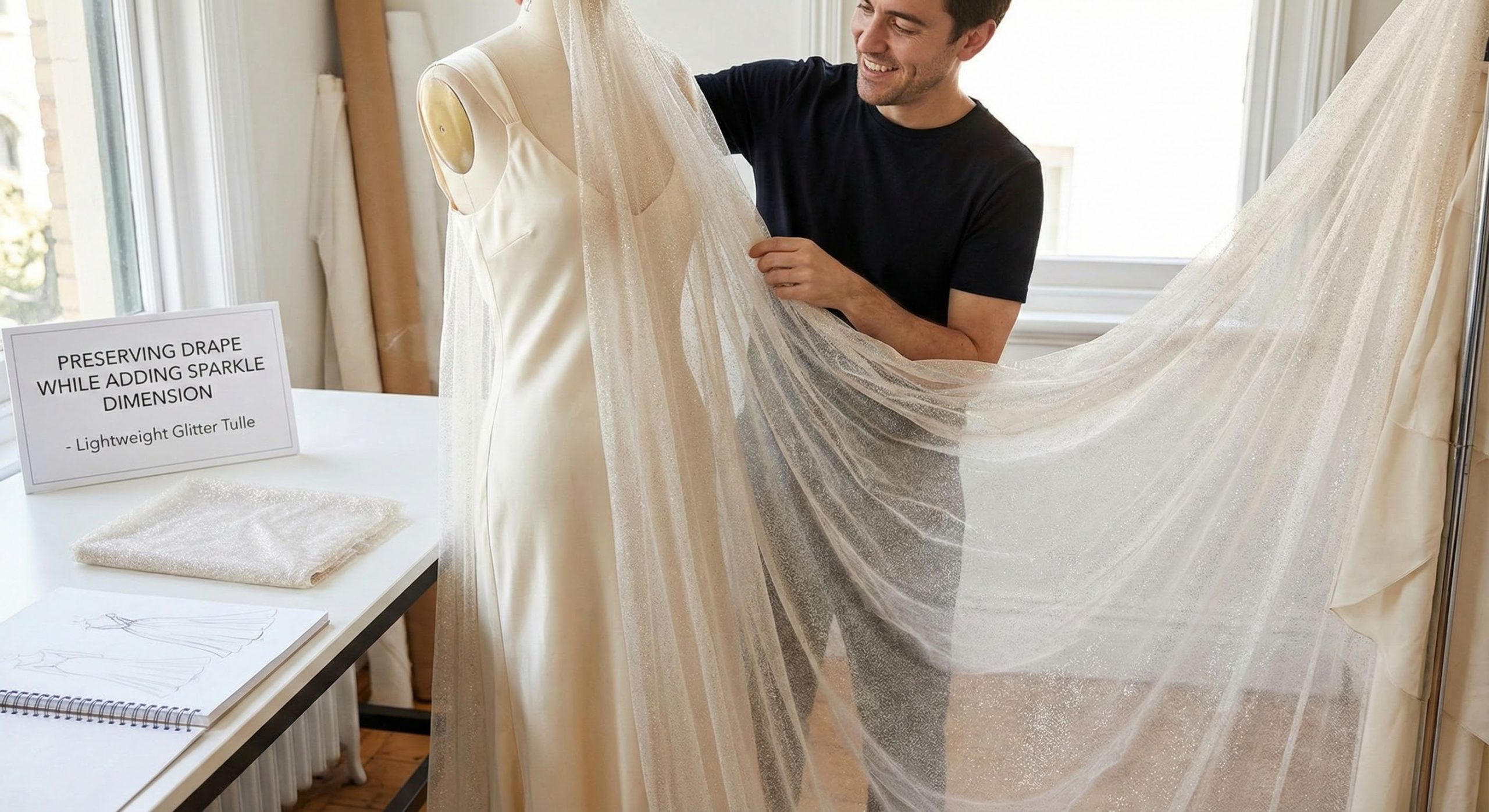
Difficulty Maintaining Drape & Silhouette
Glitter application processes often compromise the fabric's natural flow, forcing designers to choose between sparkle and elegant movement.
The Truth About These Challenges
These problems are often treated as unavoidable realities of working with glitter tulle. In reality, they are design and process-related issues that can be addressed through proper material selection, manufacturing technique, and quality control.
Experiencing these issues in your projects? See how each problem can be addressed.
View Problem SolutionsWhy Glitter Shedding Happens
Glitter shedding is not a random occurrence — it results from specific technical factors in how glitter particles are fixed to the base tulle fabric. Understanding these causes is essential for prevention.
The Root Causes of Particle Loss
Many suppliers treat shedding as an unavoidable characteristic of glitter tulle. In reality, shedding levels are directly determined by manufacturing decisions and can be controlled through proper technique selection.
Inadequate Fixation Methods
Single-layer adhesive bonds create weak anchor points that fail under mechanical stress from cutting, sewing, or body movement during wear.
Mismatch Between Glitter Type and Application
Using stage-grade large-particle glitter in bridal applications creates incompatible stress patterns that exceed fixation capacity.
Excessive Rigidity in Binding Layers
Inflexible adhesive systems crack under movement rather than flexing with the fabric, causing bond failure at stress points.
Process-Driven
Not material-inherent
Effective anti-shedding control requires application-specific techniques rather than generic solutions. What works for a stage costume may be entirely inappropriate for a bridal gown — and vice versa.
Ready to see how these challenges are solved in practice? Explore proven anti-shedding solutions.
Soft vs Hard Glitter Explained
One of the most misunderstood aspects of glitter tulle is the fundamental difference between soft and hard glitter systems. This distinction directly determines suitability for different applications.
Soft and hard glitter are not just different in feel — they represent entirely different engineering approaches to balancing sparkle, comfort, and durability. Neither is universally "better"; the right choice depends entirely on your application.
Soft Glitter
Engineered for extended wear and skin contact
Soft glitter systems use ultra-fine particles with flexible micro-coatings that conform to fabric movement. The result is a fabric that sparkles while maintaining natural drape and comfortable hand feel.
Bridal gowns, couture evening wear, body-hugging silhouettes, layered constructions where inner layers touch skin.
Hard Glitter
Engineered for maximum visual drama
Hard glitter systems use larger particles with rigid reflective coatings optimized for light capture. The fabric gains structure and delivers dramatic sparkle visible from significant distances.
Stage costumes, dance performance wear, decorative overlays with lining, designs prioritizing visual impact over comfort.
Choosing the wrong glitter type leads directly to problems: hard glitter in bridal applications causes discomfort and complaints; soft glitter on stage may lack the visual punch your design requires.
Need technical guidance on which system fits your project? See detailed specifications and case examples.
View Technical DetailsLight & Sparkle Behavior
Sparkle appearance is heavily influenced by lighting conditions. A fabric that looks perfect in one environment may perform completely differently in another.
"Understanding how glitter reacts to light is critical for runway, photography, and live performance applications. The same fabric can appear dramatically different depending on lighting conditions."
Natural Daylight
Emphasizes Subtle ShimmerDaylight produces even, diffused illumination that reveals the true character of glitter tulle. Subtle sparkle appears elegant; excessive glitter can look overwhelming or cheap in outdoor settings.
Stage Lighting
Amplifies ReflectivityHigh-intensity directional spotlights dramatically increase glitter visibility and movement perception. Fabrics engineered for stage use maximize this effect for audience impact at distance.
Camera Lighting
Can Exaggerate InconsistencyFlash and studio lighting reveal every variation in glitter distribution. Uneven application or inconsistent particle orientation creates visible hotspots and dark patches in photographs.
Why This Matters for Sourcing
Samples evaluated in showroom lighting may perform completely differently in end-use conditions. Understanding how your specific lighting environment affects sparkle behavior is essential for avoiding costly mismatches between expectation and reality.
See how we engineer fabrics for specific lighting conditions. View performance-optimized solutions.
View Light-Optimized SolutionsGlitter Application Technologies
There are multiple techniques used to apply glitter to tulle, each with distinct trade-offs in flexibility, durability, and appearance. No single method suits all applications.
Selecting the right application technique depends on multiple factors that must be balanced against each other. Understanding these trade-offs is essential for making informed sourcing decisions.
Spray Application
Fine glitter particles suspended in adhesive solution are precisely sprayed onto tulle, creating uniform all-over coverage with minimal impact on fabric hand feel.
Lower maximum sparkle intensity compared to other methods; best for subtle effects.
Transfer Printing
Glitter patterns are pre-applied to transfer paper and heat-bonded onto tulle. This technique enables precise pattern control and consistent placement across production runs.
Pattern setup costs; less suitable for all-over applications or custom one-off designs.
Adhesive Bonding
Larger glitter particles are individually bonded using specialized adhesive application, creating maximum visual impact and durability for performance-grade requirements.
Greatest impact on drape and softness; primarily suited for stage and performance use.
No single method suits all applications, which is why application-driven selection is essential. The right technique depends on your specific balance of sparkle intensity, hand feel requirements, and production constraints.
See how different techniques perform in real applications. Review our technique-specific solutions.
View Technique SolutionsWhy Stability Is Difficult
Maintaining consistent quality in glitter tulle is more challenging than in plain fabrics. Multiple variables must be controlled simultaneously to achieve reliable results.
Glitter tulle is inherently more variable than standard fabrics because the glitter application process introduces additional parameters that can drift between production runs. Understanding these factors helps buyers set realistic expectations and identify capable suppliers.
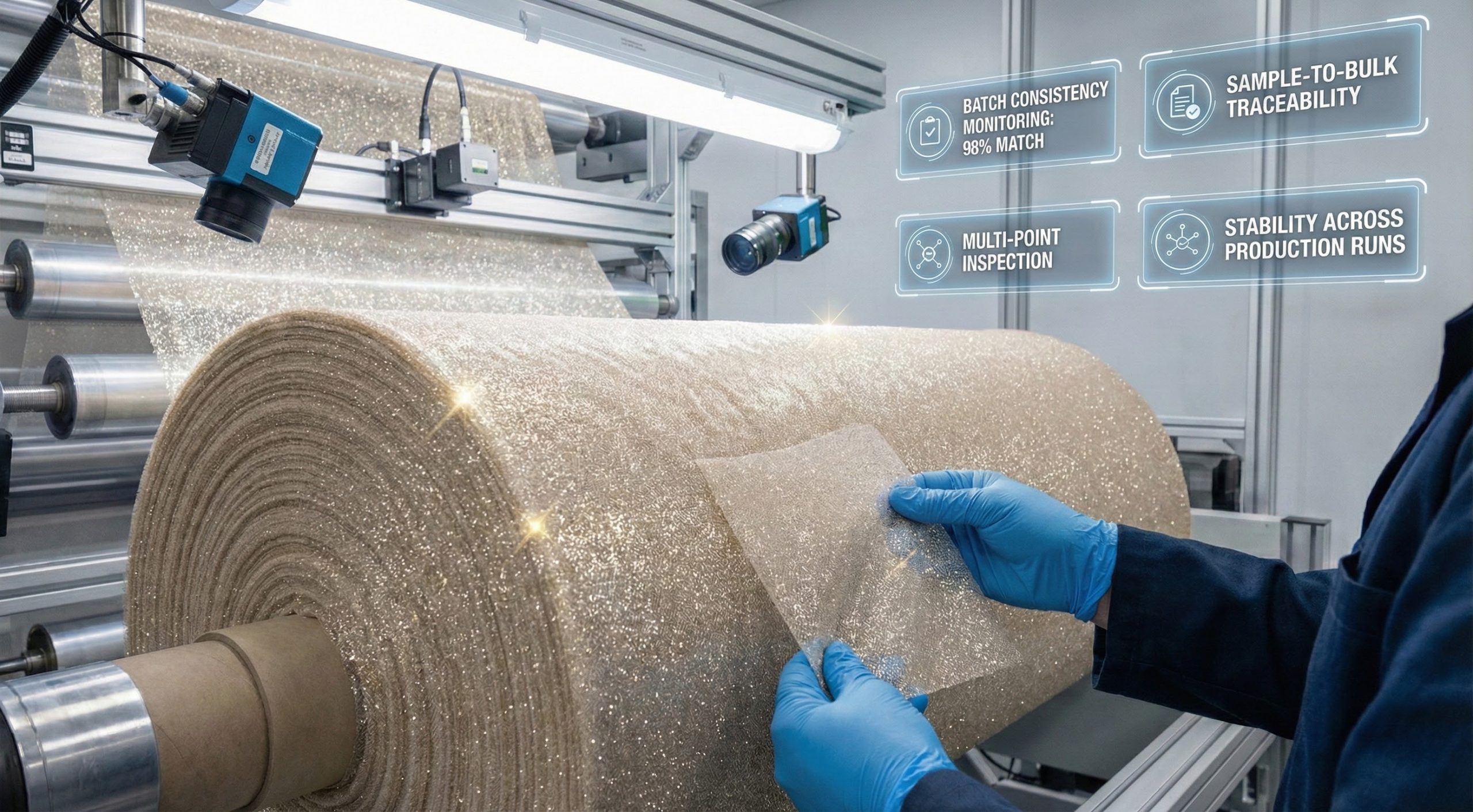
Factors Affecting Production Stability
Each of these variables can shift between batches, and small changes in one often cascade into visible differences in the finished fabric. Controlling all factors simultaneously requires systematic processes.
Variations in Glitter Distribution
Uneven particle spreading creates visible density variations — some areas sparkle more than others, creating an inconsistent visual effect.
Fixation Consistency Across Batches
Adhesive application rates, curing temperatures, and timing all affect bond strength. Minor process drift causes batch-to-batch shedding differences.
Sensitivity to Production Parameters
Temperature, humidity, machine speed, and operator technique all influence results. Small environmental changes can produce noticeable quality shifts.
The Sample-to-Bulk Gap
Without proper controls, even approved samples may not translate reliably into bulk production. This is one of the most common sources of disappointment in glitter tulle sourcing — what you approved is not what you receive.
See how systematic quality control addresses these challenges. Review our stability solutions.
View Stability SolutionsCase References
Real-world applications provide the clearest proof of performance. These case studies demonstrate how glitter tulle challenges are addressed across different industry segments.
Theory becomes meaningful only when validated in practice. Each case study documents a specific challenge, the approach taken, and the measurable results achieved — providing a reference point for similar projects.
 Bridal
Bridal Gowns
How European bridal manufacturers solved shedding and comfort issues while maintaining the sparkle their designs require.
Couture
Couture Collections
How luxury fashion houses achieve runway-quality glitter effects while meeting the demanding standards of haute couture construction.
 B2B Supply
Distributor Supply Programs
How fabric distributors maintain consistent quality across high-volume glitter tulle programs for their diverse customer base.
Explore the Complete Case Library
Our full case archive documents dozens of glitter tulle projects across bridal, evening wear, stage, and commercial applications. Find examples that match your specific requirements.
View All Glitter Tulle CasesHow to Choose the Right Glitter Tulle
Before sourcing glitter tulle, buyers should systematically evaluate their requirements against available options. Answering these questions upfront reduces trial-and-error and sourcing risk.
Application Environment
Where will the fabric be used? Indoor ceremonies, outdoor events, stage performances, and studio photography each have different requirements.
Required Hand Feel & Comfort
Will the fabric touch skin directly? How long will it be worn? Comfort requirements vary dramatically between bridal and stage applications.
Visual Expectations Under Lighting
What lighting conditions will the finished garment encounter? Samples must be evaluated under conditions that match actual use.
Production Scale & Consistency
What quantity is needed? How critical is batch-to-batch consistency? Larger programs require suppliers with systematic quality controls.
Clear answers to these questions reduce trial-and-error and sourcing risk. The more precisely you can define your requirements, the more accurately a supplier can recommend appropriate solutions — saving time, samples, and budget.
Ready to apply this framework to your specific project? Access detailed decision tools.
Use Decision ToolsTalk to a Supplier
Understanding glitter tulle performance is the first step. Applying that understanding to your specific project requires experienced support.
If you are evaluating glitter or sparkle tulle for bridal, fashion, or stage use, share your application details with us. We'll help you navigate the options and identify the right solution.
Contact UsFUZHOU HG TEXTILE
We are a specialized glitter and sparkle tulle manufacturer based in Fujian Province, China. With deep expertise in anti-shedding technology and application-specific solutions, we help bridal designers, evening wear brands, and stage costume studios source the right glitter tulle for their exact requirements.
Direct Contact
Discuss Your Glitter Tulle Requirements
Tell us about your application and design goals. Our team will respond within 24 hours with relevant recommendations and samples.