The best Mosquito Netting Fabric for professional and recreational applications is a high-density, 20 denier polyester mesh designed to block the smallest biting insects. When you are planning an outdoor expedition or designing protective gear, the constant threat of biting midges and mosquitoes can ruin the experience and compromise safety. Standard screens often fail to stop smaller “no-see-ums,” leaving you exposed to irritation and insect-borne risks. Our industrial-grade netting provides a definitive barrier without sacrificing the airflow you need to stay comfortable in humid environments.
What is the best Mosquito Netting Fabric for outdoor use?
The best Mosquito Netting Fabric for outdoor use is a 100% polyester monofilament mesh with a tight 34×31 stitch pattern. This specific weave ensures that your barriers remain impenetrable to pests while allowing for maximum ventilation.
But here is the kicker: Not all meshes are created equal when it comes to durability and weight.
- It must be lightweight for portability.
- It needs a high stitch count for protection.
- It should be UV resistant for longevity.
Is polyester better than nylon for netting?
Polyester is the superior choice for outdoor netting because it does not stretch or sag when wet. You will find that it maintains its structural integrity much better than nylon under direct sunlight.
How does the weave affect performance?
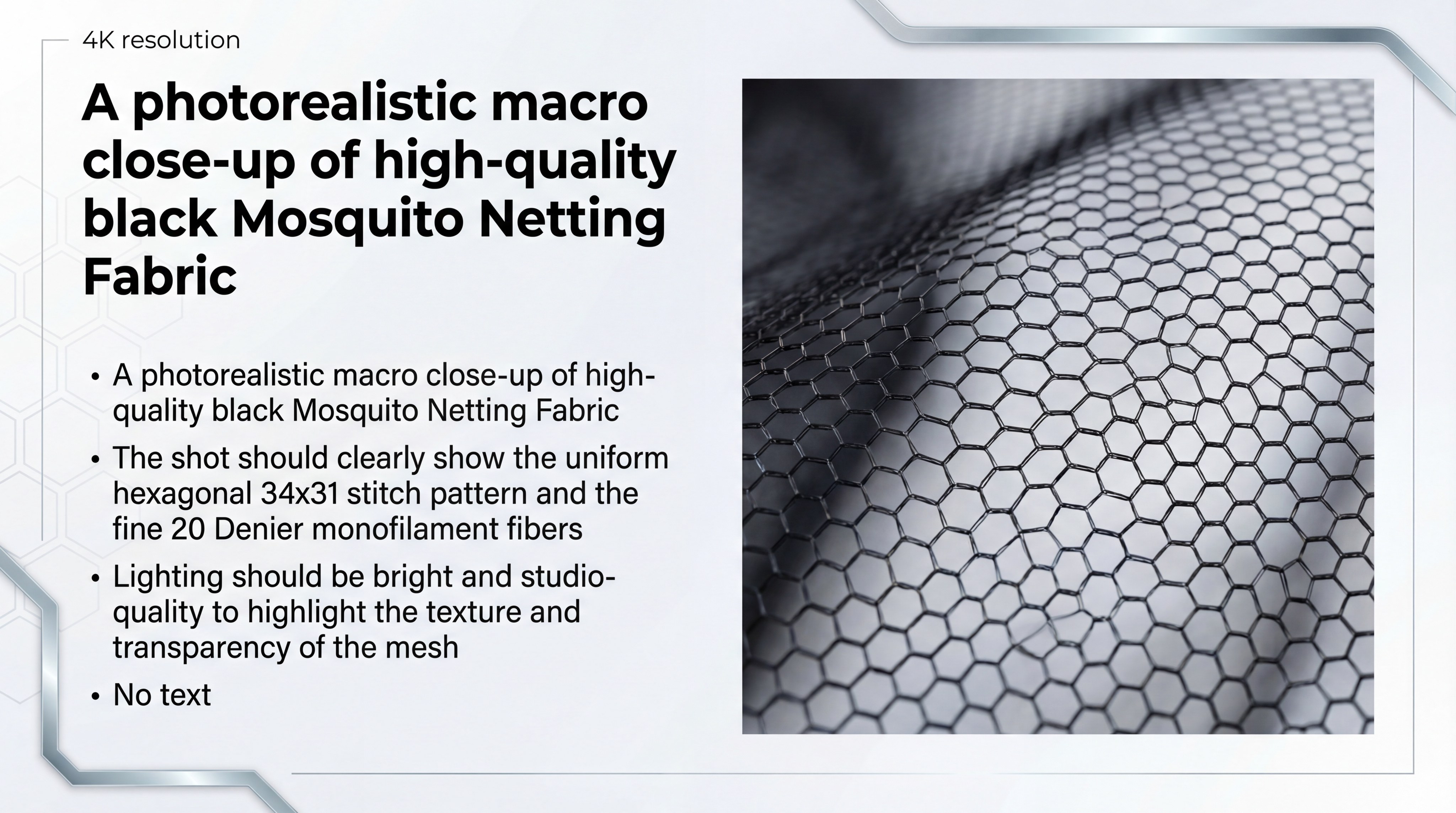
The 34×31 stitch pattern provides a balanced grid that stops insects without blocking your view. You get a clear line of sight while staying completely protected from bites.
Key Takeaway
| Feature | Specification | |
|---|---|---|
| Material | 100% Polyester | |
| Stitch Pattern | 34×31 CPI/WPI | |
| Best Use | Tents, Screens, Veils |
This technical configuration offers the optimal balance between insect exclusion and environmental visibility.
How do you identify high-quality Mosquito Netting Fabric?
You can identify high-quality Mosquito Netting Fabric by checking the denier count and the uniformity of the mesh openings. High-grade netting will typically feature a 20 denier yarn that provides strength without adding unnecessary bulk to your project.
Think about it. If the holes are uneven, even a single gap can let a swarm of insects through your defense.
- Look for a consistent 34×31 stitch.
- Check for a smooth monofilament finish.
- Ensure the fabric is rated at 0.75 oz/sq yd.
What does denier mean for netting?
Denier refers to the fiber thickness, and a 20 denier count indicates a very fine yet resilient thread. This allows you to pack the fabric into small spaces without permanent creasing.
Why does stitch count matter most?
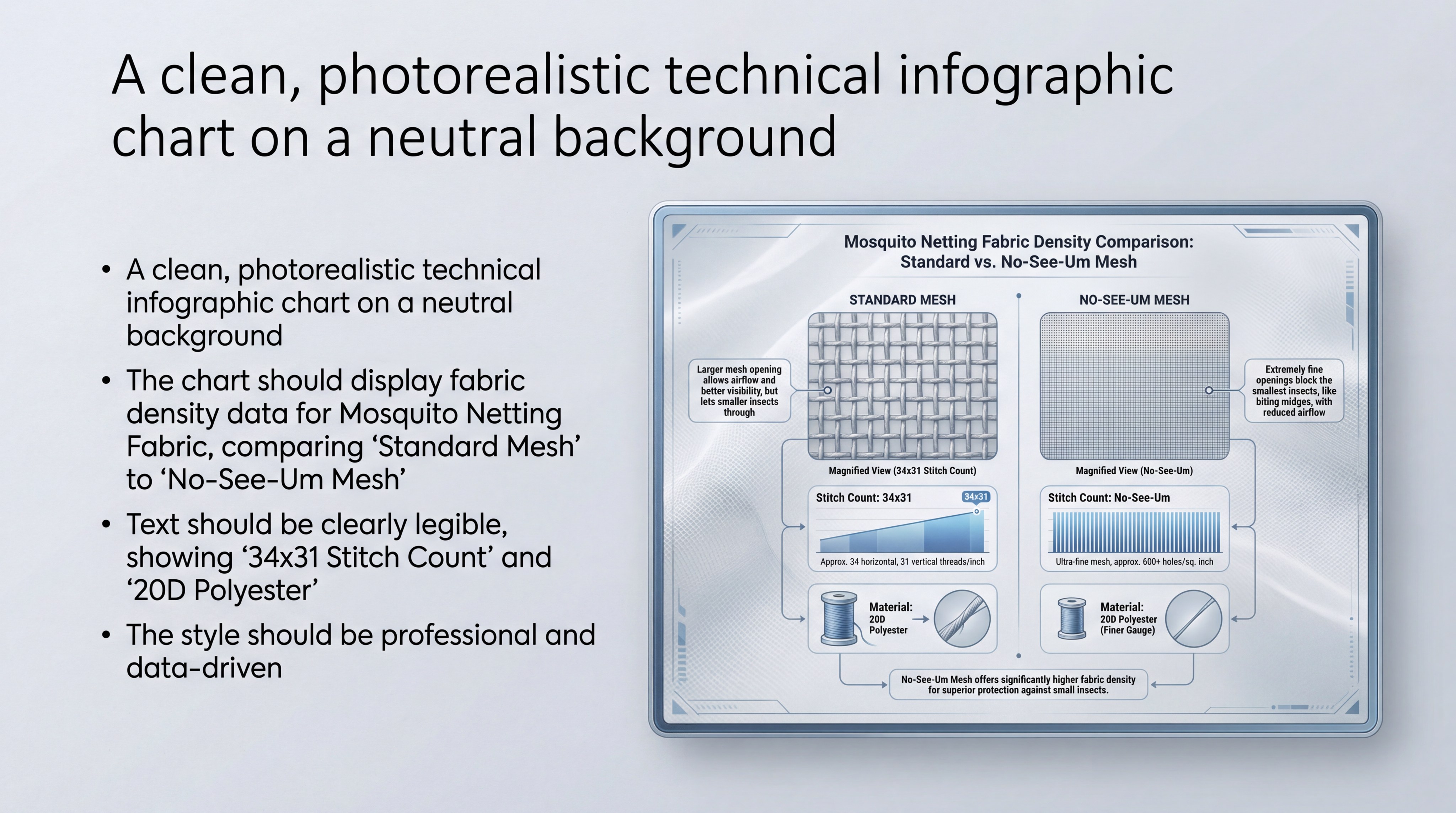
The stitch count of 34×31 determines the physical size of the holes in the mesh. This density is specifically engineered to stop No-See-Ums, which can pass through standard window screening.
Key Takeaway
| Metric | Quality Indicator | |
|---|---|---|
| Yarn Weight | 20 Denier | |
| Fabric Weight | 0.75 oz/sq yd | |
| Protection | No-See-Um Grade |
Consistent technical specifications are the only way to guarantee professional-level insect protection in the field.
Why is weight important for Mosquito Netting Fabric?
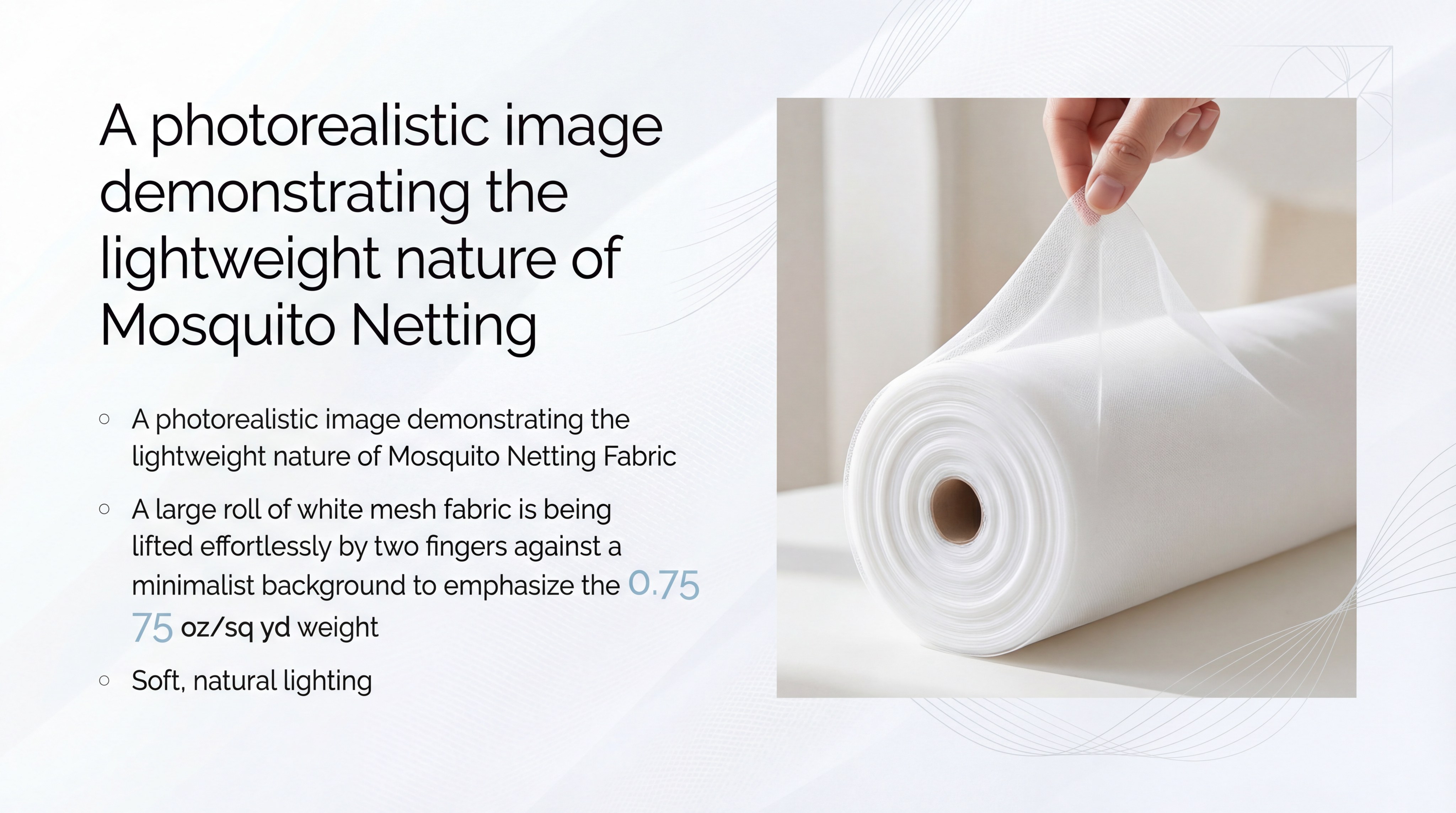
Weight is a critical factor for Mosquito Netting Fabric because it influences the portability of camping gear and the drape of apparel. At only 0.75 oz per square yard, this fabric is light enough to be used in high-performance ultralight backpacking setups.
Believe it or not: A heavy mesh can make a tent feel stifling and add several unnecessary pounds to your pack.
- It reduces the load for hikers.
- It allows for better airflow in heat.
- It hangs naturally on garments.
Does light weight mean less durability?
Despite the 0.75 oz weight, the 100% polyester construction provides excellent burst strength. You don’t have to worry about the mesh tearing during normal handling or installation.
How does weight impact airflow?
Lighter fabrics use finer yarns, which leaves more open space for air to move through. You will notice a significant cooling difference when using 20 denier mesh compared to heavier hardware store alternatives.
Key Takeaway
| Performance Area | Impact of 0.75 oz Weight | |
|---|---|---|
| Portability | Exceptional for travel | |
| Breathability | High air exchange | |
| Flexibility | Easy to sew and drape |
The ultra-lightweight nature of this mesh ensures it serves the user without becoming a physical burden.
Can you sew your own projects with Mosquito Netting Fabric?
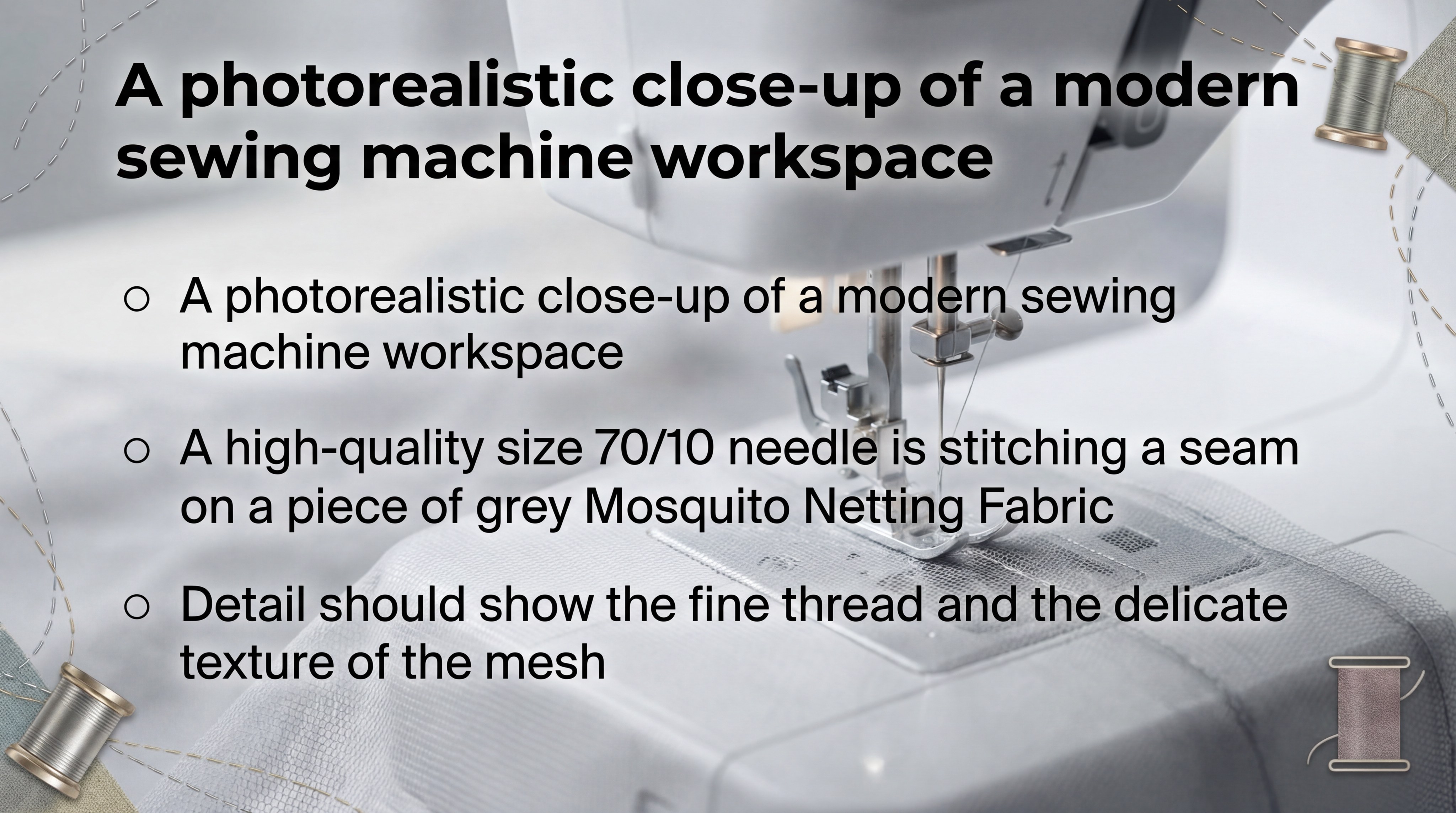
You can easily sew your own professional-grade gear using Mosquito Netting Fabric if you use the correct needle and thread settings. We recommend using a size 70/10 or 80/12 sharp needle to prevent snagging the delicate 20 denier fibers.
Let’s dive in. Customizing your own insect barriers allows you to fit non-standard windows or create bespoke camping accessories.
- Use a small zigzag stitch for stretch.
- Choose a high-quality polyester thread.
- Avoid pinning directly in the mesh area.
What is the best stitch for mesh?
A straight stitch works well, but a narrow zigzag provides the “give” needed for items like hammocks or clothing. This prevents the thread from snapping when the fabric is pulled taut.
Should you use a stabilizer?
When starting a seam, you might find it helpful to use a piece of tissue paper under the fabric. This prevents the fine mesh from being pushed down into the needle plate of your machine.
Key Takeaway
| Tool | Recommendation | |
|---|---|---|
| Needle Size | 70/10 Sharp | |
| Thread Type | Polyester | |
| Seam Finish | French Seams or Binding |
With the right technical approach, you can achieve factory-quality results on any home or industrial sewing machine.
Does Mosquito Netting Fabric effectively stop No-See-Ums?
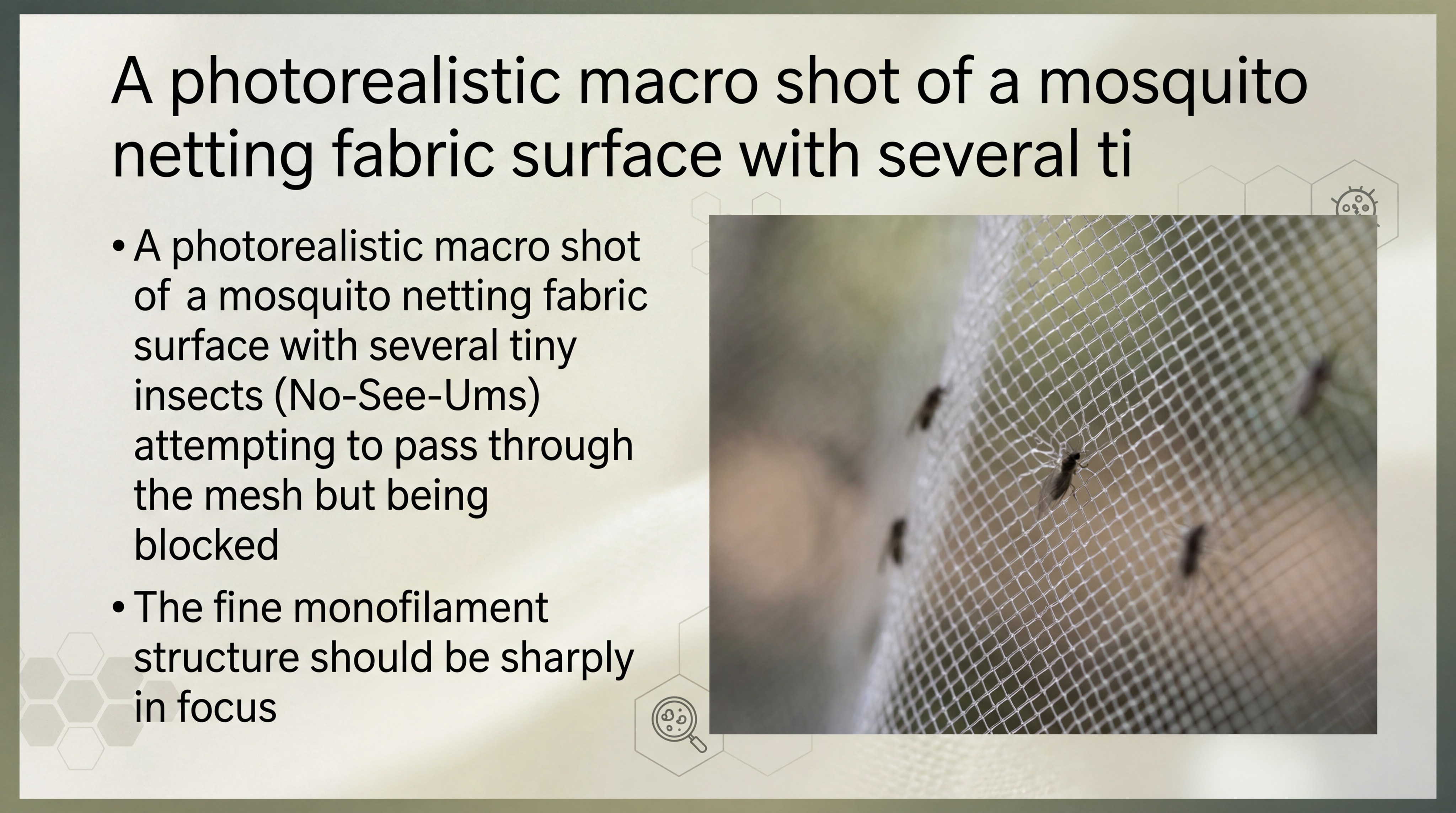
Yes, this specialized Mosquito Netting Fabric is specifically designed with a hole size small enough to block biting midges, also known as no-see-ums. The 34×31 weave creates a dense barrier that standard mosquito nets simply cannot match.
The best part? You don’t have to use chemical repellents when your physical barrier is this effective.
- It blocks pests as small as 0.5mm.
- It prevents entry of black flies.
- It keeps out gnats and midges.
Why is No-See-Um mesh different?
Standard mesh often has fewer than 200 holes per square inch, while No-See-Um grade mesh exceeds 600. This drastic increase in density is what stops the smaller, more persistent biting insects.
Does it limit visibility?
While the weave is denser, the use of fine 20 denier monofilament keeps the material transparent. You can still enjoy the view from your porch or tent without feeling closed in.
Key Takeaway
| Insect Type | Protection Level | |
|---|---|---|
| Mosquitoes | 100% Blocked | |
| No-See-Ums | 100% Blocked | |
| Airflow | Maintained |
Choosing a mesh with a high hole-per-inch count is the only way to ensure total protection against all biting insects.
Where can you buy wholesale Mosquito Netting Fabric?
You can purchase Mosquito Netting Fabric in bulk quantities for large-scale manufacturing or commercial installations. Buying by the roll is the most cost-effective way to handle big projects like patio enclosures or product lines.
Imagine that. You could save significantly on your overhead by sourcing industrial rolls rather than retail cuts.
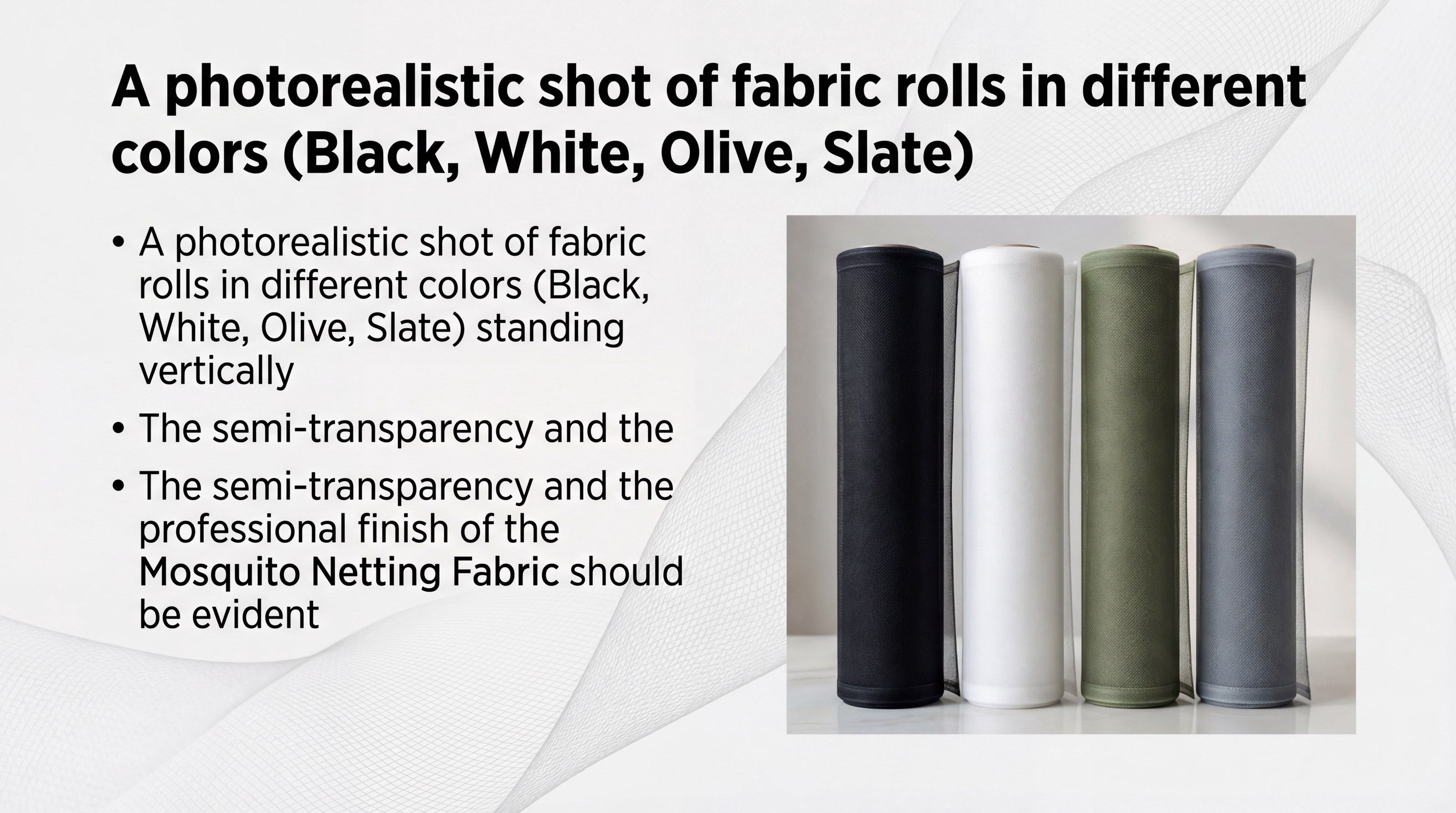
- Available in Black, White, and Olive.
- Bulk rolls ensure color consistency.
- Standard 54-inch widths maximize yield.
What colors are best for visibility?
Black mesh is actually the easiest to see through because it absorbs light rather than reflecting it. White is often preferred for aesthetic reasons in home interiors or wedding events.
Are there remnants available?
For smaller tests or repairs, remnants offer a low-stakes way to practice your sewing techniques. These are often sold at a discount and are perfect for prototyping new gear.
Key Takeaway
| Purchasing Option | Advantage | |
|---|---|---|
| Full Rolls | Lowest price per yard | |
| By the Yard | Exact project quantities | |
| Remnants | Economical for repairs |
Sourcing from a dedicated supplier ensures you receive the technical consistency required for professional applications.
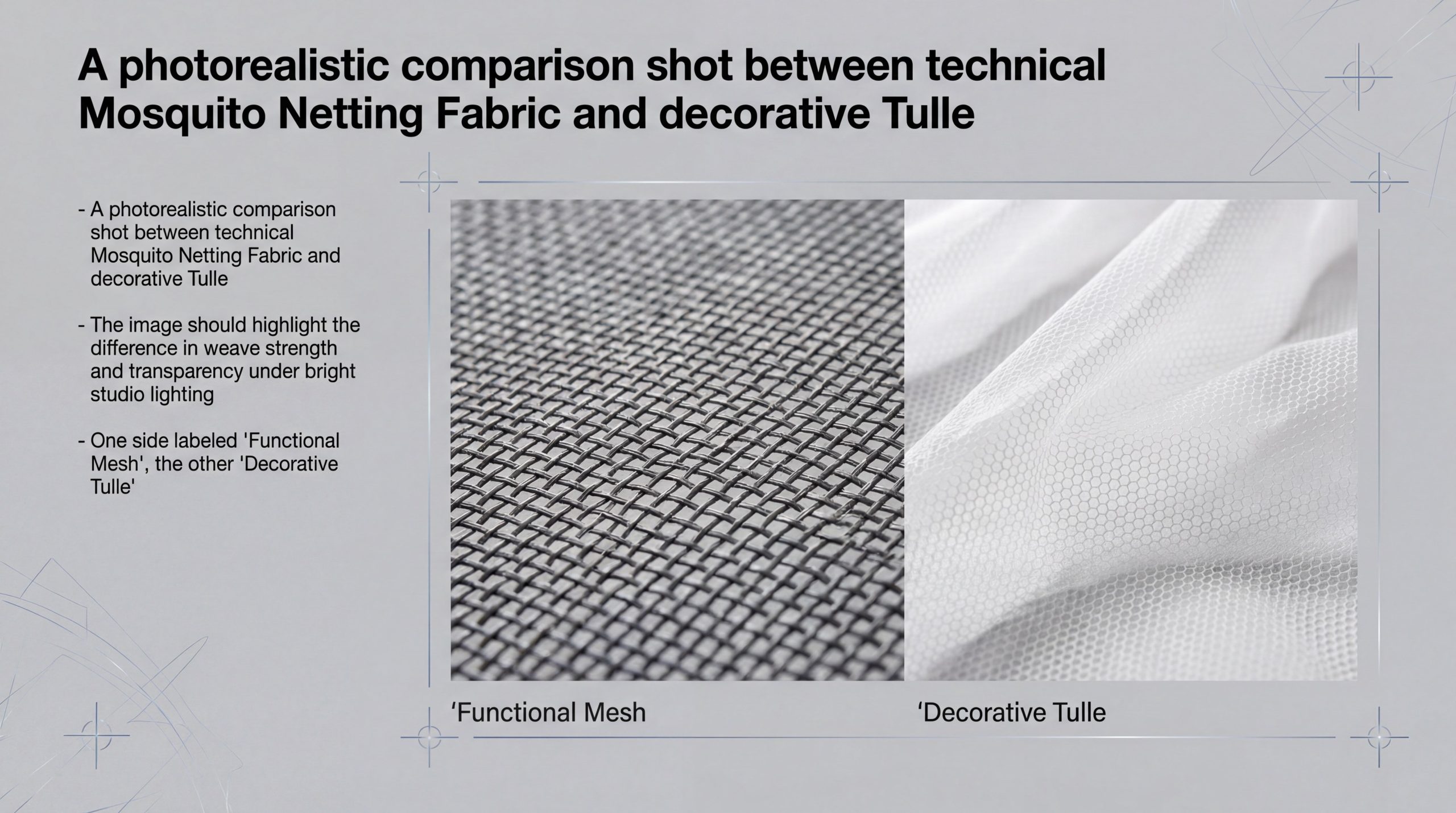
How does Mosquito Netting Fabric differ from tulle?
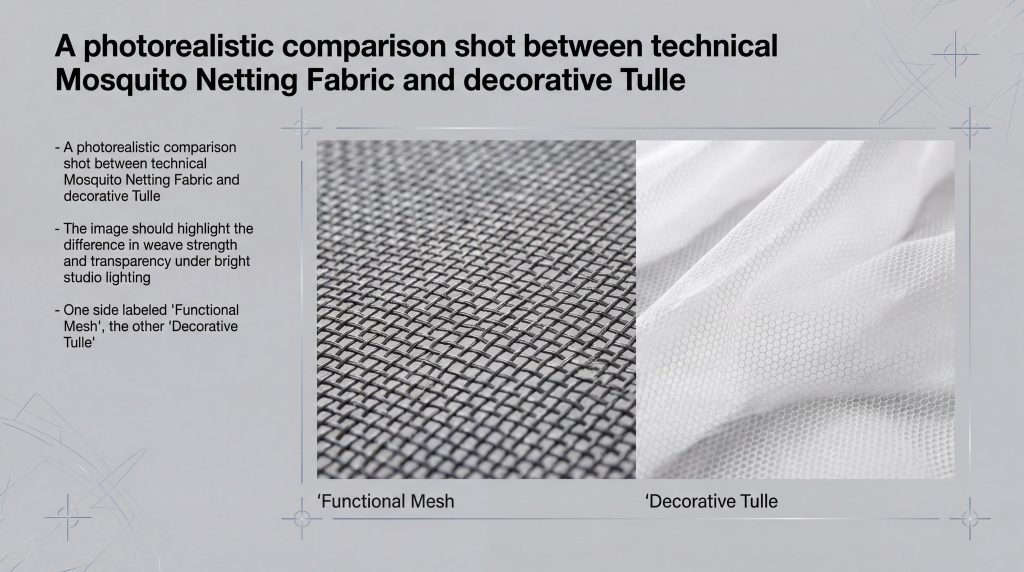
While they may look similar, Mosquito Netting Fabric is a technical utility material, whereas tulle is primarily decorative. Our netting is made from 100% polyester monofilament designed for strength and outdoor exposure.
Here’s the deal. Using decorative tulle for insect protection will result in tears and failed barriers within days of use.
- Netting has a higher burst strength.
- Tulle is often too soft to hold shape.
- Utility mesh is UV-stabilized.
Can tulle stop bugs?
Tulle can stop larger mosquitoes, but its uneven hole structure often allows smaller biting insects to pass through. It also lacks the 34×31 consistent stitch count found in technical fabrics.
Why choose utility mesh for clothing?
If you are making a bug shirt or head net, the utility mesh will stand away from the skin better than tulle. This physical distance is necessary to prevent mosquitoes from biting through the fabric.
Key Takeaway
| Feature | Utility Netting | Decorative Tulle | |
|---|---|---|---|
| Durability | High (Monofilament) | Low (Soft Knit) | |
| Hole Uniformity | Exact (34×31) | Variable | |
| Environment | Rugged Outdoor | Interior/Fashion |
Investing in the correct technical mesh is essential for any project where functionality and protection are the priorities.
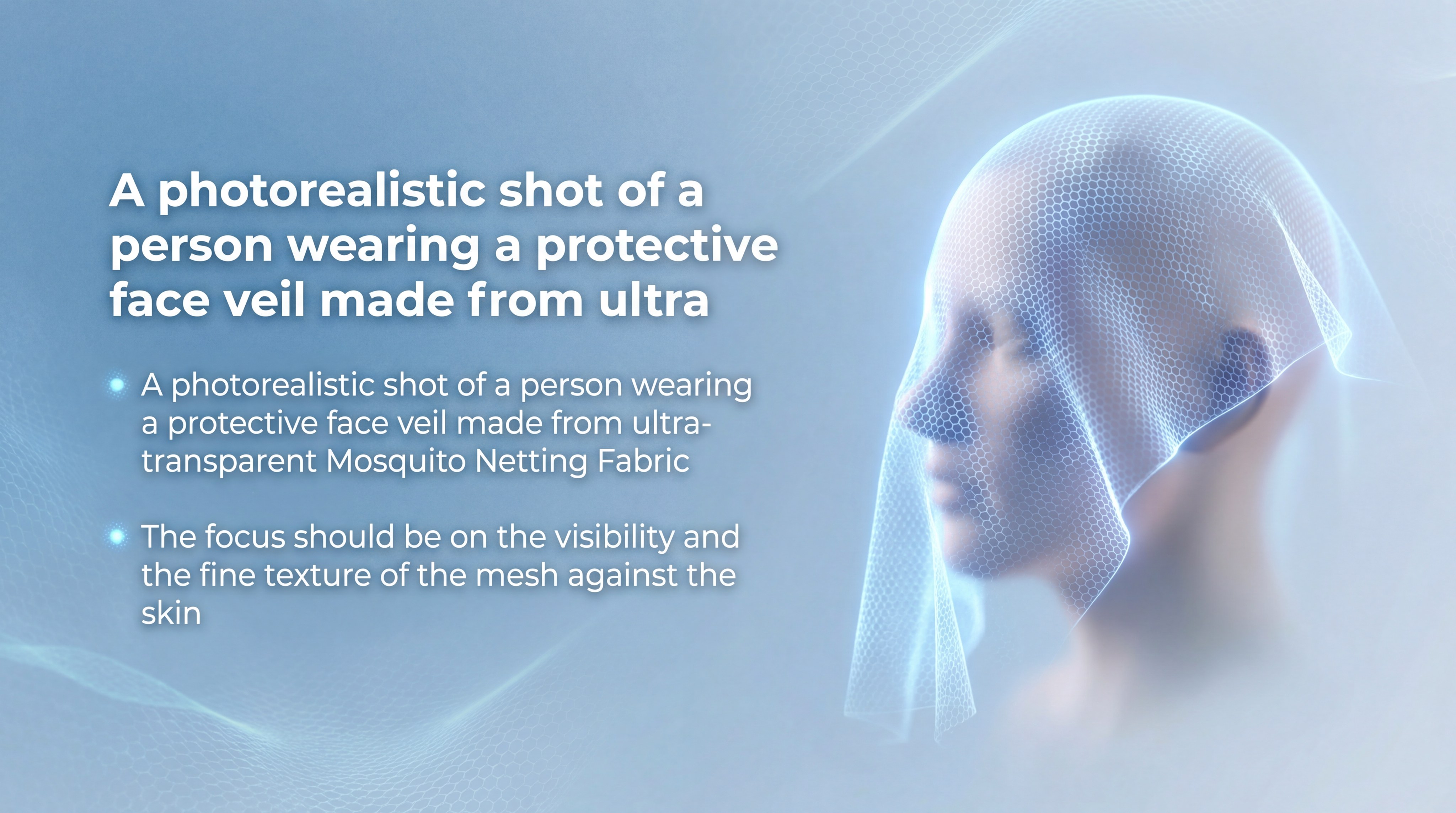
Is Mosquito Netting Fabric suitable for face veils?
The 20 denier Mosquito Netting Fabric is the industry standard for face veils because of its high transparency and breathability. It allows you to protect your face and neck from swarms while maintaining a clear view of your surroundings.
That’s not all. The soft finish of our polyester mesh means it won’t irritate your skin during long hours of wear.
- It is non-abrasive on the face.
- It fits easily over wide-brimmed hats.
- It can be washed and reused frequently.
Does it fog up glasses?
Because the 34×31 weave allows for excellent air exchange, moisture from your breath escapes quickly. You will find that glasses and optics stay clearer than with denser, non-breathable materials.
Is the black color better for veils?
Yes, black is the preferred color for veils because it reduces glare and improves contrast. When the sun is bright, a black mesh is nearly invisible to the wearer’s eyes.
Key Takeaway
| Veil Quality | Technical Benefit | |
|---|---|---|
| Transparency | 20 Denier fine yarn | |
| Comfort | Soft polyester finish | |
| Safety | Full No-See-Um block |
A high-quality veil made from technical mesh is the most effective tool for working or hiking in infested areas.
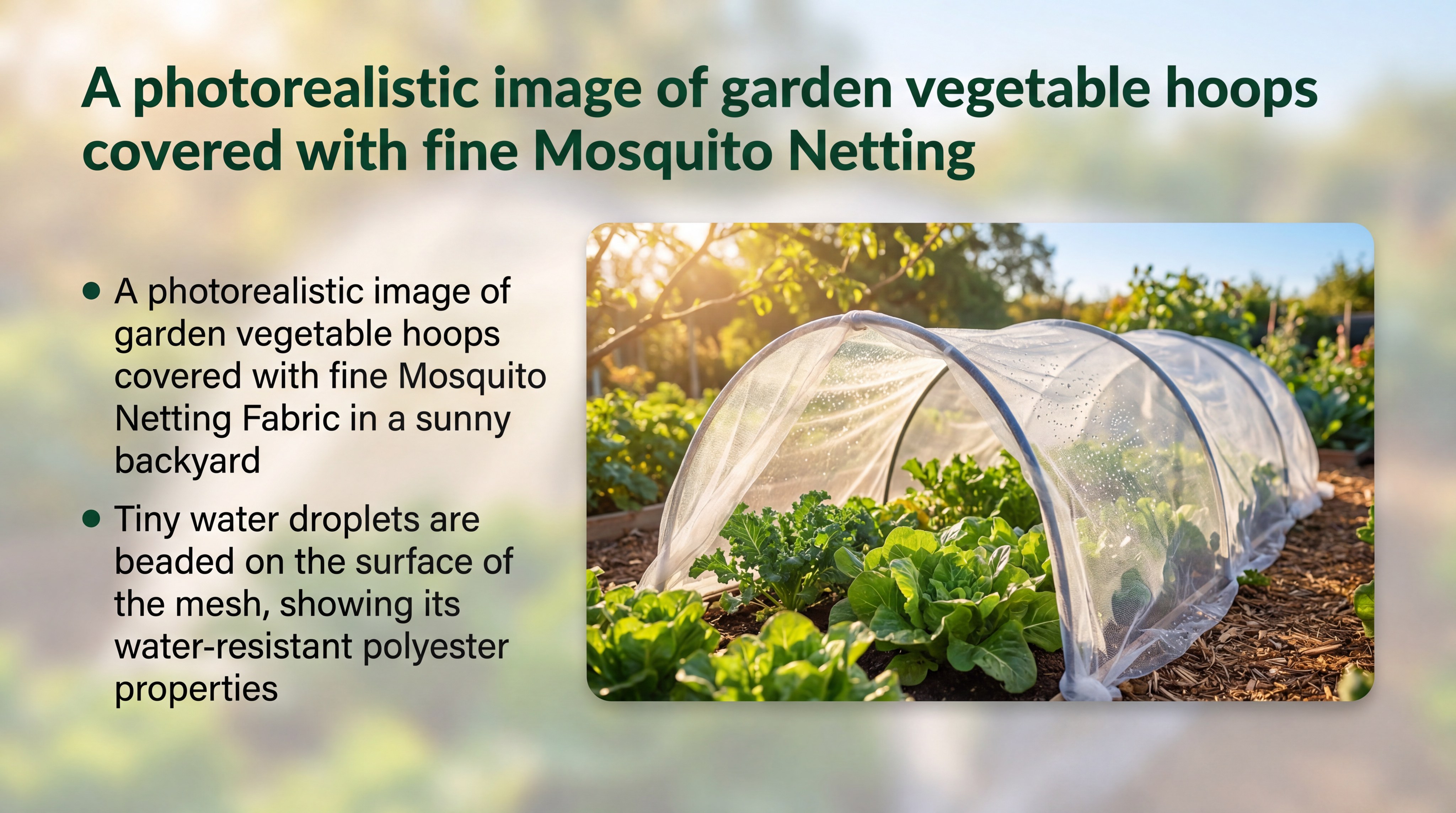
Can you use Mosquito Netting Fabric for garden protection?
You can use Mosquito Netting Fabric in the garden to protect delicate vegetables from pests like leaf miners and aphids. The fine mesh allows sunlight and water to reach the plants while keeping destructive insects out.
Truth be told. Chemical-free pest control is becoming the preferred choice for both home gardeners and commercial growers.
- It provides a physical barrier.
- It reduces the need for pesticides.
- It protects against light frost.
How do you secure it to garden hoops?
You can use simple clips or weights to hold the 54-inch wide fabric over your garden rows. Because it is 0.75 oz/sq yd, it won’t crush young seedlings even if it rests directly on them.
Will it hold up to rain?
The 100% polyester construction means the fabric won’t absorb water or become heavy during a downpour. It dries quickly and maintains its shape throughout the growing season.
Key Takeaway
| Garden Use | Benefit | |
|---|---|---|
| Pest Exclusion | Blocks aphids and flies | |
| Plant Health | Allows 90%+ light/water | |
| Longevity | Rot and mildew resistant |
Utilizing professional mesh in the garden ensures a higher crop yield without the use of harmful chemical interventions.
What makes Mosquito Netting Fabric ideal for camping?
For camping, Mosquito Netting Fabric is the ideal choice due to its extreme packability and reliable insect defense. Whether you are building a hammock enclosure or a tent door, this fabric provides a secure sleeping environment.
You better believe it. A single night in a buggy forest without a proper net is enough to make any camper appreciate high-quality mesh.
- It packs down to the size of a tennis ball.
- It integrates easily with zippers.
- It provides a “bug-free zone” in seconds.
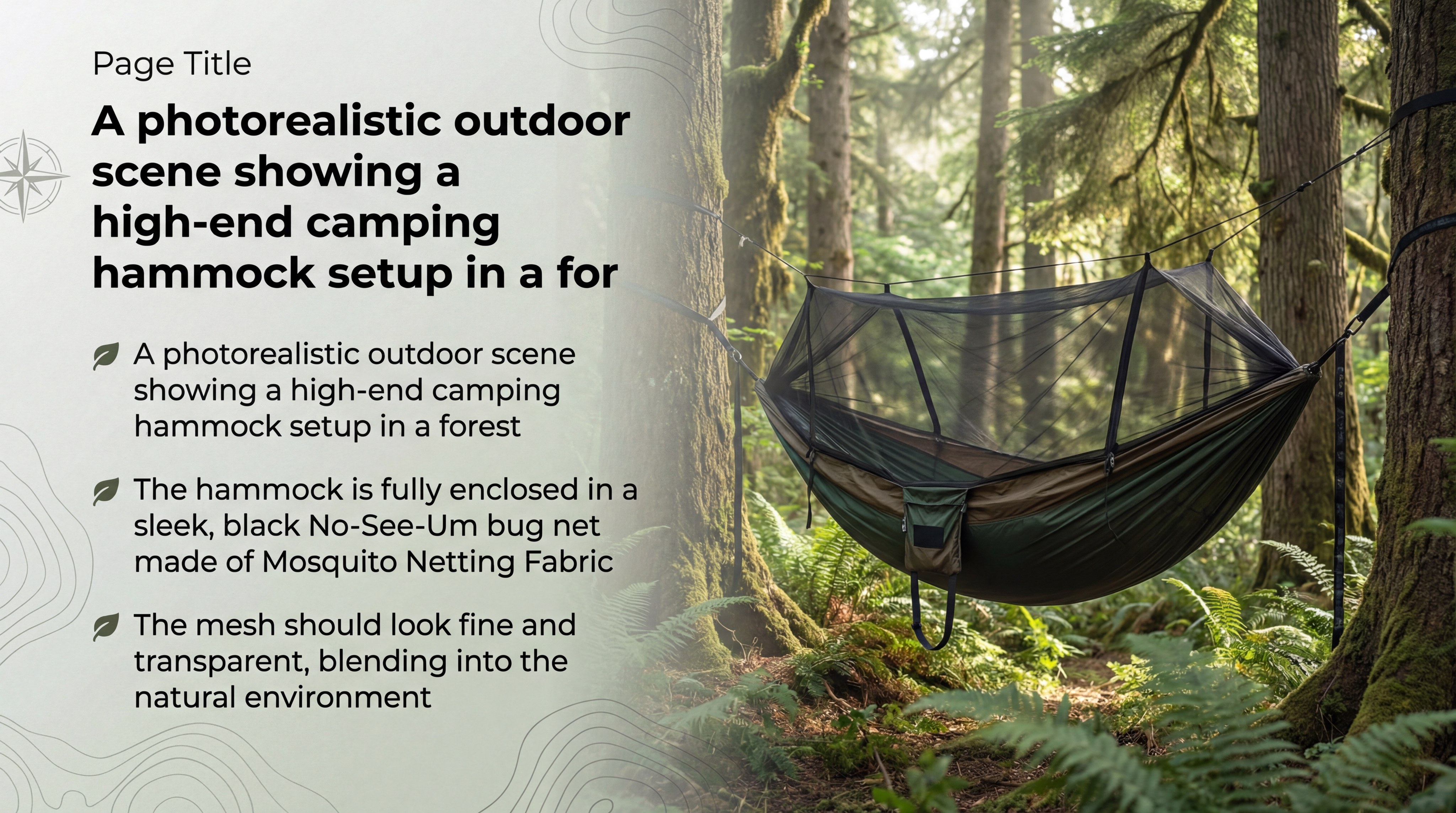
Can it be used for hammock bug nets?
Yes, the 54-inch width is perfect for creating “cocoon” style nets that surround a hammock. The 20 denier strength ensures it can handle the tension of being pulled around a suspension system.
How do you repair a camping net?
If you get a small snag, you can use a needle and thread to whip-stitch the hole closed in the field. The polyester fibers hold knots well, making temporary repairs very effective.
Key Takeaway
| Application | Camping Advantage | |
|---|---|---|
| Weight | 0.75 oz/sq yd (Ultralight) | |
| Packability | Minimal volume | |
| Reliability | 34×31 No-See-Um block |
Choosing technical-grade netting for your camping gear is the best investment you can make for outdoor comfort and sleep quality.
Our commitment to quality ensures that every yard of fabric we provide meets the rigorous demands of professional makers and outdoor enthusiasts alike. Whether you are outfitting a commercial patio or sewing a custom head net for your next trek, our technical mesh delivers the performance you expect. For more information on our bulk options or specific technical data, please contact us today .
FAQ
Can I wash this fabric in a machine?Yes, you should wash it on a delicate cycle in a mesh laundry bag. This prevents the fine 20 denier fibers from snagging on the agitator or other clothing.
What is the best way to cut the mesh?A rotary cutter and a straight edge are best for keeping the edges clean. If you use scissors, ensure they are very sharp to prevent the polyester from bunching.
Can I use this for window screens?Absolutely, though it is much softer than traditional fiberglass screen. It is best used for removable screens or travel window covers where flexibility is required.
Does it offer any UV protection?While not rated with a specific UPF, the 34×31 weave does provide a slight physical shade. However, its primary purpose is insect exclusion, not sun blocking.
What thread should I use for outdoor projects?Always use 100% polyester thread. Cotton thread will rot over time when exposed to moisture and UV rays, causing your seams to fail.