ProblemMost brides spend months searching for a gown with the perfect lace or silhouette, only to realize on their wedding day that the dress is uncomfortably scratchy, clings in the wrong places, or is unexpectedly translucent under professional camera flashes. The external beauty of a gown is often undermined by a lack of attention to what lies beneath the surface.
AgitateImagine the frustration of walking down the aisle while feeling a constant itch against your skin or noticing, in your highly anticipated wedding photos, that the outline of your legs or undergarments is visible through the fabric. A poor choice in foundation textiles can turn a dream designer gown into a source of physical discomfort and aesthetic regret, distracting you from the most important moments of your life.
SolutionSelecting the right foundation is just as critical as the gown itself. By understanding the technical properties of high-quality textiles, you can ensure both flawless drape and all-day comfort. At our core, we believe that bridal elegance starts from the inside out. This guide explores everything you need to know about selecting the ideal interior layers for your bridal look.
1. What is a wedding dress lining fabric layer?
The wedding dress lining fabric is the innermost layer of a gown, designed to sit directly against the wearer’s skin. While the outer shell (the “fashion fabric”) provides the aesthetic appeal, the lining serves as the functional bridge between the garment and the body.
Defining the Underlay and Lining
In professional garment construction, the lining is distinct from the underlay. The lining is usually a separate layer that hangs inside the dress, while an underlay is often fused or layered directly behind the main fabric to provide opacity or structural support. Choosing the right wedding dress lining fabric ensures that the interior of the gown looks as finished and professional as the exterior.
The Functional Purpose of Interior Fabrics
- Skin Protection: Shields the bride from abrasive materials like heavy beadwork, stiff tulle, or metallic threads.
- Opacity: Prevents the dress from being “see-through” under bright ceremony lights or camera flashes.
- Moisture Management: High-quality linings help wick away perspiration, keeping the bride cool.
To understand how we prioritize these foundational elements, you can learn more about our mission and history .
2. Why choose a specific wedding dress lining fabric?
The selection of a wedding dress lining fabric is not merely a secondary thought; it is a strategic decision that dictates the gown’s overall success. A mismatched lining can cause a dress to “ride up,” static cling to the legs, or fail to support the weight of heavy embellishments.
Enhancing Gown Comfort and Skin Feel
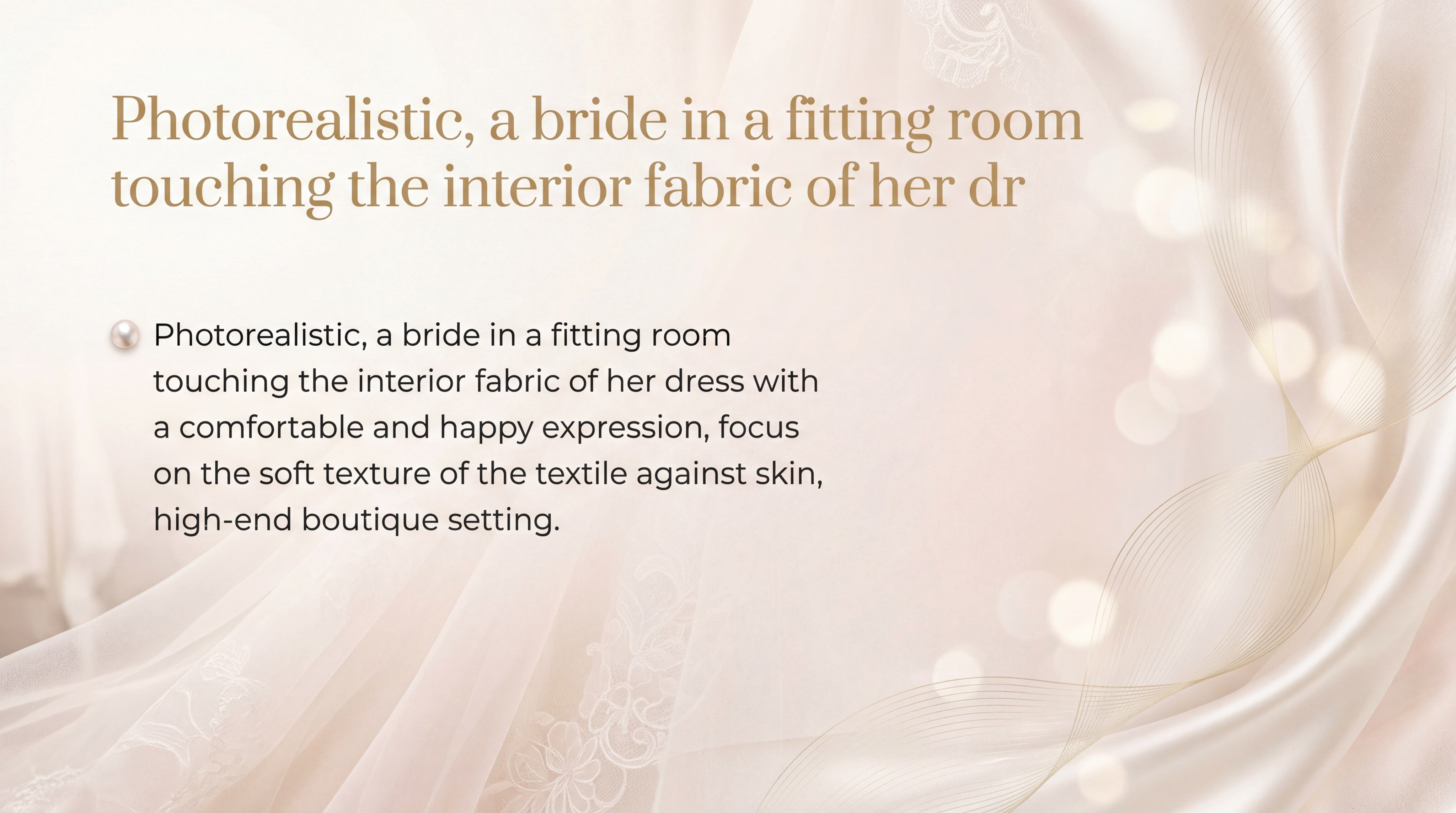
Softness is paramount. Fabrics like Silk Habotai or Bemberg rayon are often preferred for their “cool to the touch” sensation. When a bride moves, the lining should glide effortlessly over her skin, eliminating friction that causes redness or irritation.
Ensuring Structural Integrity and Opacity
A specific wedding dress lining fabric can also provide the necessary “body” to a gown. For example, a heavy Crepe de Chine can smooth out the silhouette, hiding the lines of undergarments and providing a seamless foundation for the outer lace or silk.
3. Which wedding dress lining fabric offers best colors?
Color selection in lining is an art form. It can either blend into the background or be used to highlight the intricate details of the gown’s outer layers.
Classic Ivory and Stark White Options
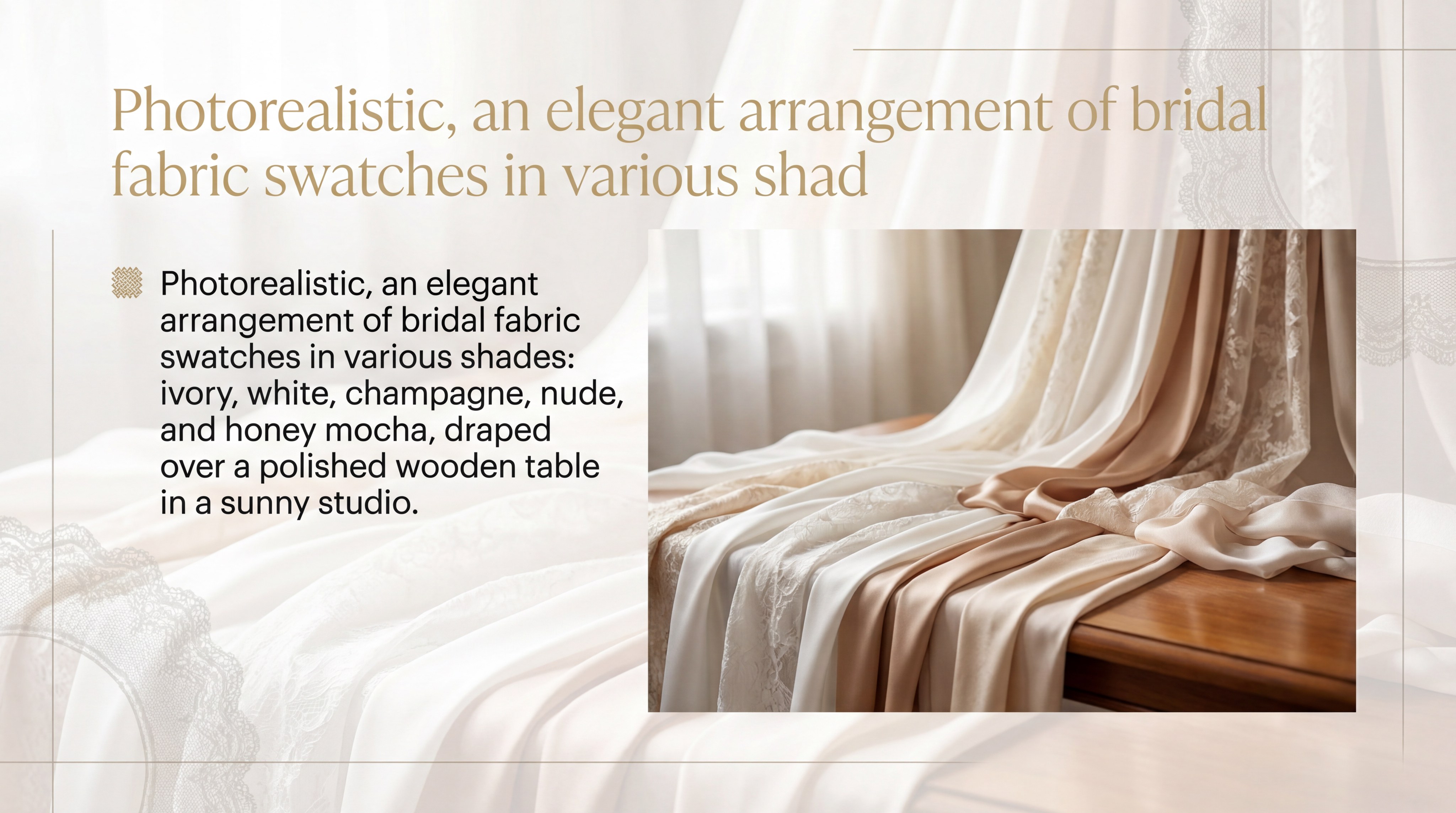
Historically, a wedding dress lining fabric was chosen to match the outer fabric exactly. Stark white linings are used for traditional gowns to maintain a “pure” look, while ivory linings provide a warmer, more traditional bridal glow.
Modern Nude, Champagne, and Mocha Tones
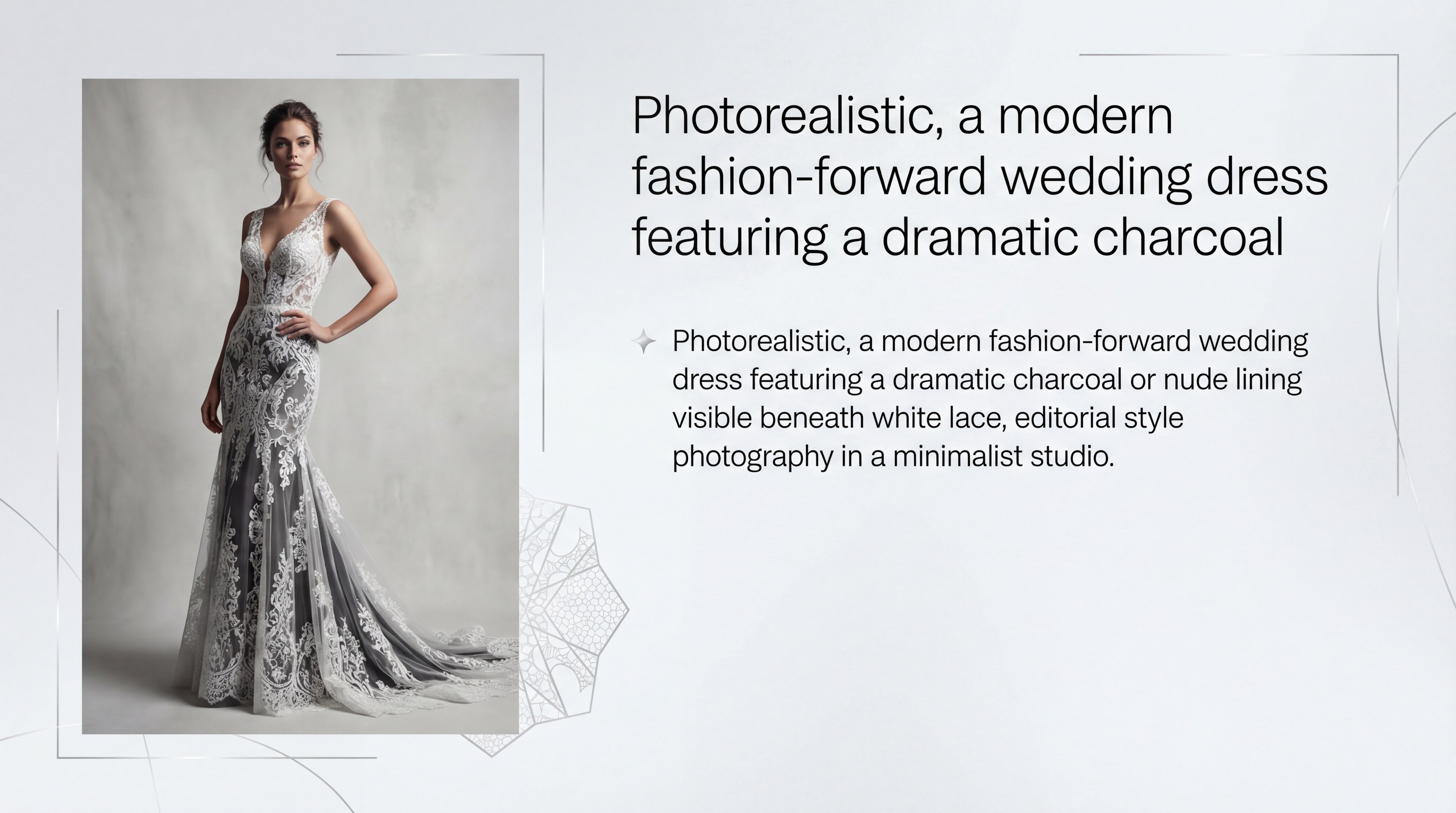
Modern bridal trends have shifted toward depth and contrast. By using a nude or mocha-colored wedding dress lining fabric, designers can make white lace patterns “pop” visually. This creates a three-dimensional effect that is highly sought after in contemporary couture.
“The choice of a ‘honey’ or ‘nude’ lining can transform a standard lace gown into a masterpiece of depth and texture.”
For designers looking to create these unique effects, we offer specialized customization services to match any palette.
4. How does wedding dress lining fabric affect style?
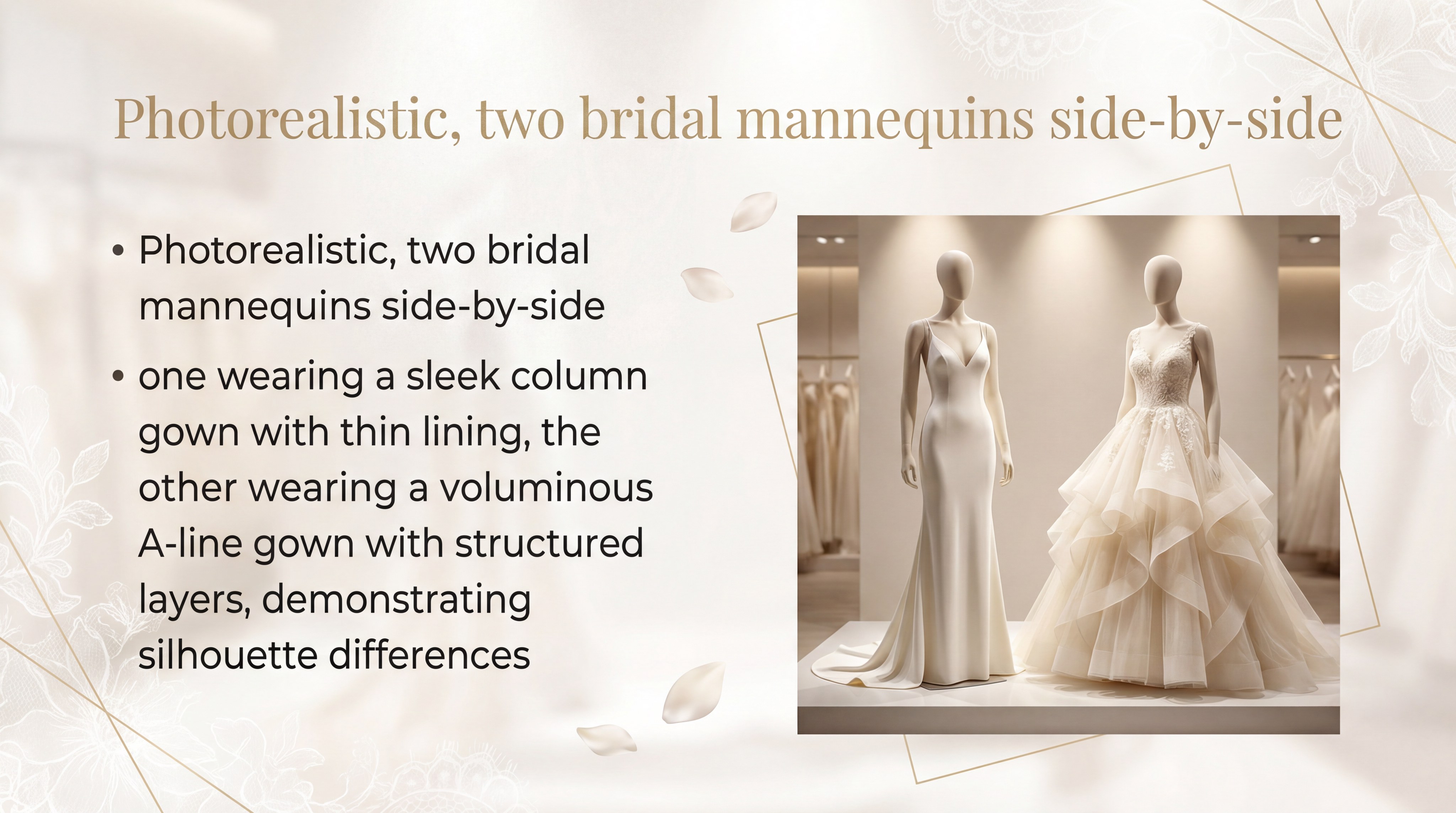
The weight and “drape” of the wedding dress lining fabric directly influence the garment’s silhouette. A lining that is too stiff will ruin a flowing gown, while one that is too light will fail to support a structured one.
Sleek Foundations for Column Dresses
For sheath or column dresses, a wedding dress lining fabric with a bit of stretch (such as a Spandex-blend Satin) is ideal. It allows the gown to hug the curves of the body without restricting movement.
Voluminous Underlays for A-Line Gowns
In contrast, A-line or Ballgown silhouettes require a more substantial lining. Fabrics like Taffeta or a heavy Satin provide the “snap” needed to keep the skirt from collapsing inward, ensuring the iconic “bell” shape remains intact throughout the event.
5. Is silk a good wedding dress lining fabric choice?
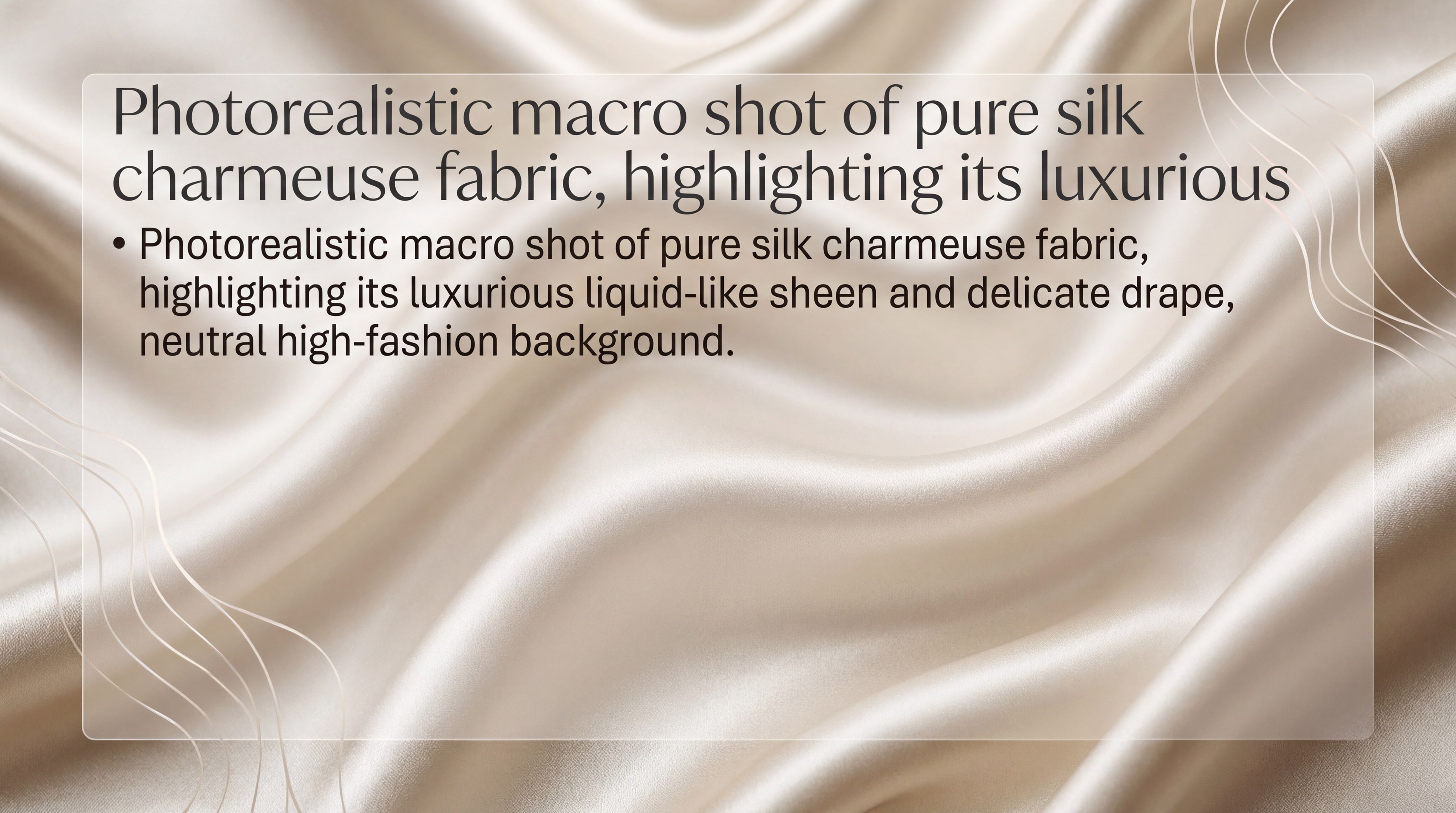
Silk is often considered the “gold standard” for wedding dress lining fabric, though it comes with its own set of considerations for the modern bride and manufacturer.
The Luxurious Feel of Silk Charmeuse
Silk Charmeuse offers an unparalleled liquid-like sheen and a buttery softness against the skin. It is the ultimate choice for luxury gowns where cost is less of a concern than the sensory experience of the wearer.
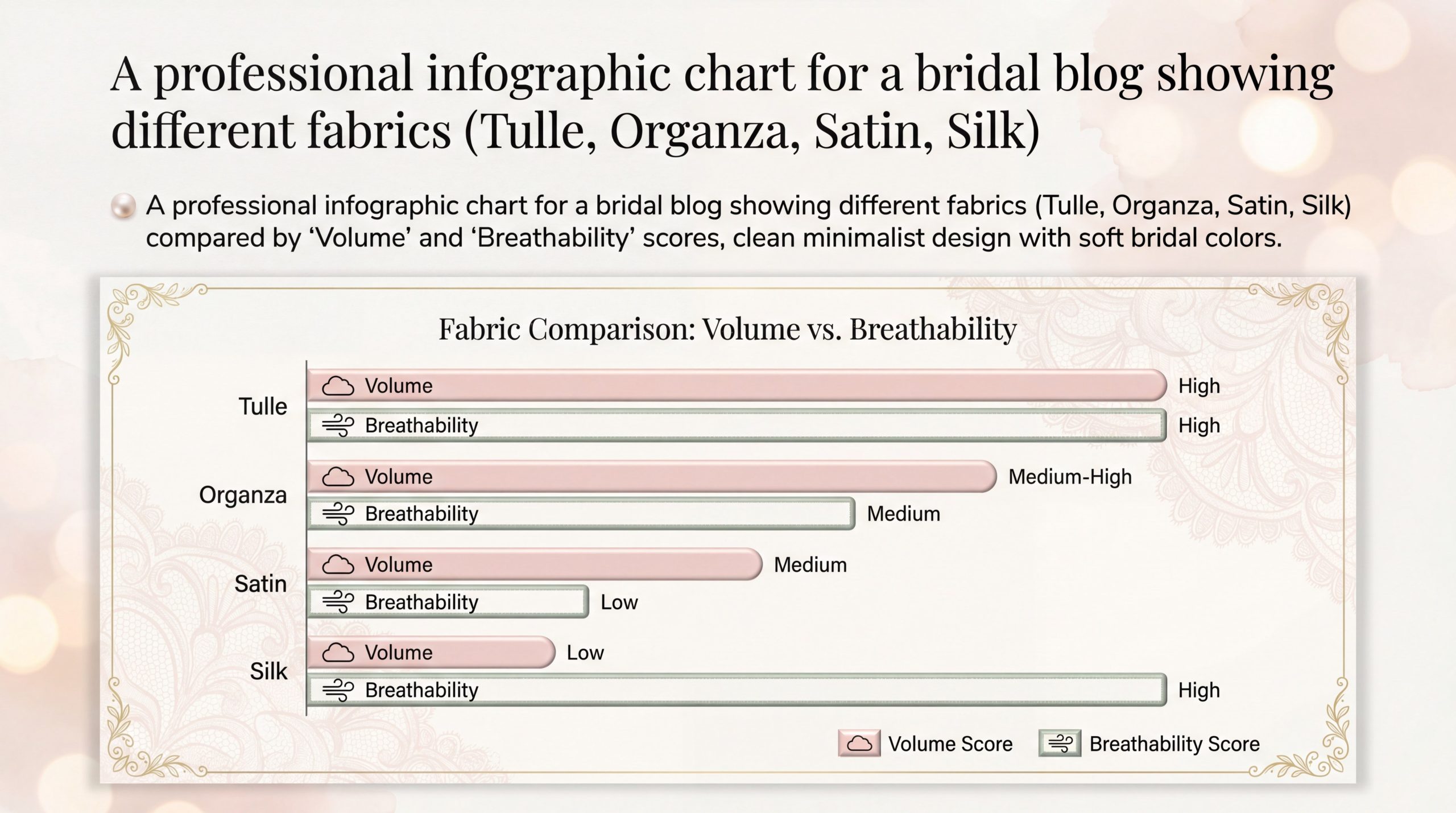
Natural Breathability for Summer Weddings
One of the primary advantages of a silk wedding dress lining fabric is its natural temperature-regulating properties. Silk is highly breathable and can absorb moisture without feeling damp, making it the perfect choice for outdoor or summer ceremonies.
| Fabric Type | Breathability | Texture | Durability | |
|---|---|---|---|---|
| Silk | Very High | Ultra-Soft | Delicate | |
| Polyester | Low-Medium | Smooth | High | |
| Rayon/Viscose | High | Soft | Medium |
For a deeper look into the technical specifications of these materials, explore our industrial insights .
6. What wedding dress lining fabric works for lace?

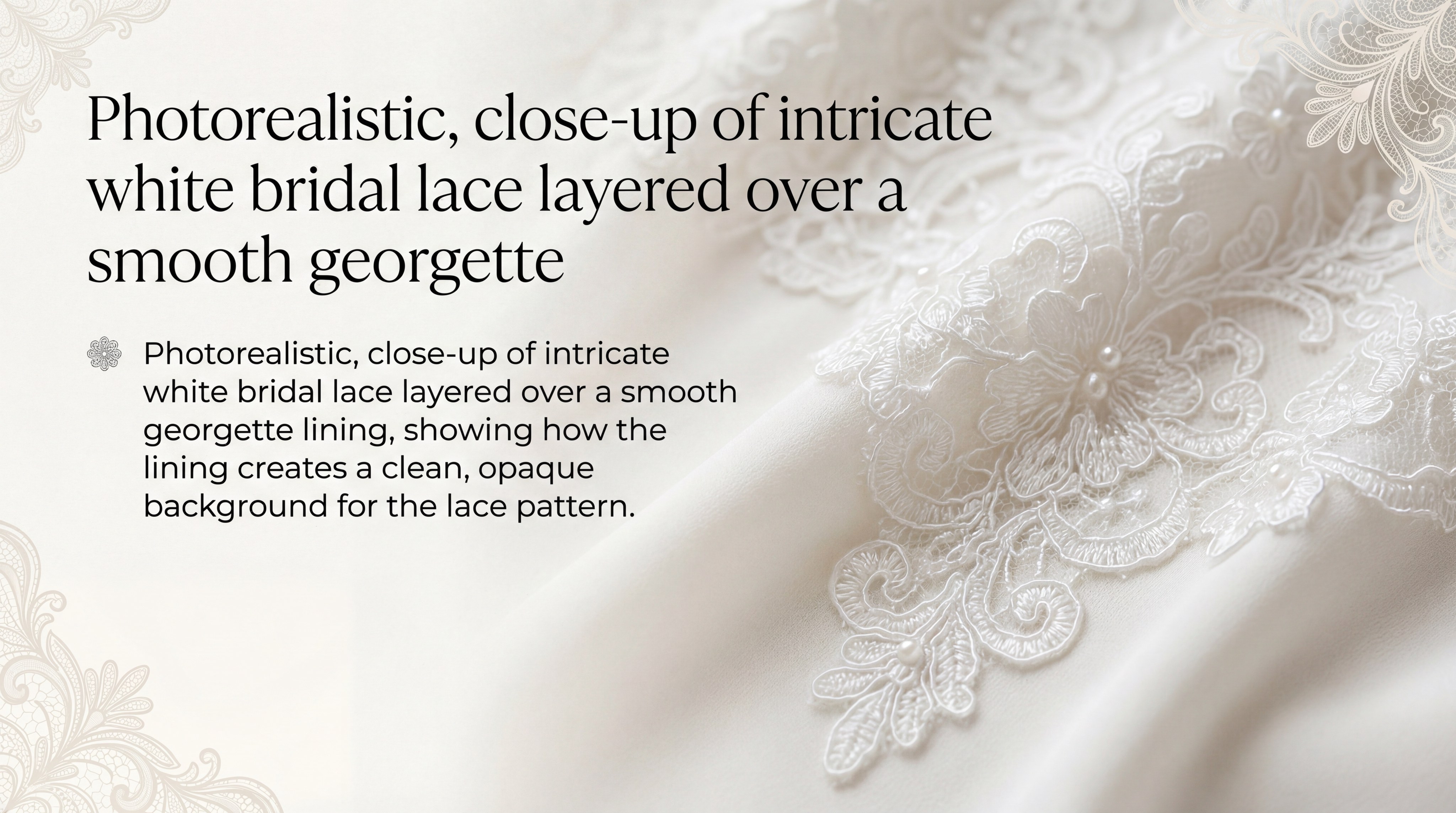
Lace is inherently transparent, meaning the wedding dress lining fabric behind it acts as a canvas. The choice here is usually between a matte finish or a subtle shimmer.
Using Georgette for a Smooth Matte Finish
Georgette is a popular choice for lace gowns because its grainy, matte texture doesn’t compete with the lace. It provides a clean, understated background that allows the floral or geometric patterns of the lace to take center stage.
Choosing Satin for a Subtle Interior Glimmer
If a designer wants to add a touch of glamour, a Satin wedding dress lining fabric can be used. The light-reflecting properties of the satin shine through the gaps in the lace, giving the entire gown a luminous, ethereal quality.
7. Can wedding dress lining fabric add volume?
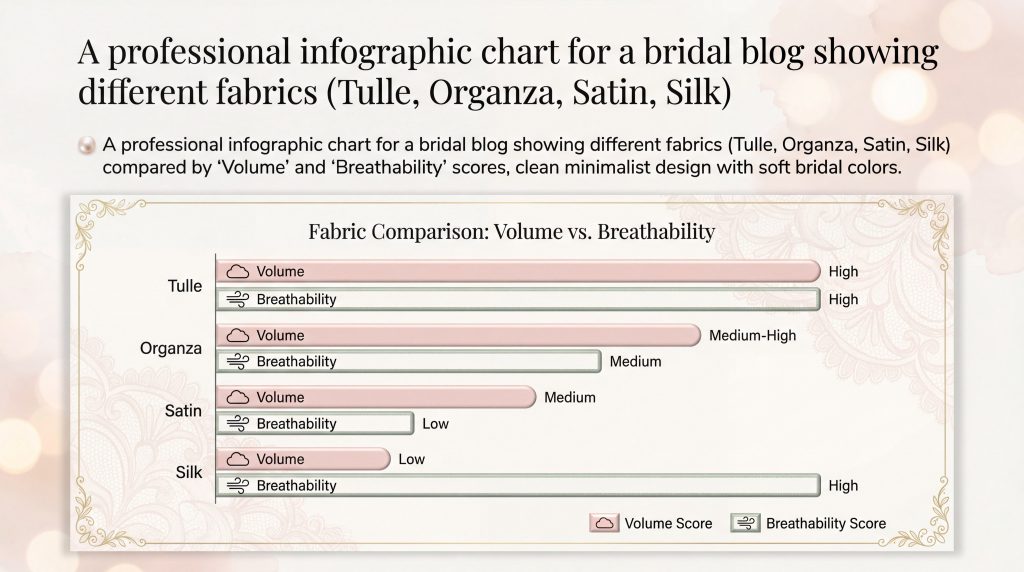
While many think of volume coming from the outer layers, the wedding dress lining fabric and its associated under-layers are the true architects of a gown’s shape.
Structured Tulle for Fit-and-Flare Shapes
In fit-and-flare or mermaid styles, layers of structured Tulle are often sewn into the lining at the knee. This “crinoline” effect ensures the flare remains dramatic and doesn’t limp during the walk down the aisle.
Lightweight Organza for Soft Support
For a more romantic, soft volume, Organza can be used as an internal support layer. It provides more “lift” than a standard lining but lacks the scratchiness of traditional tulle. Using a high-quality wedding dress lining fabric alongside these layers ensures the bride remains comfortable despite the extra bulk.
Discover more about our commitment to quality construction in our about section .
8. Should you pick a dark wedding dress lining fabric?
While unconventional, using a dark wedding dress lining fabric is a bold stylistic choice that has gained traction in “Alternative” and “Gothic” bridal fashion.
Bold Visuals with Black and Charcoal Layers
A black or charcoal lining beneath white or silver lace creates a dramatic, high-contrast look. It emphasizes the “negative space” of the lace pattern and appeals to brides looking for a non-traditional aesthetic.
Creating Contrast to Highlight Lace Details
Even in more traditional settings, a slightly darker wedding dress lining fabric (like a deep Champagne or Sand) is used to highlight the intricacies of white embroidery. This technique ensures that the details of the dress are visible in photographs, rather than being washed out by the light.
9. How to source quality wedding dress lining fabric?
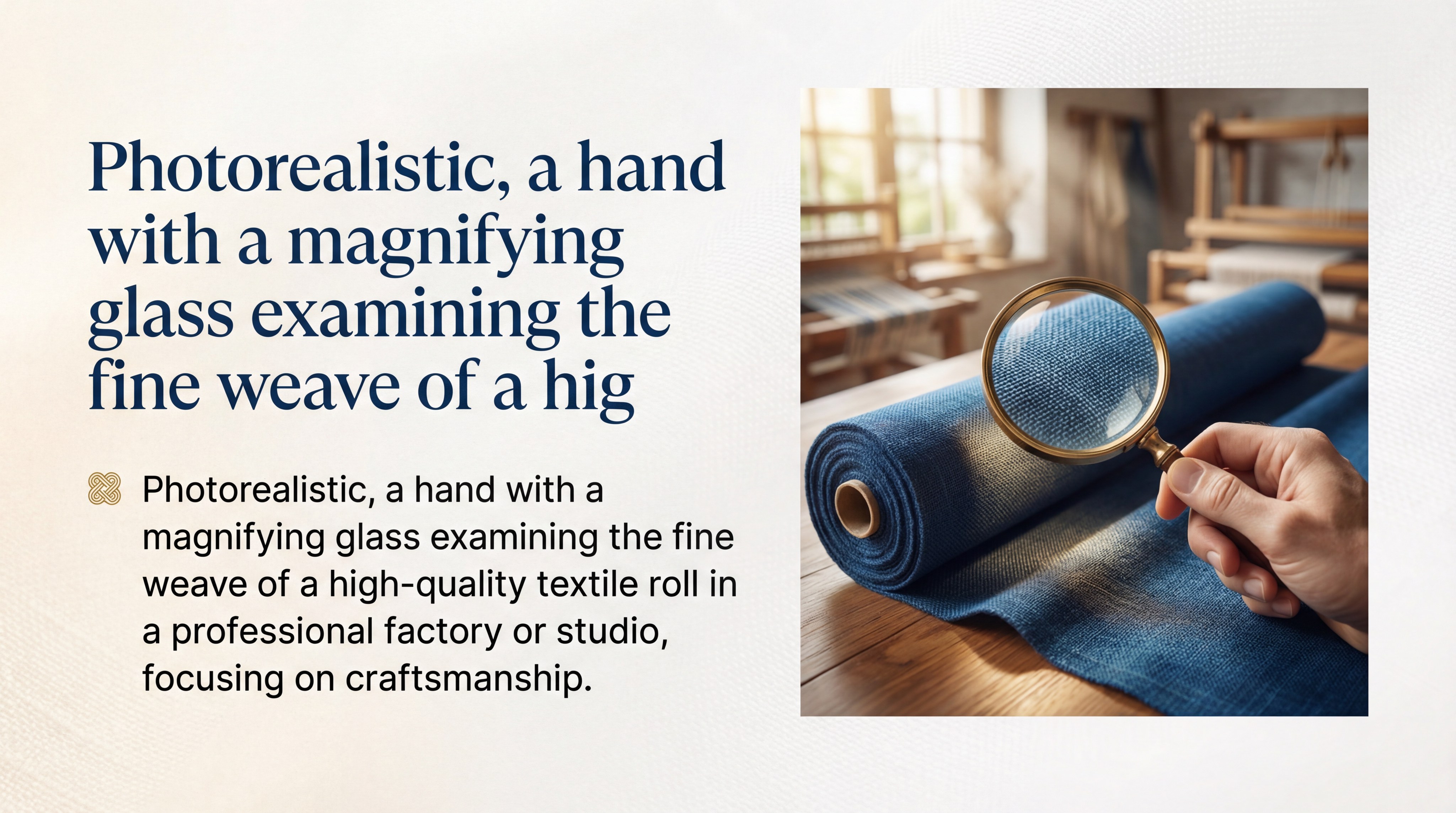
For manufacturers and designers, sourcing the right wedding dress lining fabric requires a keen eye for technical specifications. Not all fabrics are created equal, even if they share the same name.
Identifying High-Grade Textile Standards
When evaluating a wedding dress lining fabric, professional buyers look for:
- Thread Count: A higher thread count usually indicates a smoother, more durable fabric.
- Color Fastness: Ensuring the lining won’t bleed onto the expensive outer lace if it gets damp.
- Pilling Resistance: Preventing the fabric from forming small “balls” of fiber due to friction.
Professional Sourcing for Gown Manufacturers
Sourcing from reputable textile mills ensures consistency across production runs. For the latest trends and sourcing tips, you can read more on our professional blog .
10. Where can you find expert wedding dress lining fabric?
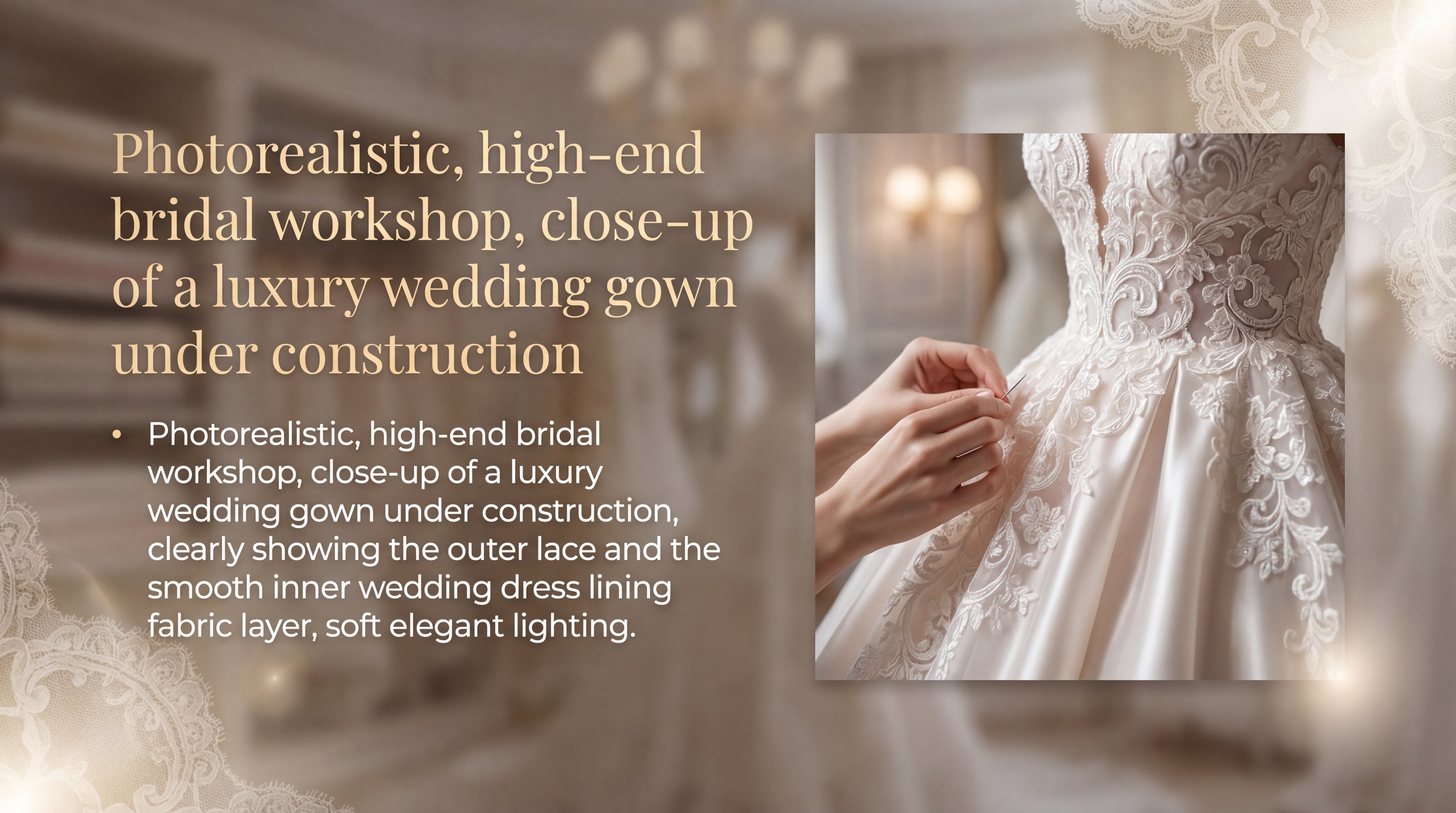
Finding the perfect wedding dress lining fabric often requires consultation with textile experts who understand the nuances of bridal construction.
Consulting with Bridal Textile Professionals
Working with a specialist supplier allows designers to match the lining to the specific needs of a gown’s silhouette and the bride’s comfort requirements. Professionals can provide swatches and technical data that generic fabric stores cannot.
Customizing Your Unique Bridal Aesthetic
Whether you are looking for the breathability of silk or the structural support of a heavy crepe, the right wedding dress lining fabric is out there. Customizing these internal layers is the secret to a gown that looks and feels like a million dollars.
Frequently Asked Questions (FAQ)
- Can I change my wedding dress lining fabric after purchase?Yes, a skilled seamstress can often swap or add a lining layer during the alterations process to improve comfort or change the gown’s opacity.
- What’s the best wedding dress lining fabric for summer?Natural fibers like silk or high-quality lightweight rayons are ideal as they offer maximum breathability and moisture-wicking properties for warm-weather ceremonies.
- Can I use a colored wedding dress lining fabric for depth?Absolutely. Using a nude or “honey” toned lining underneath white lace is a popular technique to make the intricate patterns of the lace pop visually.
- What’s the best wedding dress lining fabric for sensitive skin?Silk habotai or high-end polyester crepes are recommended for their exceptionally smooth surface, which minimizes friction and irritation against the skin.
- Can I add extra wedding dress lining fabric for opacity?Yes, if a gown feels too sheer, an additional layer of lightweight lining can be inserted to provide coverage without significantly altering the silhouette.
Contact Information
For professional inquiries regarding fabric sourcing or custom textile solutions for bridal wear, please contact our team today .