
Mesh fabric is a textile characterized by its open, lattice-like structure where threads are knitted, woven, or knotted to create a consistent pattern of holes. Many creators face the frustrating problem of designing items that need to be both lightweight and incredibly strong. This struggle often leads to garments that feel suffocating or industrial components that fail under pressure. By understanding how is mesh a fabric specifically engineered for airflow and durability, you can solve these design dilemmas and create high-performance products that breathe.
Why is mesh a fabric so versatile in design?
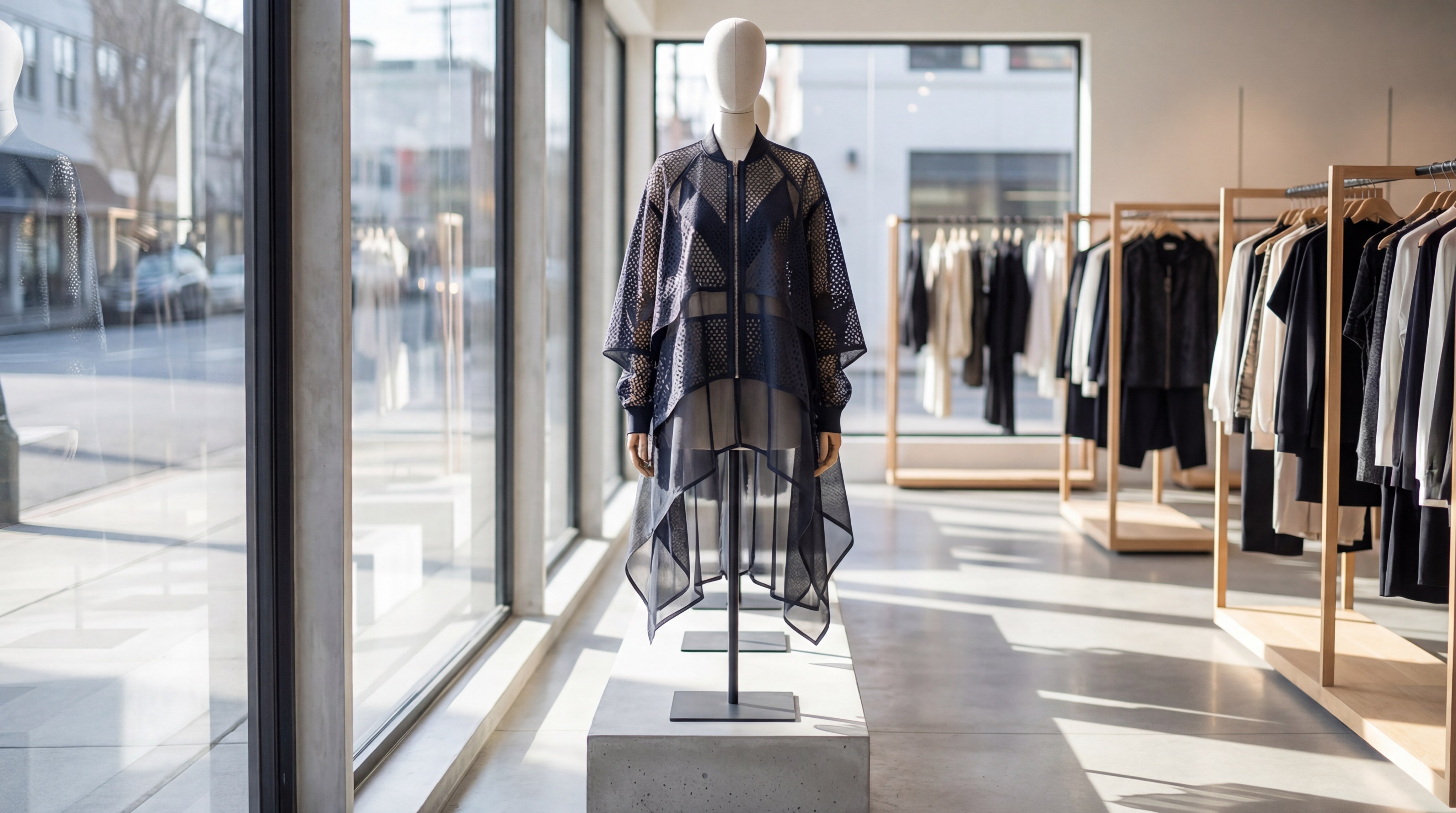
In the world of textiles, the reason why is mesh a fabric so favored is its unique ability to provide transparency without sacrificing structural integrity. Designers utilize this material to create visual layers that add depth to a garment while keeping the weight minimal. This versatility makes it a staple in everything from high-street fashion to ergonomic industrial equipment.
How does it improve visual texture?
Mesh provides a distinct geometric aesthetic that solid fabrics simply cannot replicate. By varying the size of the holes, designers can create patterns that range from delicate and romantic to bold and industrial.
Here is the deal:
- Geometric symmetry
- Layered transparency
- Contrast with solid linings
- Modern industrial finish
But that’s not all. The play of light through the open weave creates a dynamic look that changes with movement, making it a favorite for runway pieces.
Can it be used for functional layering?
Indeed, mesh serves as the perfect foundation for layering because it doesn’t add bulk or trap heat. It allows the underlying colors and textures to peek through while providing a finished, polished appearance.
Think about this:
- Enhances airflow between layers
- Provides a protective outer shell
- Minimizes garment weight
- Adds textural complexity
The open structure ensures that even multiple layers remain breathable, which is essential for complex fashion designs.
Key Takeaway: Mesh is a design powerhouse because it balances aesthetic transparency with practical durability across various industries.
| Design Aspect | Benefit | Common Application | |
|---|---|---|---|
| Open Weave | Visual Depth | Fashion Layering | |
| High Strength | Structural Support | Industrial Gear |
The analytical evidence suggests that mesh’s versatility is a direct result of its engineered porosity, allowing for both aesthetic and functional innovation.
How is mesh a fabric created by manufacturers?
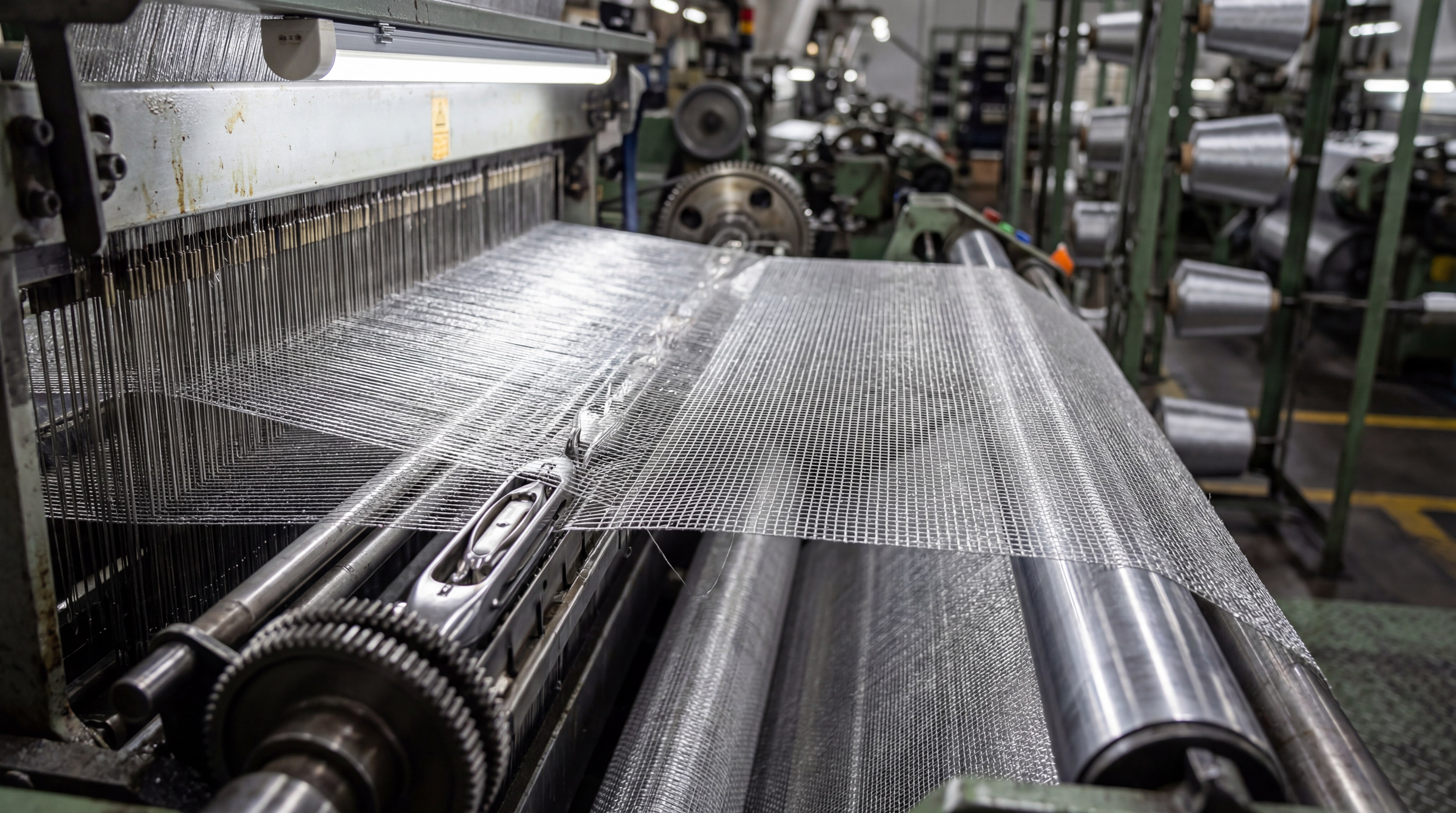
Manufacturers determine how is mesh a fabric structured by choosing between knitting and weaving techniques using high-performance synthetic fibers. Most modern mesh is produced on warp-knitting machines, which create a series of interlocking loops that prevent the material from fraying. This technical precision ensures that the resulting grid is uniform and capable of withstanding significant tension.
Is warp knitting the preferred method?
Warp knitting is the most common production method because it creates a stable, ladder-resistant structure that is perfect for apparel. Unlike traditional weaving, these loops allow the fabric to stretch in multiple directions while maintaining its original shape.
Believe it or not:
- Resists unraveling if snagged
- Allows for four-way stretch
- High production speed
- Customizable hole shapes
This method is particularly valuable for creating “power mesh,” which provides high compression and support in athletic and medical wear.
Key Takeaway: Modern manufacturing relies on warp knitting to produce a resilient, non-fraying grid that excels in high-stress environments.
| Production Method | Key Benefit | Typical Fiber | |
|---|---|---|---|
| Warp Knit | Ladder Resistance | Polyester/Nylon | |
| Plain Weave | Dimensional Stability | Industrial Poly |
The consistency of the knitting process is what gives mesh its reliable performance metrics, ensuring every square inch meets industrial standards.
When is mesh a fabric essential for athletes?
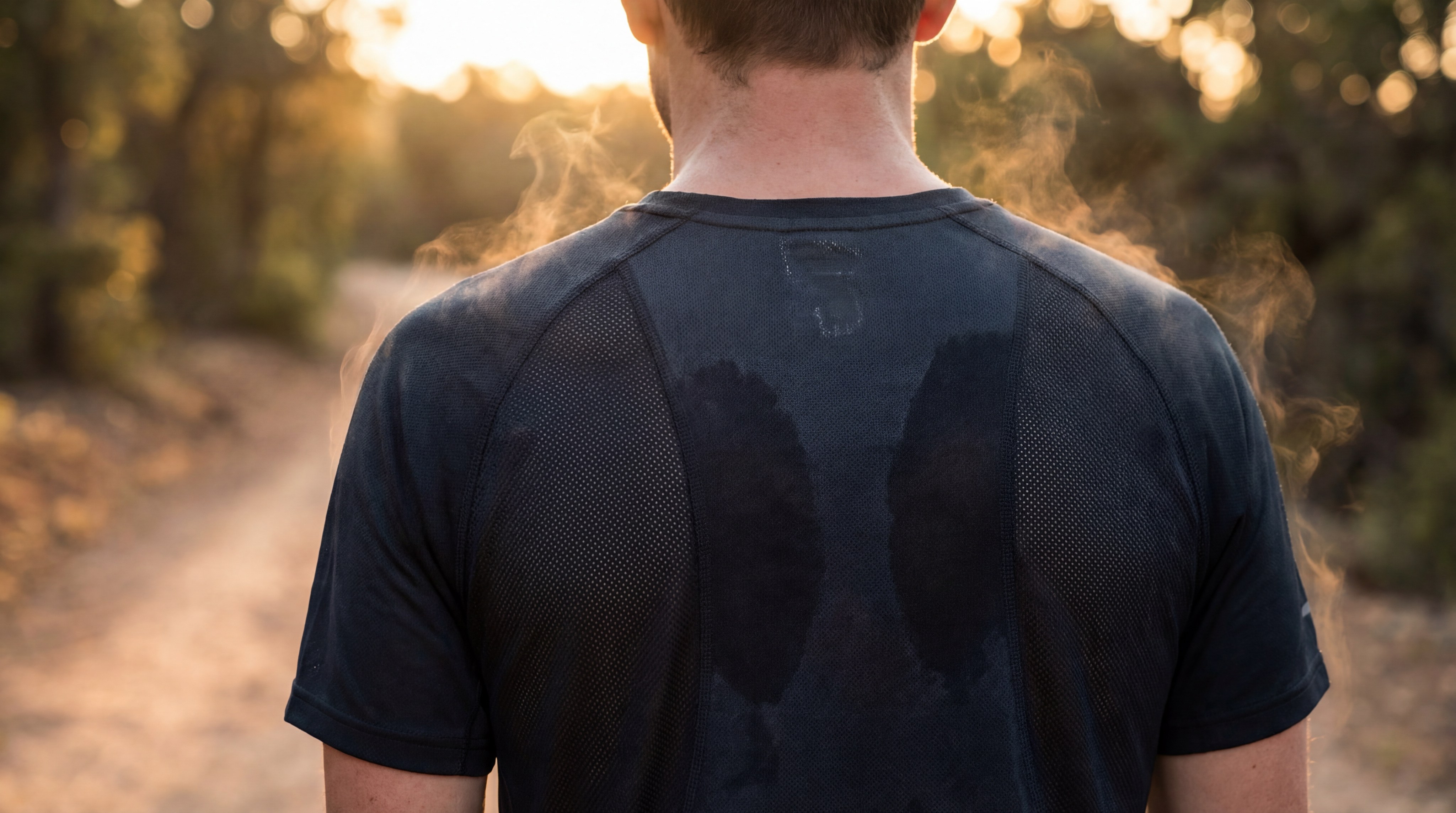
Athletes consider the question of when is mesh a fabric necessary based on their need for immediate thermal regulation and moisture management. During high-intensity training, the body generates significant heat that must be dissipated to prevent performance drops. Mesh panels placed in high-perspiration zones facilitate this heat transfer by allowing air to flow directly against the skin.
Does it prevent overheating during exercise?
The primary function of athletic mesh is to create a ventilation system that moves hot air away from the body. By replacing solid panels with open-hole mesh, manufacturers can drastically reduce the internal temperature of a garment.
The truth is:
- Maximizes convective cooling
- Reduces sweat accumulation
- Lowers core body temperature
- Increases comfort duration
Here’s the deal. Without this ventilation, moisture would be trapped against the skin, leading to chafing and rapid exhaustion during long-distance runs.
Key Takeaway: For athletes, mesh is a critical functional component that manages heat and moisture to optimize physical endurance.
| Activity Level | Mesh Density | Primary Goal | |
|---|---|---|---|
| High Intensity | Macro-mesh | Maximum Airflow | |
| Low Intensity | Micro-mesh | Moisture Wicking |
Strategic placement of mesh ensures that the athlete’s microclimate remains stable, even under the most strenuous environmental conditions.
Where is mesh a fabric used in bridal fashion?
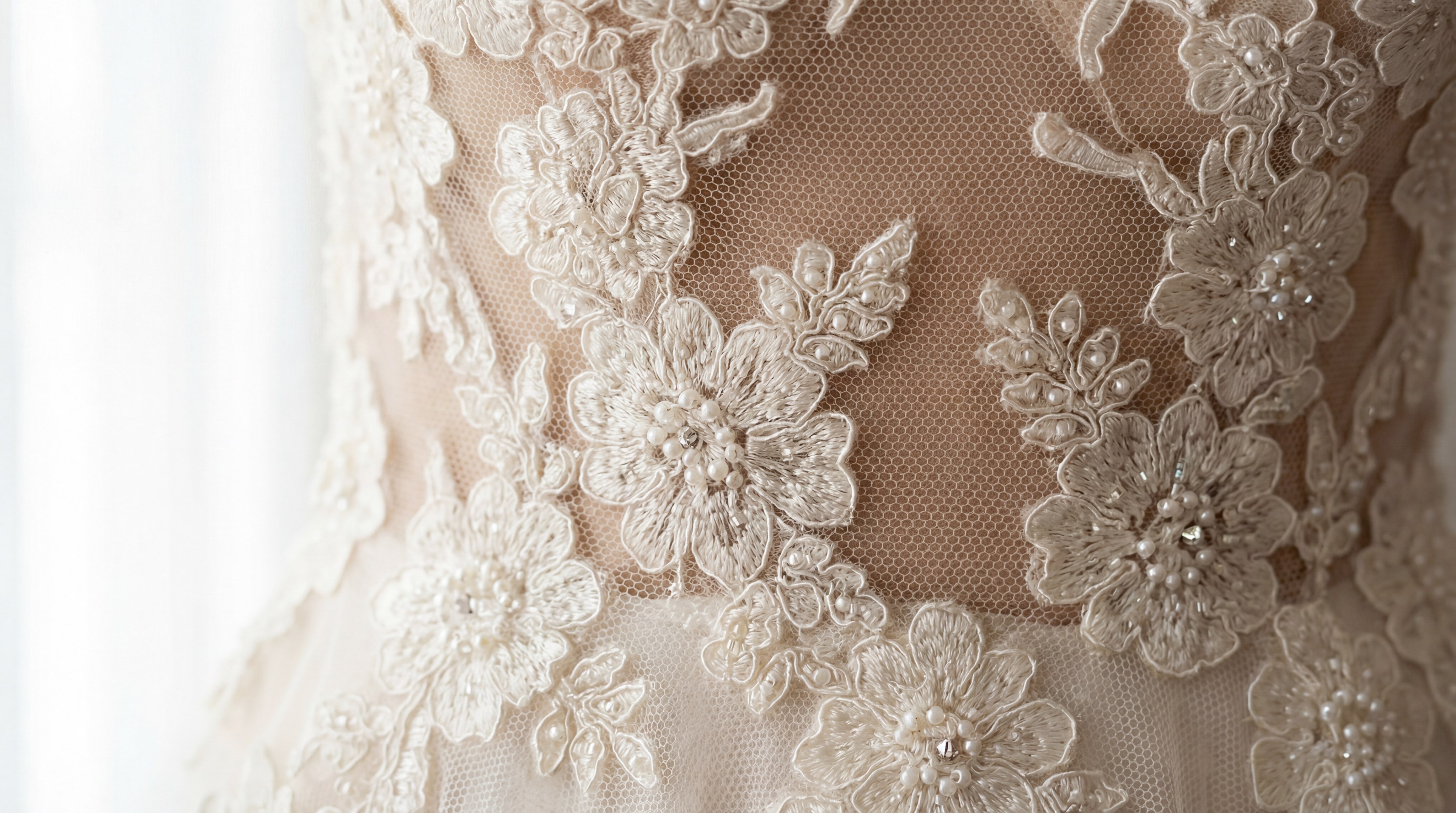
Bridal designers often ask where is mesh a fabric most effective, and the answer lies in the structural “ghosting” of high-end gowns. It serves as an invisible support system for intricate lace appliqués and heavy beadwork, creating the illusion of gems floating on skin. This “illusion mesh” is knitted with ultra-fine yarns to ensure it remains nearly imperceptible under photography lights.
Why is it the standard for veils?
Tulle, a specific variety of fine mesh, is the standard for veils because its hexagonal structure provides the necessary “loft” and stiffness. It holds its shape beautifully while remaining light enough to flow behind the bride.
Believe it or not:
- Holds voluminous shapes
- Extremely lightweight
- Doesn’t obscure hair details
- Easy to embellish
But wait, there’s more. The stiffness of the mesh can be adjusted during the finishing process to create either a soft, flowing drape or a crisp, structured silhouette.
Key Takeaway: In bridal wear, mesh acts as a structural foundation that provides invisible support for complex decorative elements.
| Mesh Type | Appearance | Use Case | |
|---|---|---|---|
| Illusion Mesh | Transparent/Nude | Bodice Support | |
| Bridal Tulle | Crisp/Hexagonal | Veils and Skirts |
The integration of mesh into luxury fashion demonstrates its ability to provide high tensile strength while remaining visually delicate.
Is mesh a fabric the best choice for summer?
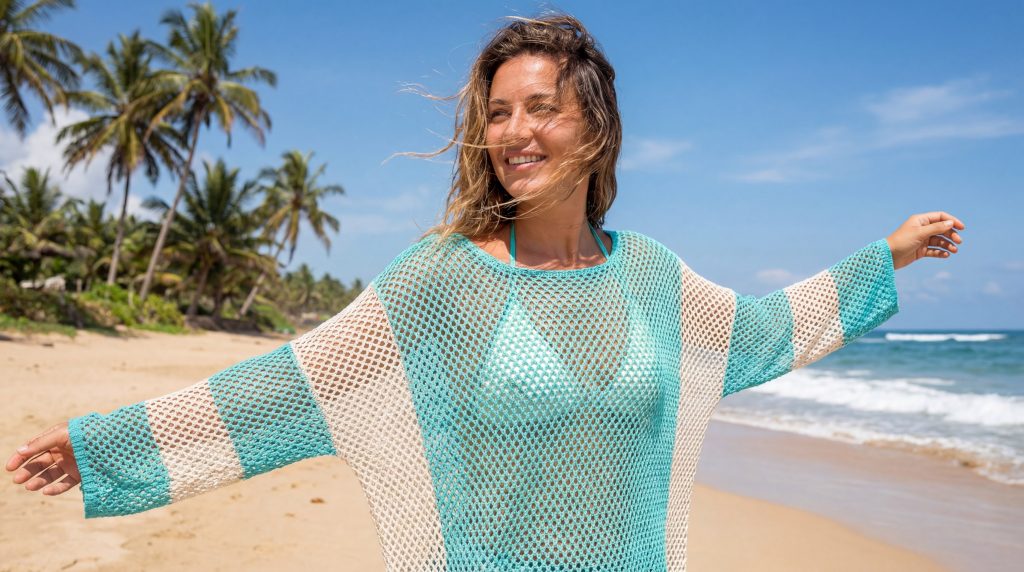
When temperatures rise, is mesh a fabric that provides the best relief? Absolutely, because its open-weave construction allows for maximum natural convection. Solid cotton or linen can become heavy when damp, but mesh allows moisture to evaporate almost instantly. This keeps the wearer feeling dry and cool even in humid coastal environments.
How does the airflow mechanism work?
Mesh works by minimizing the surface area of the fabric that actually touches the skin. This creates a pocket of moving air that constantly replaces body heat with cooler ambient air.
Think about this:
- Reduces skin-to-fabric contact
- Facilitates rapid evaporation
- Prevents heat trapping
- Offers lightweight sun protection
Here is the deal. The larger the holes in the mesh, the higher the airflow, which is why beach cover-ups often feature wide, decorative grid patterns.
Key Takeaway: Mesh is the superior summer textile because it prioritizes airflow and evaporation over thermal insulation.
| Weather Condition | Fabric Performance | Comfort Rating | |
|---|---|---|---|
| High Humidity | Excellent Evaporation | 10/10 | |
| Dry Heat | Constant Airflow | 9/10 |
The physics of mesh fabric naturally lends itself to cooling, making it an indispensable material for any warm-weather wardrobe.
What makes nylon mesh a fabric so resilient?
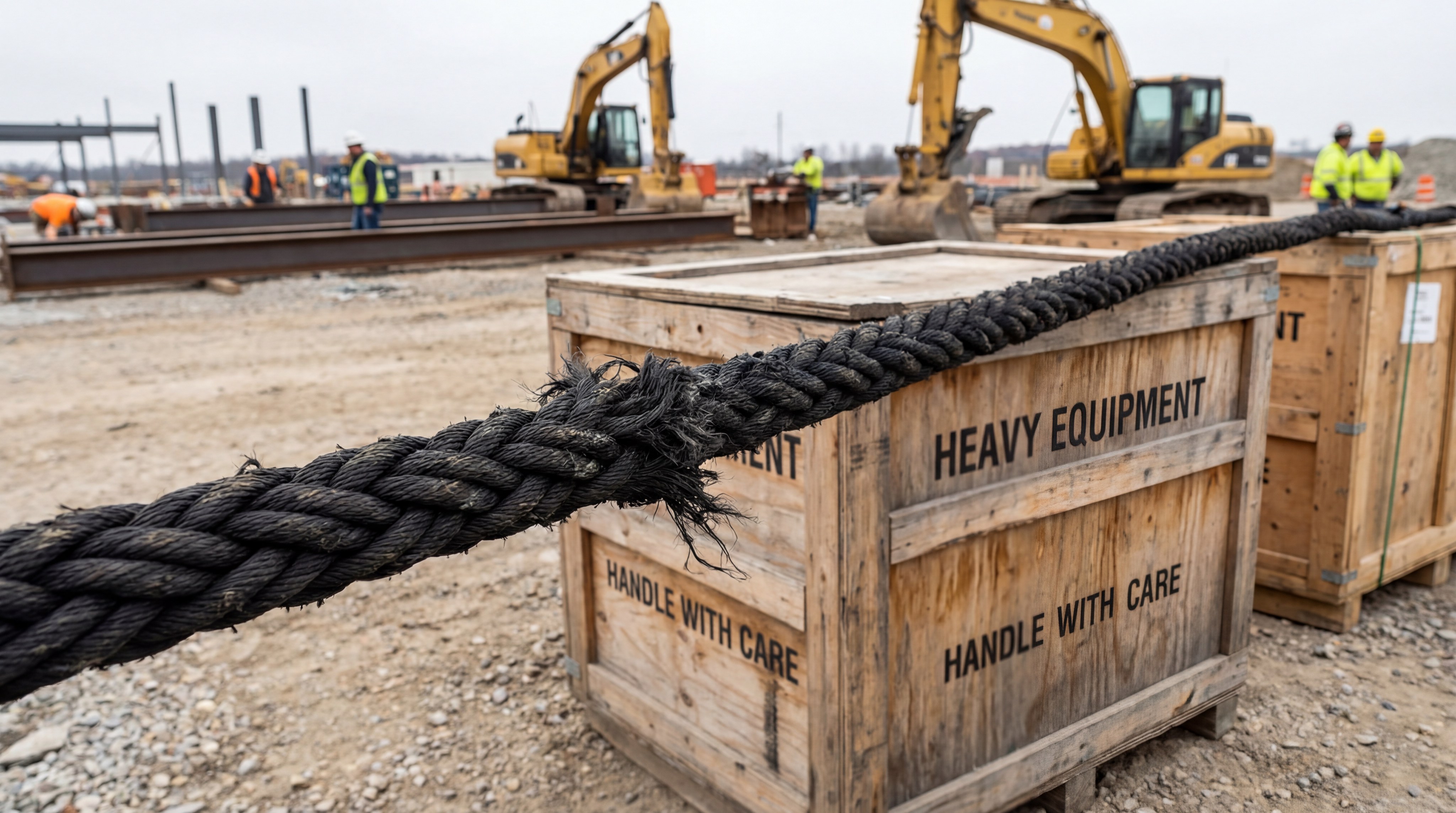
Nylon is the reason why is mesh a fabric capable of securing heavy cargo or surviving rugged outdoor use. Nylon fibers possess incredible tensile strength and a high degree of elasticity, allowing the mesh to stretch under load without breaking. This resilience is why industrial nets, backpacks, and safety equipment rely on nylon-based mesh structures.
Is it better for heavy-duty applications?
Nylon mesh outperforms most other materials when it comes to abrasion resistance and durability. It can withstand constant friction and harsh environmental exposure without the fibers thinning or snapping.
But that’s not all:
- High weight-to-strength ratio
- Excellent elastic recovery
- Resists chemical degradation
- Withstands high tension
Believe it or not, a thin nylon mesh net can support hundreds of pounds, making it a favorite for logistical and maritime operations.
Key Takeaway: The molecular structure of nylon gives the mesh an unmatched ability to endure physical stress and environmental wear.
| Material | Abrasion Resistance | Elasticity | |
|---|---|---|---|
| Nylon Mesh | Superior | High | |
| Cotton Mesh | Low | Minimal |
By choosing nylon mesh, industries ensure a longer lifespan for their products, reducing the need for frequent replacements.
Can polyester mesh a fabric manage moisture?
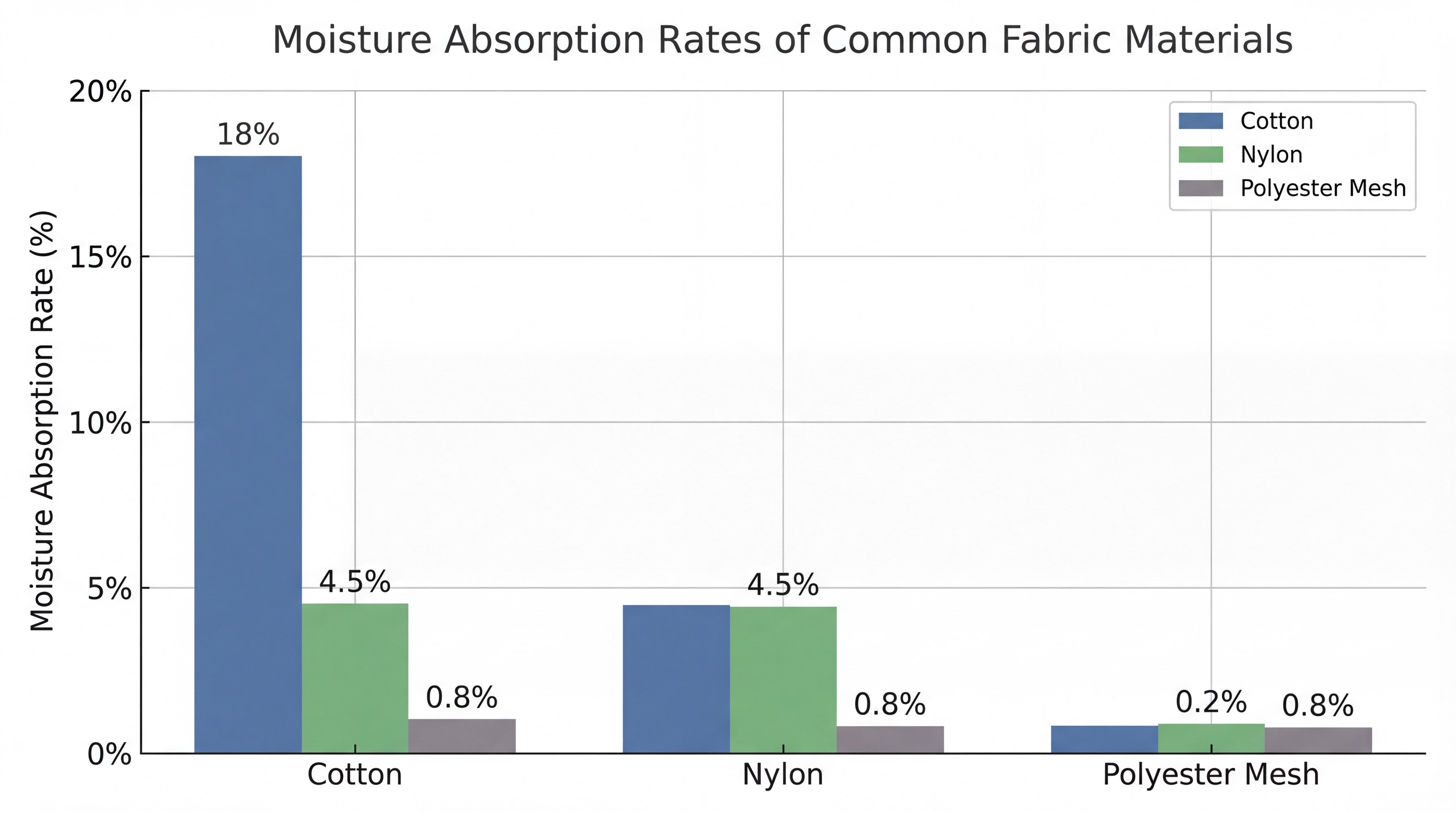
Yes, polyester is mesh a fabric that manages moisture with clinical efficiency because its fibers are naturally hydrophobic. Unlike cotton, which absorbs and holds water, polyester allows moisture to pass through its surface and evaporate into the air. This makes it the ideal material for hats, shoe linings, and outdoor gear that must stay dry.
Does it dry faster than natural fibers?
Because the fibers themselves do not soak up liquid, polyester mesh can dry in a fraction of the time it takes for natural textiles. This rapid-dry capability prevents the growth of mildew and bacteria in damp environments.
Here is the deal:
- Minimal water retention
- Quick-dry performance
- Inhibits mold growth
- Maintains weight when wet
Think about this: A polyester mesh hat will stay light even during a rainstorm, whereas a cotton cap would become heavy and uncomfortable.
Key Takeaway: Polyester mesh is the gold standard for moisture-wicking and quick-drying performance in technical apparel.
| Fabric Material | Water Absorption | Dry Time | |
|---|---|---|---|
| Polyester Mesh | < 1% | Fast | |
| Cotton | ~25% | Slow |
The data clearly indicates that polyester’s low absorption rate is the key driver behind its success in moisture-controlled environments.
Why is mesh a fabric ideal for technical filters?
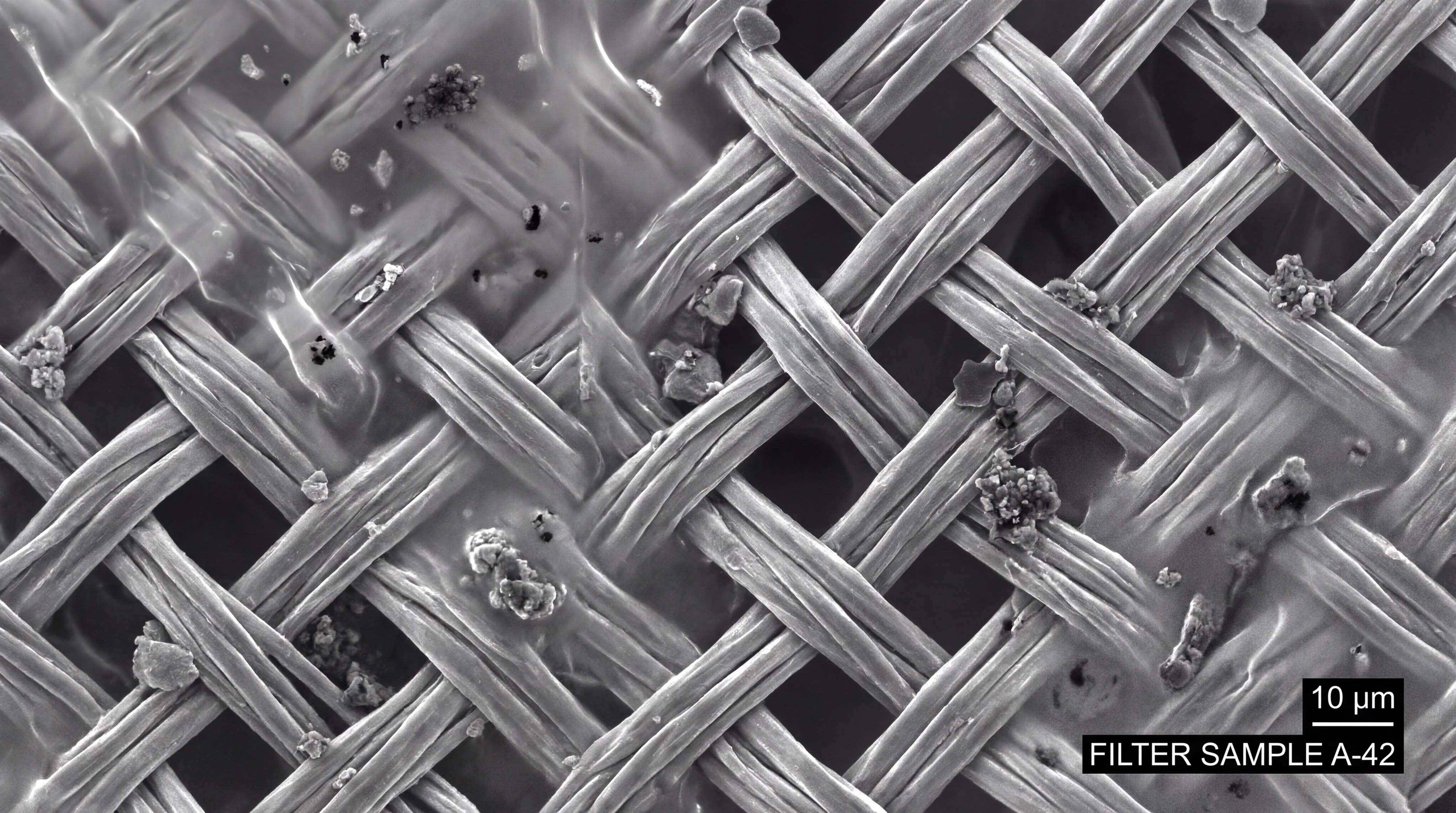
Engineers recognize that is mesh a fabric perfect for filtration because the pore size can be controlled with microscopic precision. In laboratory and industrial settings, mesh filters are used to separate particles from liquids or gases with absolute consistency. The rigid structure of woven technical mesh ensures that the holes do not deform under pressure, maintaining the integrity of the filtration process.
How precise can the filtration be?
Precision-woven mesh can capture particles as small as a few microns, making it essential for medical and scientific applications. The uniformity of the grid allows for a predictable flow rate, which is critical for sensitive equipment.
But wait, there’s more:
- Micron-level precision
- Consistent flow dynamics
- Easy to clean and reuse
- High chemical resistance
Believe it or not, these filters are often found in life-saving medical devices where even the smallest contamination must be removed.
Key Takeaway: Technical mesh provides the exactitude required for high-stakes filtration in medical, industrial, and scientific fields.
| Filter Grade | Pore Consistency | Application | |
|---|---|---|---|
| Medical Grade | Ultra-High | Blood Filtration | |
| Industrial Grade | High | Water Treatment |
The analytical conclusion is that the manufacturing stability of mesh makes it the only viable option for precision particle separation.
How do you care for mesh a fabric properly?
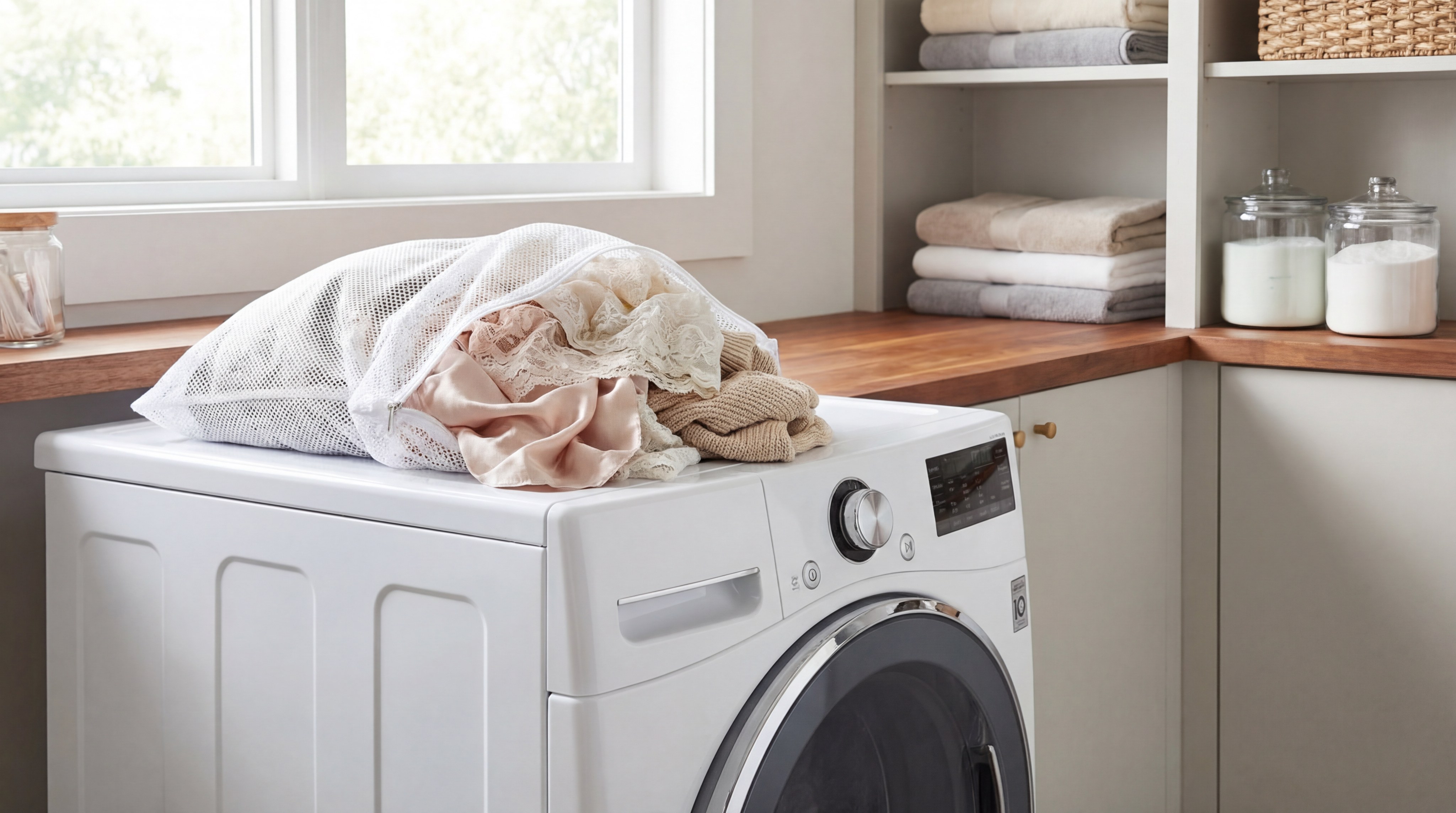
Knowing how to wash is mesh a fabric properly is the secret to preventing the delicate holes from snagging on other items. Because mesh is essentially a series of loops or woven threads, it is susceptible to catching on zippers, hooks, or rough textures in the wash. Using a dedicated laundry bag and a gentle cycle is the best way to maintain the fabric’s appearance for years.
Should you always air dry mesh?
While most mesh is made of durable synthetics, high heat in a dryer can cause the thin fibers to melt or lose their elasticity. Air drying is the safest method to ensure the garment retains its original shape and “spring.”
The truth is:
- Prevents heat damage
- Maintains elastic memory
- Reduces friction wear
- Extends fabric lifespan
Here is the deal. Mesh dries so quickly on its own that the mechanical heat of a dryer is usually unnecessary anyway.
Key Takeaway: Protecting mesh from high heat and mechanical friction is essential for maintaining its structural and aesthetic quality.
| Care Step | Recommendation | Reason | |
|---|---|---|---|
| Washing | Use Mesh Bag | Prevent Snagging | |
| Drying | Flat Air Dry | Avoid Fiber Melt |
Analysis shows that the majority of mesh damage occurs during improper drying, making low-heat care the most important factor in longevity.
Which mesh a fabric is best for home DIY?

Beginners often wonder which is mesh a fabric most suitable for their first sewing project. For DIY enthusiasts, a stable “utility mesh” or a stiff “deco mesh” is often easier to handle than the highly elastic “power mesh” used in professional apparel. These stiffer varieties don’t shift as much under the sewing machine foot, allowing for cleaner seams and easier construction.
Is utility mesh better for beginner projects?
Utility mesh is an excellent starting point because it offers a balance of structure and breathability for items like tote bags or organizers. It doesn’t require specialized needles or complex tension settings, making it very user-friendly.
Believe it or not:
- Resists slipping while sewing
- Compatible with standard thread
- Holds its shape during cutting
- Available in vibrant colors
But that’s not all. You can even use a standard zigzag stitch to finish the edges, providing a professional look without needing a serger.
Key Takeaway: Stiffer, low-stretch mesh varieties are the most accessible choice for DIYers looking to experiment with open-weave textiles.
| Project Type | Recommended Mesh | Skill Level | |
|---|---|---|---|
| Market Bag | Heavy Utility Mesh | Beginner | |
| Custom Apparel | Stretch Power Mesh | Advanced |
Choosing a mesh that matches your machine’s capabilities is the first step toward a successful and frustration-free DIY project.
Master the Art of Mesh Design
Finding a material that balances transparency, breathability, and strength is no longer a challenge. We have explored how mesh provides the structural foundation for everything from luxury bridal gowns to heavy-duty industrial nets. Our brand vision is to empower creators with high-quality textiles that push the boundaries of what’s possible in design. If you’re ready to start your next project or have technical questions about our collections, contact us today to find the perfect solution for your needs.
FAQ
- Can I iron mesh fabric to remove wrinkles?Only use a very low heat setting or a steamer, as high temperatures can easily melt the synthetic fibers.
- What’s the best way to cut mesh without it shifting?Using a rotary cutter and a weighted cutting mat is the most effective way to keep the fabric stable and ensure clean edges.
- How do I know if a mesh is strong enough for a backpack?Check the denier rating of the nylon or polyester fibers; a higher denier indicates a thicker, more tear-resistant material.
- Can I use regular sewing needles for stretch mesh?A ballpoint or stretch needle is required to prevent skipped stitches and to avoid puncturing the delicate fibers.
- What’s the best mesh for outdoor patio furniture?Vinyl-coated polyester mesh is the most durable choice due to its extreme UV resistance and weatherproofing.