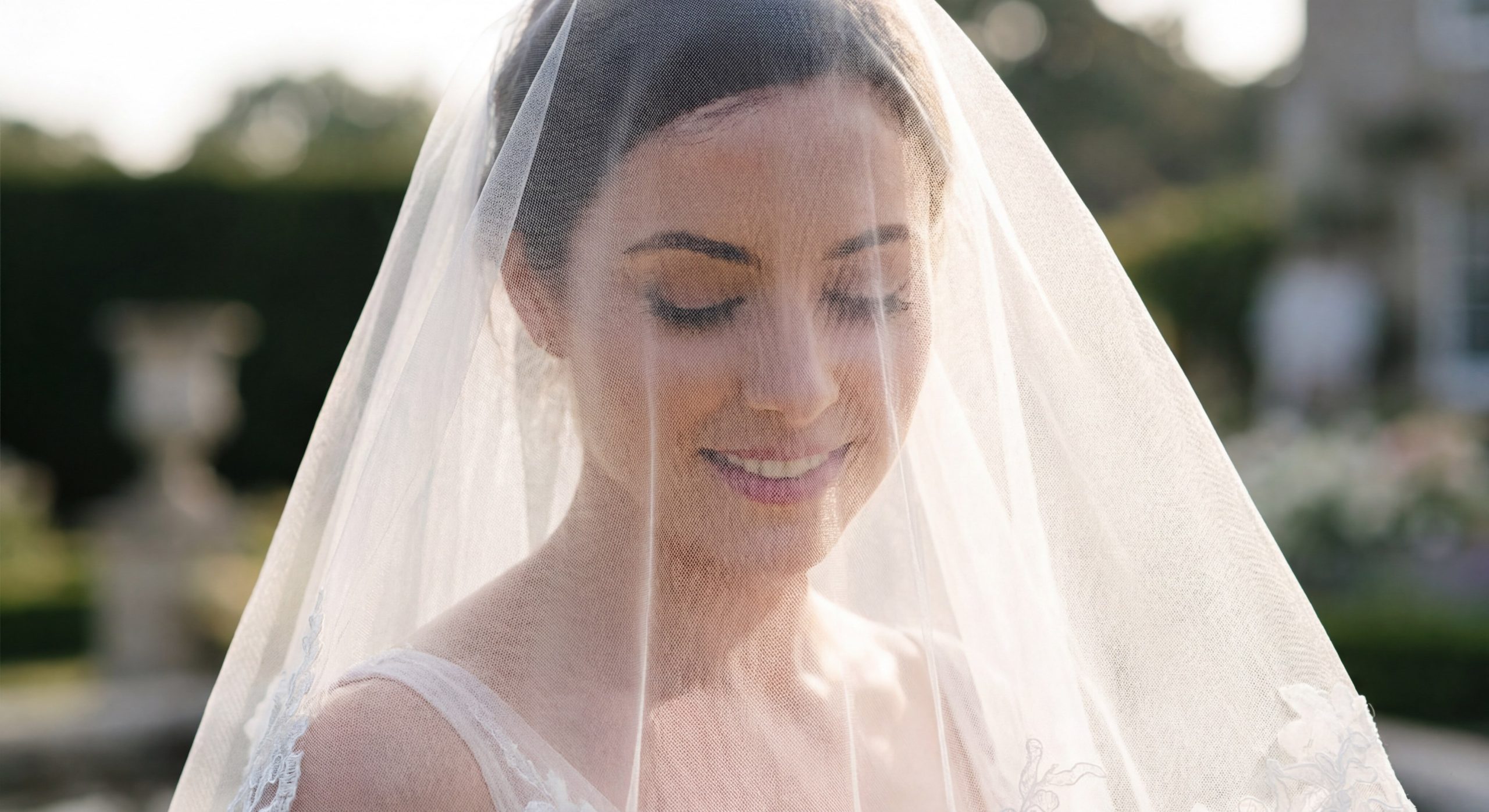
Imagine you are standing in your bridal suite, your hair is perfectly coiffed, and your gown fits like a second skin. You reach for your veil, but as you drape it over your head, you realize it is stiff, scratchy, and completely obscures the delicate lace on your dress’s back. Choosing the wrong material can turn a romantic accessory into a bulky distraction that ruins your photos and your comfort. This guide provides the expert insight you need into bridal veil fabric so you can select a textile that complements your gown’s silhouette and movement perfectly.
What is the most common bridal veil fabric choice?
Bridal illusion tulle is the most popular choice for modern weddings because of its fine mesh and soft-focus finish. This bridal veil fabric is crafted from nylon or polyester, offering a lightweight feel that doesn’t weigh down your hairstyle. It provides enough body to hold a shape while remaining transparent enough to show off dress details. You will find this material used in everything from simple blushers to dramatic cathedral-length designs.
Why do designers prefer illusion tulle?
Designers gravitate toward this material because it offers the perfect balance of price and performance.
- It does not fray when cut, allowing for raw edges.
- It captures light beautifully without being overly shiny.
- It is available in various widths for maximum versatility.
Think about it. Most of the iconic bridal looks you see on social media utilize this specific mesh to create that “ethereal glow” effect.
Is nylon better than polyester for veils?
You might be wondering if the fiber content actually changes the look of your accessory.
- Nylon tulle is generally softer and has a better drape.
- Polyester options are often more budget-friendly but can be slightly stiffer.
Key Takeaway: Illusion tulle remains the industry standard for its combination of sheer transparency and structural integrity.
| Feature | Nylon Illusion Tulle | Polyester Tulle | |
|---|---|---|---|
| Texture | Very Soft | Moderate | |
| Durability | High | High | |
| Common Use | Luxury Veils | Budget-Friendly Options |
This comparison shows that while both are durable, nylon is superior for brides seeking a professional, soft-to-the-touch finish.
Why is silk considered a luxury bridal veil fabric?
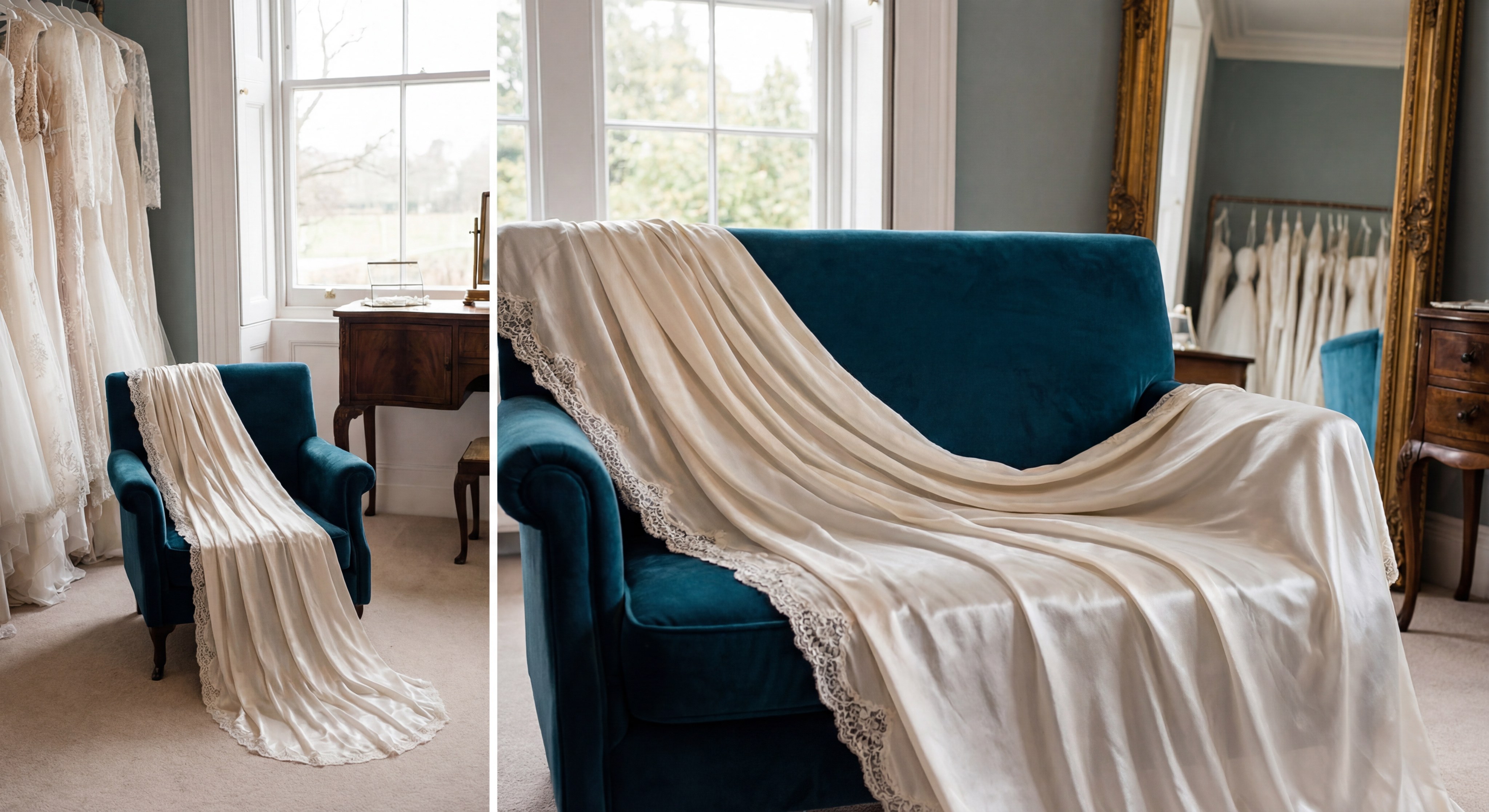
Silk is considered the ultimate luxury because it offers a liquid-like drape and an organic feel that synthetic fibers cannot replicate. When you choose silk as your bridal veil fabric, you are opting for a textile that is incredibly soft against the skin and moves naturally with your body. It is often much narrower than synthetic tulle, which gives it a more columnar, sophisticated silhouette. Because it is a natural fiber, it breathes better than nylon or polyester alternatives.
What is the difference between silk tulle and silk organza?
But here is the best part: you have options within the silk family depending on your desired volume.
- Silk tulle is extremely floppy and drapes straight down.
- Silk organza is crisp and holds its own weight.
- Both offer a matte-to-subtle luster that looks expensive in person.
How does silk behave in outdoor settings?
You might be wondering: will a silk veil fly away in the wind?
- It is heavier than synthetic mesh, so it stays closer to the body.
- It can snag easily on jewelry or outdoor foliage.
Key Takeaway: Silk is the premier choice for high-end, romantic looks, though it requires more careful handling than synthetics.
| Material Type | Drape Quality | Price Point | |
|---|---|---|---|
| Silk Tulle | Fluid / Heavy | Premium | |
| Silk Organza | Architectural / Crisp | Premium |
The choice between these two silk variants depends entirely on whether you want a soft flow or a structured shape.
Can lace be used as a primary bridal veil fabric?
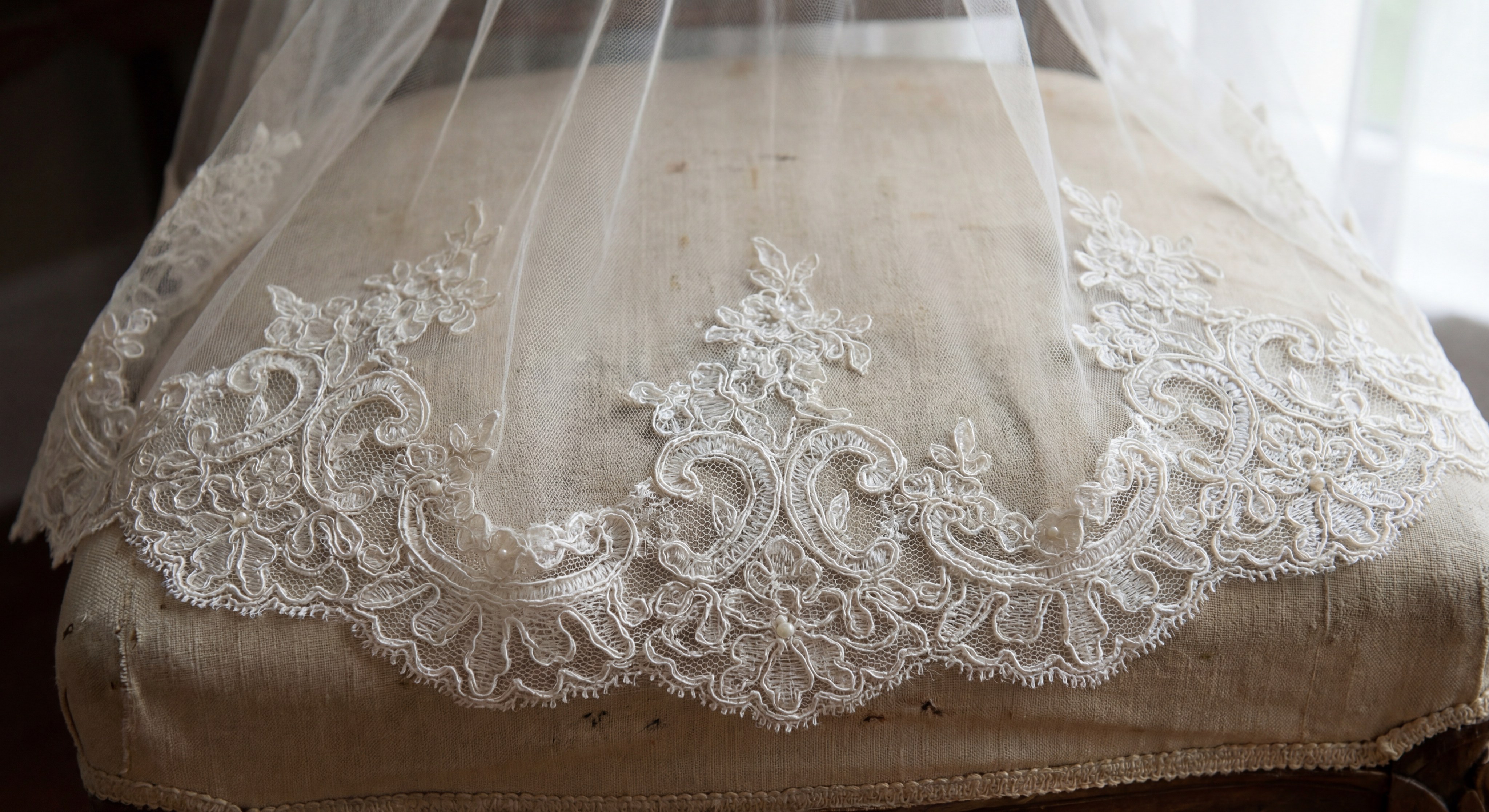
Lace can serve as the primary material for a veil, usually in the form of an all-over patterned mesh or an embroidered tulle base. Utilizing lace as your bridal veil fabric creates a classic, heirloom aesthetic that pairs beautifully with simple, unadorned gowns. These veils are typically heavier than plain tulle and provide a much more opaque look. They are often finished with scalloped edges that frame the face and shoulders elegantly.
Which lace styles are most popular?
Think about it. The type of lace you choose dictates the entire vibe of your wedding ensemble.
- Chantilly lace is flat and delicate for a vintage feel.
- Alençon lace is corded and bold for a traditional look.
- Guipure lace is heavy and geometric for modern styles.
Can you mix lace with other fabrics?
But wait, there’s more. Most “lace veils” are actually a hybrid of two materials.
- A tulle base provides the transparency.
- Lace appliqués are sewn onto the edges or scattered throughout.
Key Takeaway: Lace adds texture and weight, making it a perfect choice for brides who want their veil to be a focal point.
| Lace Style | Texture | Visual Weight | |
|---|---|---|---|
| Chantilly | Smooth | Light | |
| Alençon | Raised | Heavy |
Choosing the right lace requires balancing the intricacies of your dress with the pattern of the veil.
Is chiffon a practical bridal veil fabric for modern weddings?
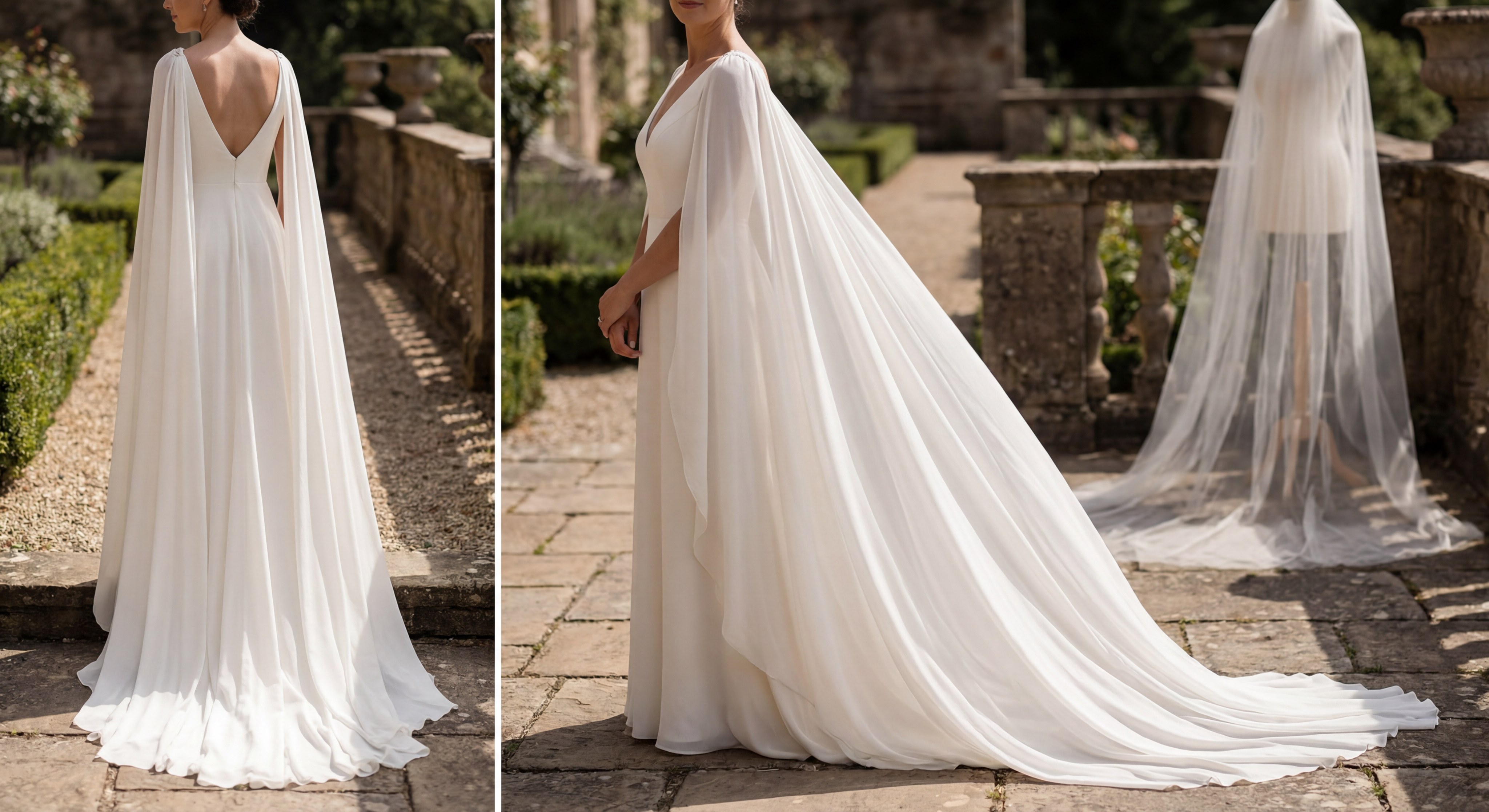
Chiffon is an excellent choice for brides seeking a non-traditional, opaque look that offers a dramatic, sweeping drape. This bridal veil fabric is frequently used for “cape veils” or bohemian styles where the material flows from the shoulders rather than the head. It is entirely matte and has a much tighter weave than tulle, meaning it is not transparent. Chiffon creates a beautiful “waterfall” effect as you walk down the aisle.
Does chiffon work for cathedral lengths?
You might be wondering: is chiffon too heavy for a long veil?
- It is significantly heavier than tulle.
- It requires a very secure attachment to avoid pulling.
- It drapes in beautiful, thick folds that look stunning in outdoor photography.
Is chiffon difficult to maintain?
Here is the thing: chiffon is surprisingly durable compared to fine mesh.
- It resists snags much better than silk or tulle.
- It can be steamed easily to remove travel wrinkles.
Key Takeaway: Chiffon is the ultimate bohemian material, offering opacity and a unique “weighty” elegance.
| Property | Chiffon | Standard Tulle | |
|---|---|---|---|
| Transparency | Low (Opaque) | High (Sheer) | |
| Movement | Swaying / Heavy | Bouncy / Light |
Chiffon provides a distinct visual alternative for brides who find tulle too “poofy” or traditional.
How do different textures affect bridal veil fabric?
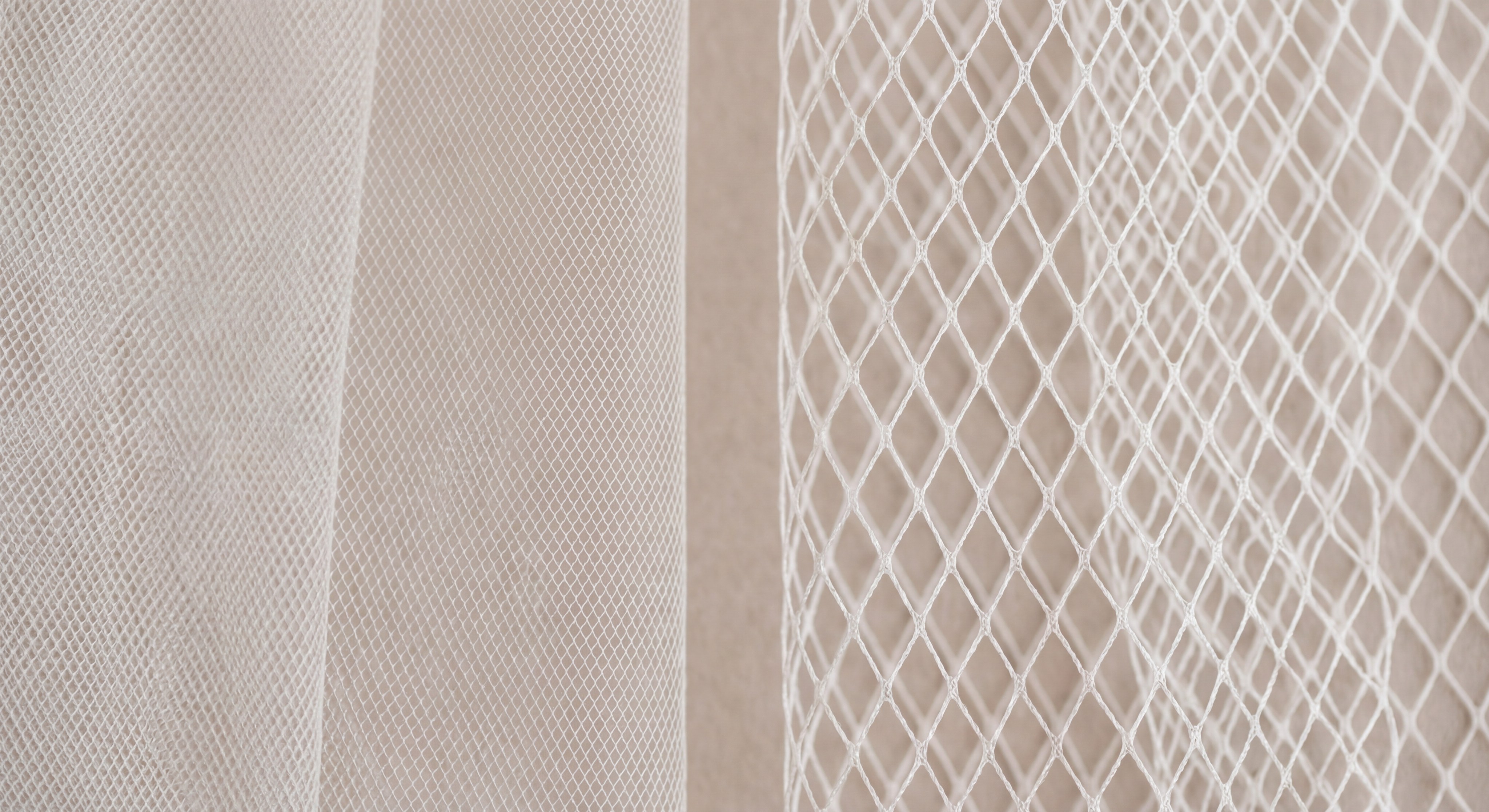
Texture determines how light reflects off the surface and how much of your dress remains visible through the mesh. When selecting your bridal veil fabric , you must consider whether you want a matte finish that blends in or a shimmering texture that stands out. Coarser textures generally provide more structure and volume, while fine, smooth textures offer a soft, romantic drape. The size of the “holes” in the mesh also impacts the overall texture and clarity.
What is the difference between soft and stiff textures?
But here is the best part: the texture often dictates the “pouf” factor of your veil.
- Soft textures like English net fall close to the body.
- Stiff textures like organza stand away from the head.
- Medium textures like illusion tulle can be manipulated for both looks.
Does texture change the color perception?
Think about it. A textured fabric catches more light, which can make “Diamond White” look brighter than a smooth fabric in the same shade.
- High-shine textures can look “cheap” in flash photography.
- Matte textures are generally safer for all lighting conditions.
Key Takeaway: Texture is the invisible hand that guides the volume and light-play of your bridal silhouette.
| Texture Type | Hole Size | Volume Level | |
|---|---|---|---|
| Fine Mesh | Microscopic | Low-Medium | |
| Netting | Large/Visible | High |
Understanding these tactile differences allows you to match the veil’s “energy” to the fabric of your gown.
What bridal veil fabric works best for cathedral lengths?
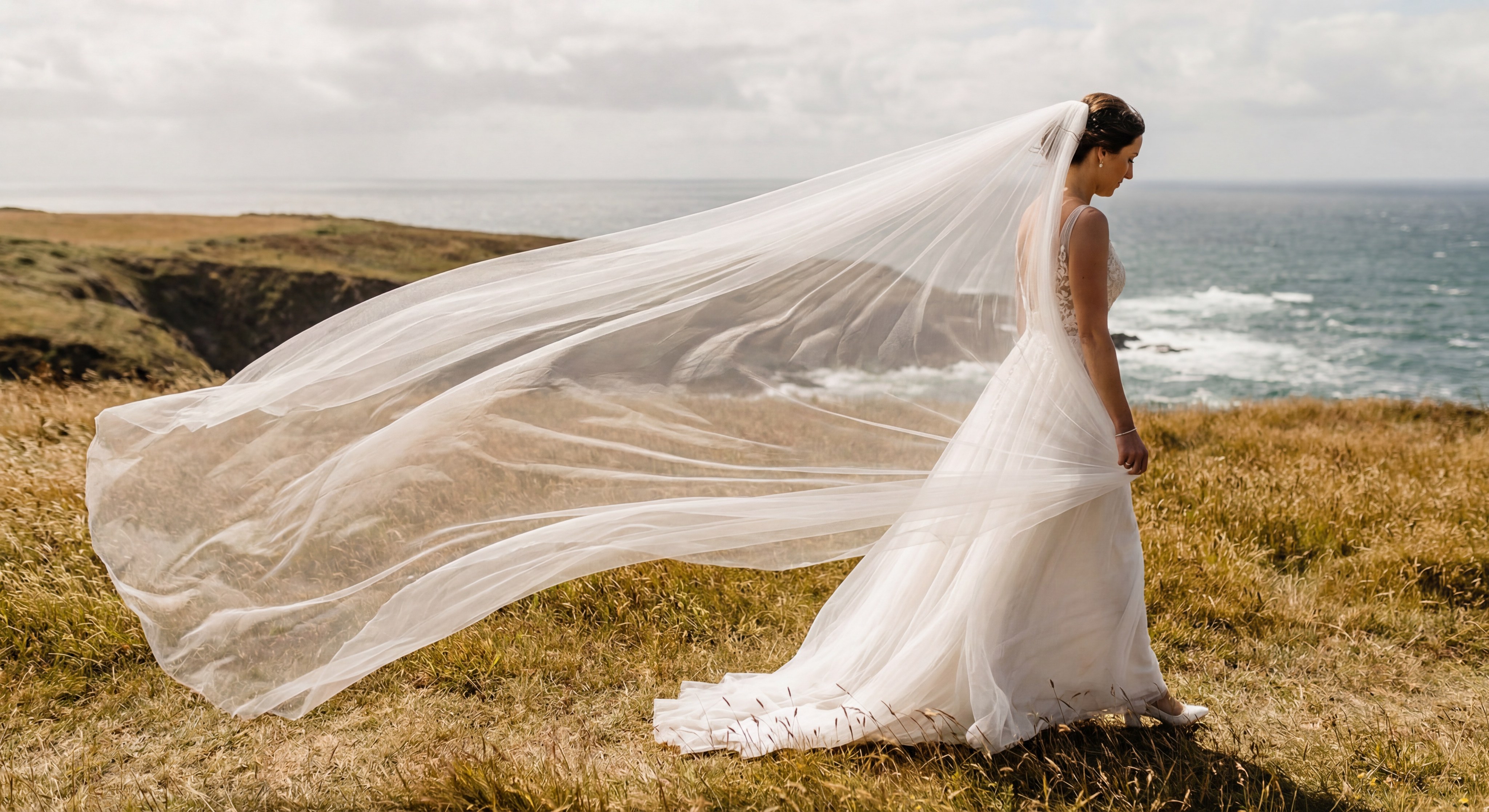
Cathedral veils require a lightweight yet durable material like bridal illusion tulle to ensure they can trail behind the bride without snagging or becoming too heavy. Choosing the right bridal veil fabric for a 120-inch veil is critical because the cumulative weight of the material can pull on your hair. Fine synthetic tulles are ideal because they catch the air gracefully, creating those iconic “wind-blown” photos. They also offer enough transparency so that your gown’s train is still the star of the show.
Can you use English net for long veils?
You might be wondering: is English net a viable option for cathedral lengths?
- It is much heavier than illusion tulle.
- It provides a beautiful, vintage “drop” that falls straight down.
- It is better suited for indoor ceremonies where wind isn’t a factor.
How do you prevent long veils from tearing?
The best part? Modern synthetic tulles are surprisingly strong.
- Look for “hexagonal” weaves which distribute tension evenly.
- Avoid ultra-fine silk tulle for long outdoor walks.
Key Takeaway: For maximum drama with minimum weight, lightweight synthetic tulle is the gold standard for cathedral styles.
| Veil Length | Ideal Fabric Weight | Recommended Width | |
|---|---|---|---|
| Chapel (90″) | Light | 72″ – 108″ | |
| Cathedral (120″) | Ultra-Light | 108″ |
This data confirms that as length increases, keeping the fabric weight low becomes the primary technical priority.
Which bridal veil fabric creates a vintage aesthetic?
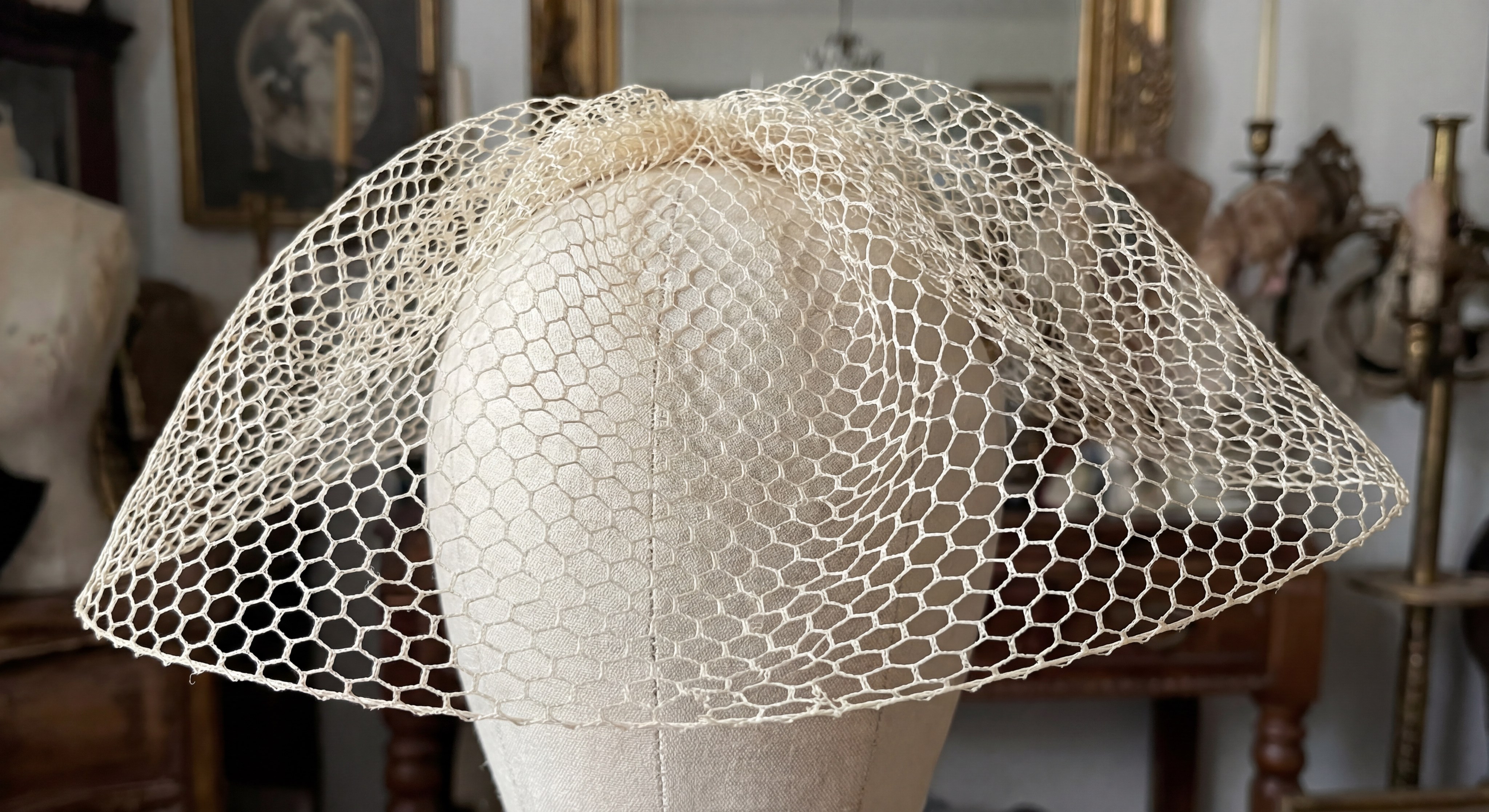
Russian netting, often called birdcage veiling, is the go-to bridal veil fabric for creating a 1940s or 1950s vintage look. This material features a very large, open diamond weave that is much stiffer than standard tulle. It is designed to be sculpted and pinned close to the face, often covering just the eyes or chin. Because of its structural integrity, it holds its shape perfectly without the need for additional stiffening agents.
What is the difference between Russian and French net?
But wait, there’s more. Not all vintage netting is created equal.
- Russian net is the stiffest and has the largest holes.
- French net is slightly softer and more delicate.
- Both provide a bold, geometric look that standard tulle lacks.
How do you style a birdcage veil?
Think about it. A birdcage veil is as much a piece of millinery as it is a veil.
- It pairs perfectly with tea-length dresses.
- It is ideal for civil ceremonies or courthouse weddings.
Key Takeaway: If you want a “retro” or “chic” vibe, structured netting is the only way to achieve that specific silhouette.
| Netting Type | Stiffness | Visual Pattern | |
|---|---|---|---|
| Russian | Very High | Large Diamonds | |
| French | Medium | Fine Mesh |
The choice here is between a bold, architectural statement and a softer, vintage-inspired touch.
How do you calculate yardage for bridal veil fabric?
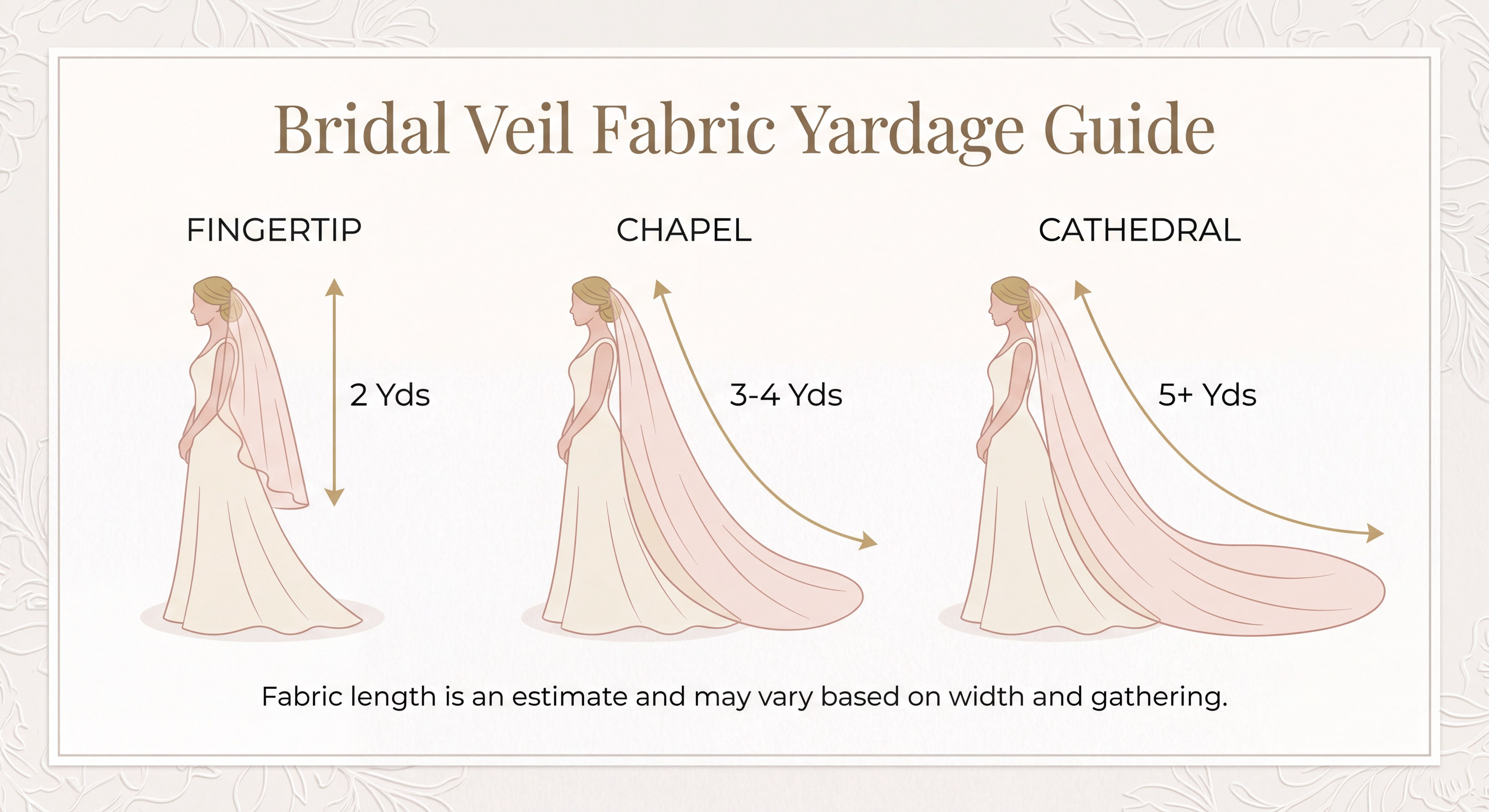
To calculate yardage, you must first determine your desired length (from the comb to the end) and add at least 10% extra for trimming and errors. When purchasing bridal veil fabric, standard widths range from 54 inches to 108 inches. A wider fabric will create more “gathering” at the comb, resulting in a fuller, more voluminous look. For a simple fingertip veil, you generally need about 1.5 to 2 yards, while a cathedral veil will require 4 to 5 yards of material.
How does width affect the final look?
Here is the thing: width is just as important as length.
- 54″ width is “slim” and shows off the back of the dress.
- 72″ width is “medium” and covers the shoulders.
- 108″ width is “extra full” and creates a dramatic halo effect.
Should you buy extra fabric?
You might be wondering: do I really need a “buffer”?
- Mistakes in cutting tulle are hard to hide.
- Extra fabric is useful for testing your sewing machine tension.
Key Takeaway: Always buy slightly more than your measurements suggest to allow for the natural “take-up” of the fabric when gathered.
| Veil Style | Yardage Needed | Recommended Width | |
|---|---|---|---|
| Fingertip | 2 Yards | 72″ | |
| Cathedral | 5 Yards | 108″ |
Using these estimates ensures you have enough material to achieve the professional level of fullness seen in designer veils.
What is the proper way to steam bridal veil fabric?
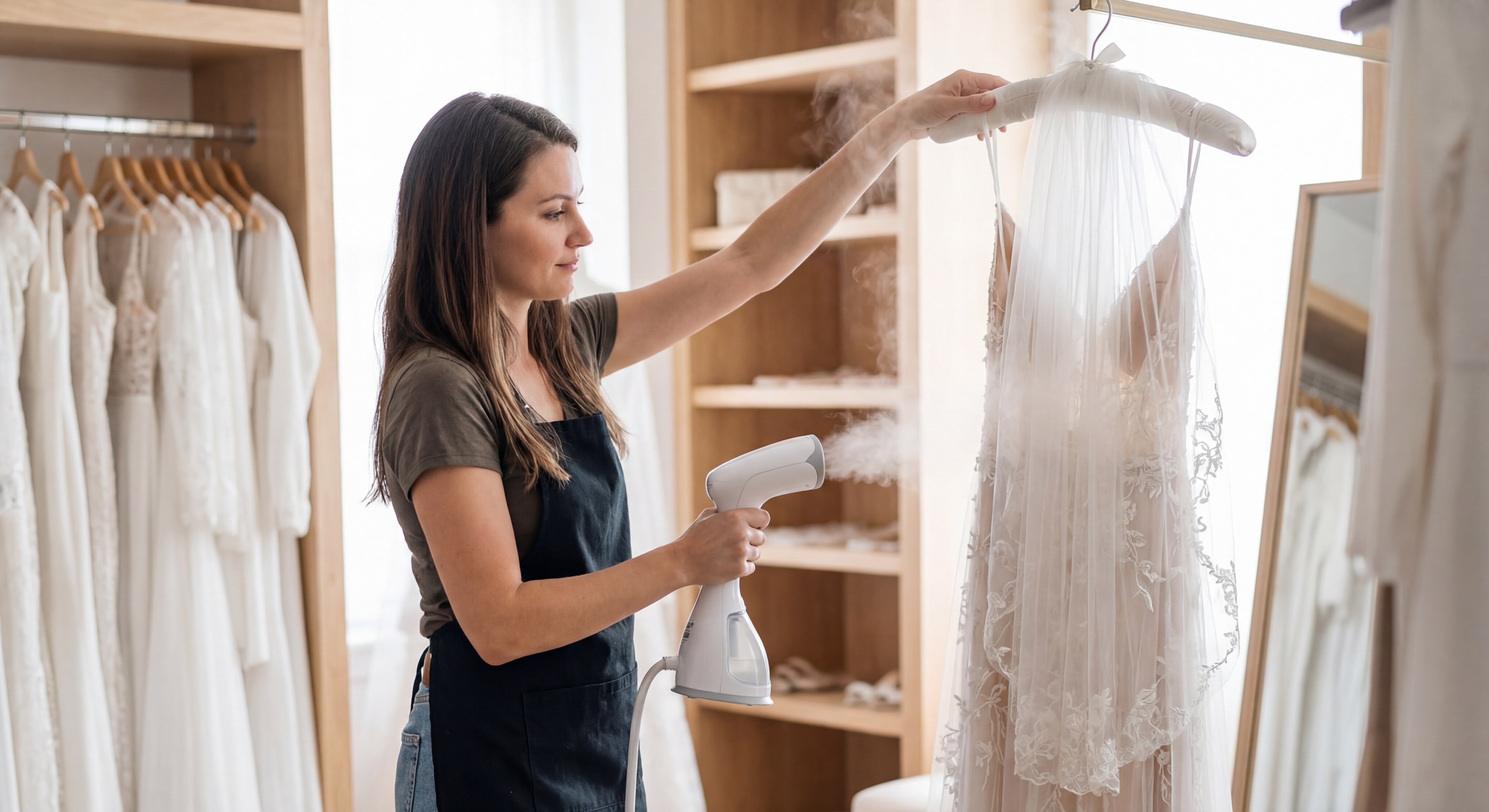
The proper way to remove wrinkles from your veil is to use a handheld steamer from a distance of at least 6 inches to avoid melting the delicate fibers. This bridal veil fabric is almost always made of synthetic materials that can melt instantly if touched by a hot iron. You should hang the veil vertically by its comb before starting and allow the steam to penetrate the mesh naturally. For stubborn creases, you can gently tug on the bottom of the veil while steaming to encourage the fabric to relax.
Can you steam all veil types?
But here is the best part: steaming is the safest method for almost every bridal textile.
- Silk tulle should be steamed very carefully to avoid water spotting.
- Synthetic tulle is very responsive to low-heat steam.
- Lace borders should be steamed from the back to protect the embroidery.
What if you don’t have a steamer?
Think about it. You can achieve a similar effect in a pinch without professional equipment.
- Hang the veil in a bathroom while a hot shower is running.
- Let it sit for 20 minutes in the steam, then hang it in a cool room.
Key Takeaway: Never use a traditional iron; gentle steam is the only safe way to restore the drape of your veil.
| Material | Heat Sensitivity | Steaming Ease | |
|---|---|---|---|
| Synthetic Tulle | High | Very Easy | |
| Silk Tulle | Medium | Moderate |
Proper care ensures that your fabric looks fresh and fluid rather than crushed and static on your wedding day.
How does transparency vary in bridal veil fabric?
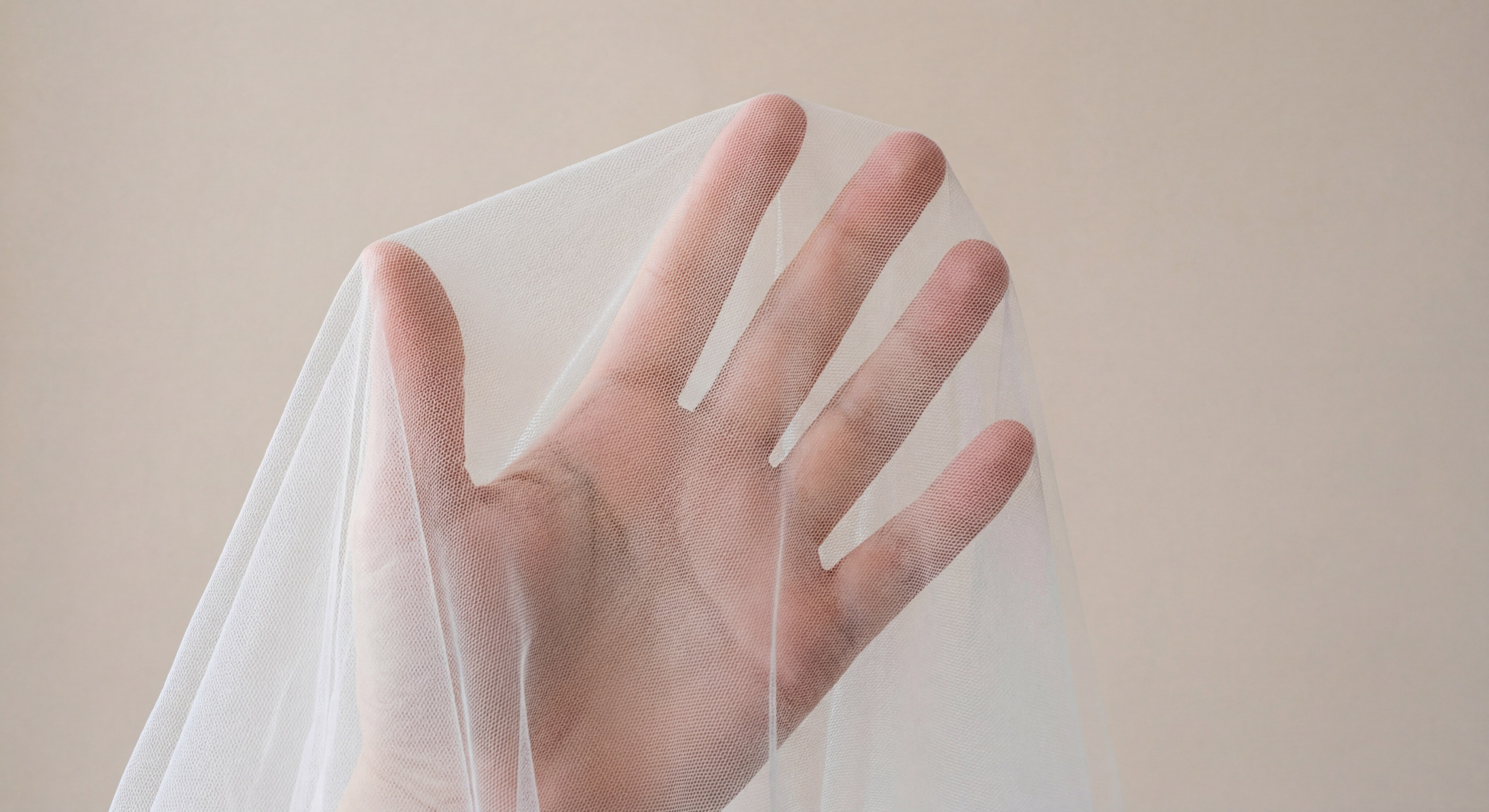
Transparency varies based on the denier of the thread and the density of the weave, with single-layer illusion tulle being the most transparent option. When evaluating bridal veil fabric, you must decide how much of your hairstyle and dress back you want to remain visible. Layering fabrics will significantly decrease transparency; a two-tier veil will appear much more “white” or “ivory” than a single-tier version. Darker skin tones or highly detailed dress bodices often require higher transparency to maintain a balanced look.
How do layers impact color?
But wait, there’s more. Every layer of mesh acts like a filter.
- One layer is nearly invisible.
- Two layers begin to hide the “skin” or dress color underneath.
- Three or more layers create an opaque, cloud-like effect.
Is “sheer” always better?
You might be wondering: why would anyone want a less transparent veil?
- Lower transparency provides a better “blusher” effect for traditional ceremonies.
- It hides imperfections or tan lines on the shoulders.
Key Takeaway: Transparency is a tool you can use to either highlight your gown or create a traditional, modest “bridal glow.”
| Fabric Type | Transparency Level | Best Use | |
|---|---|---|---|
| Illusion Tulle | 90% | Showing off dress details | |
| English Net | 70% | Vintage/Heirloom looks | |
| Chiffon | 10% | Opaque/Modern capes |
Choosing the right transparency ensures that your veil enhances your overall aesthetic rather than clashing with the intricate details of your gown.
FAQs
Can I wash my veil at home?Yes, but only if it is synthetic. You should hand-wash synthetic tulle in cold water with a very mild detergent, then hang it to air dry, but silk or lace veils should always be taken to a professional dry cleaner who specializes in bridal wear.
Will my veil snag on my sequins?It is a common problem. Fine bridal mesh is very prone to catching on loose beads or sharp sequins, so you should test your veil with your dress during a fitting to see if you need a smoother fabric like chiffon.
Can I dye a veil to match an off-white dress?Yes, you can, but proceed with caution. Synthetic fabrics require specialized dyes and high heat, which can damage the mesh, so it is usually better to purchase the fabric in the correct shade of ivory or champagne from the start.
How do I stop my veil from being static?Static electricity can make a veil cling to your face or dress. You can lightly mist the underside of the fabric with a static-dissipating spray or even a very light layer of hairspray from a distance to keep the fibers separated.
Can I use regular “craft” tulle for a veil?No, you really shouldn’t. Craft tulle is much stiffer, scratchier, and has a larger hex pattern that looks very different from the soft, professional-grade mesh used by bridal designers.
Finding the perfect fabric is the secret to a veil that feels as good as it looks. Whether you desire the airy lightness of illusion tulle or the dramatic presence of silk, your choice will define your bridal silhouette for years to come in your wedding portraits. At Tullemesh, we are dedicated to providing the highest quality textiles to ensure your walk down the aisle is nothing short of breathtaking. If you need expert guidance on selecting the right mesh for your custom design, contact us today . Our vision is to empower every bride and designer with the premium materials needed to create timeless, beautiful memories.