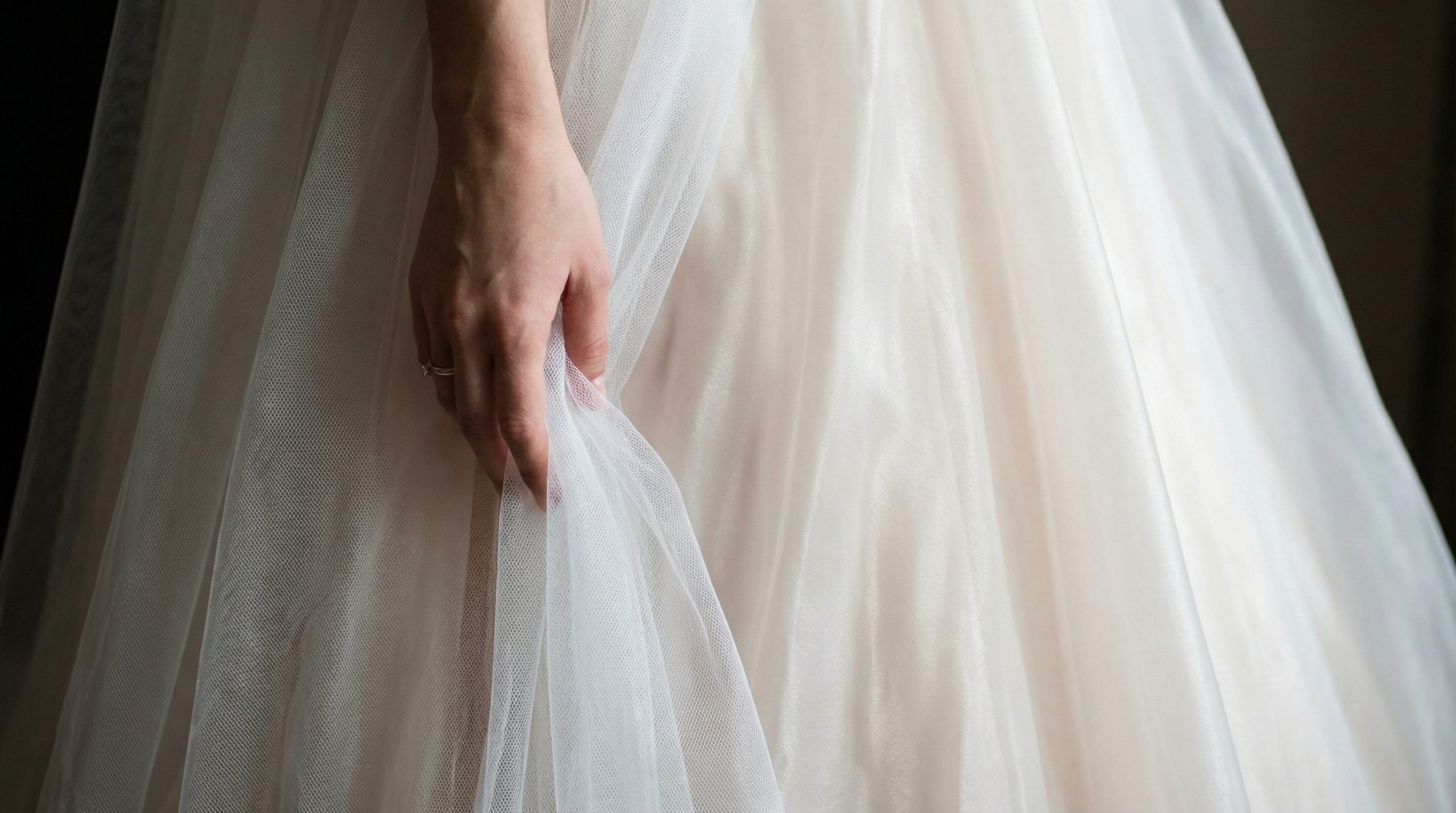
Choosing between tulle, organza, and chiffon depends on whether you desire ethereal volume, architectural structure, or liquid-like drape. Imagine finding the perfect gown silhouette only to realize the fabric feels stiff or looks flat in photos. This mismatch can turn your dream look into a heavy, uncomfortable burden on your big day. By understanding the nuances of organza fabric vs tulle , you can select the material that perfectly aligns with your bridal vision.
What is the main organza fabric vs tulle difference?
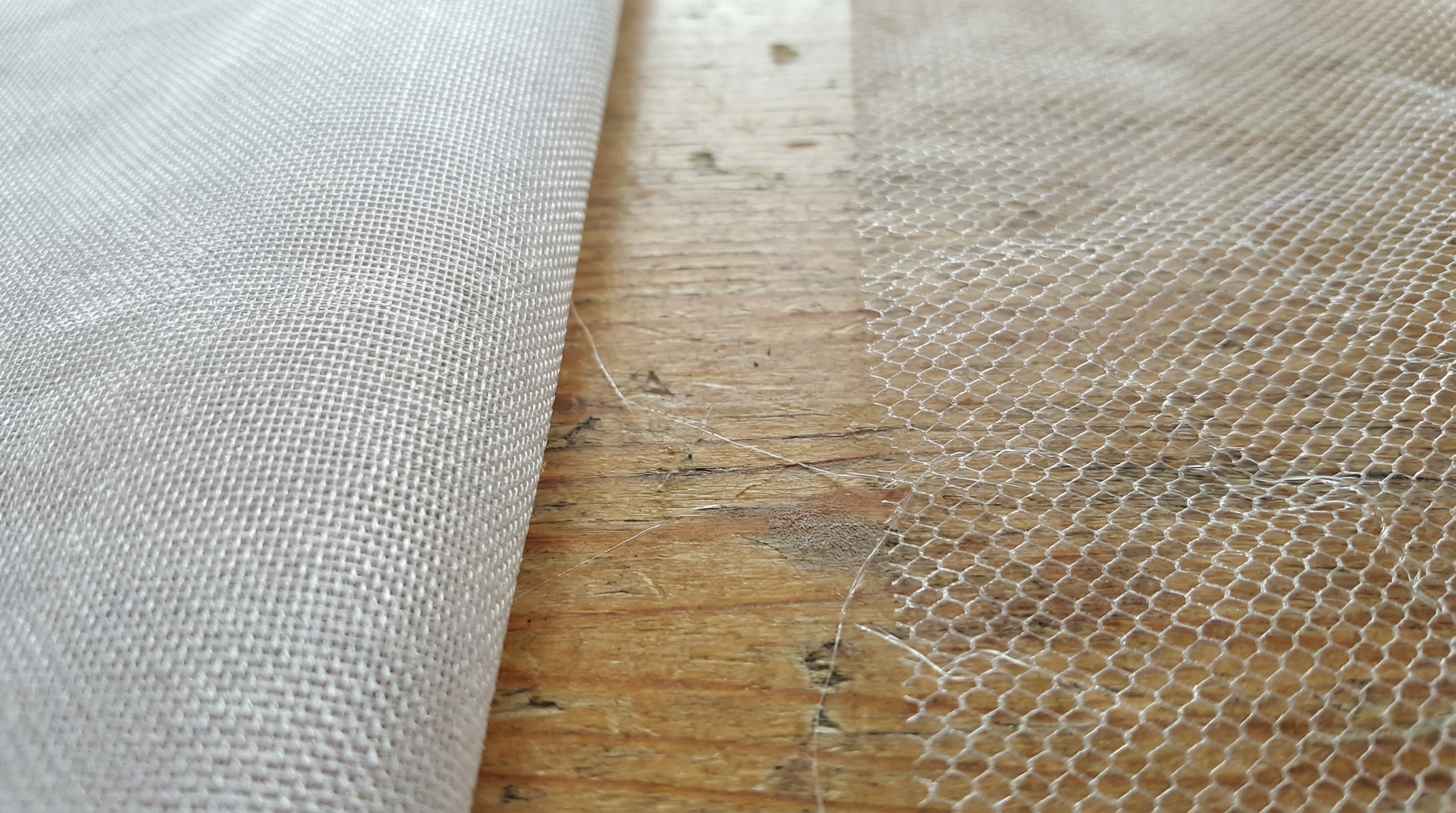
The primary distinction in organza fabric vs tulle lies in their construction, where tulle is a knitted hexagonal mesh and organza is a crisp, plain-weave textile. While both are sheer, their physical DNA dictates how they catch the light and hold a shape. Tulle provides a misty, diffused look, whereas organza offers a more solid, glass-like clarity.
Examining the weave structure
Think about this: the way threads intersect defines the fabric’s entire personality. Tulle is essentially a fine net, created by twisting yarns into a stable, open honeycomb pattern. This allows air and light to pass through freely, creating that iconic “cloud” effect.
Organza, however, is a traditional woven cloth. It uses a tight “one-over, one-under” weave that results in a much smoother surface than mesh.
- Tulle: Knitted/Knotted mesh structure.
- Organza: Tightly woven plain weave.
- Transparency: Tulle is more “open”; Organza is more “frosted.”
Comparing the light reflection
Here is the kicker: organza has a natural, sophisticated sheen that tulle simply cannot replicate. Because the fibers in organza are packed closely together, they create a flatter surface for light to bounce off of. Tulle is generally more matte, though it can be enhanced with glitter or metallic threads.
Key Takeaway: Tulle is defined by its open-cell mesh structure, while organza is a solid, shimmering weave that provides more surface coverage.
| Technical Feature | Tulle Properties | Organza Properties | |
|---|---|---|---|
| Fabric Type | Knitted/Warp-knit Mesh | Plain Woven Textile | |
| Hole Pattern | Hexagonal/Diamond | None (Solid Weave) | |
| Visual Texture | Misty and Airy | Crisp and Lustrous |
Analysis: The hexagonal structure of tulle makes it nearly weightless and transparent, whereas the woven nature of organza provides a more traditional, polished fabric finish.
Which is better for volume, organza fabric vs tulle?
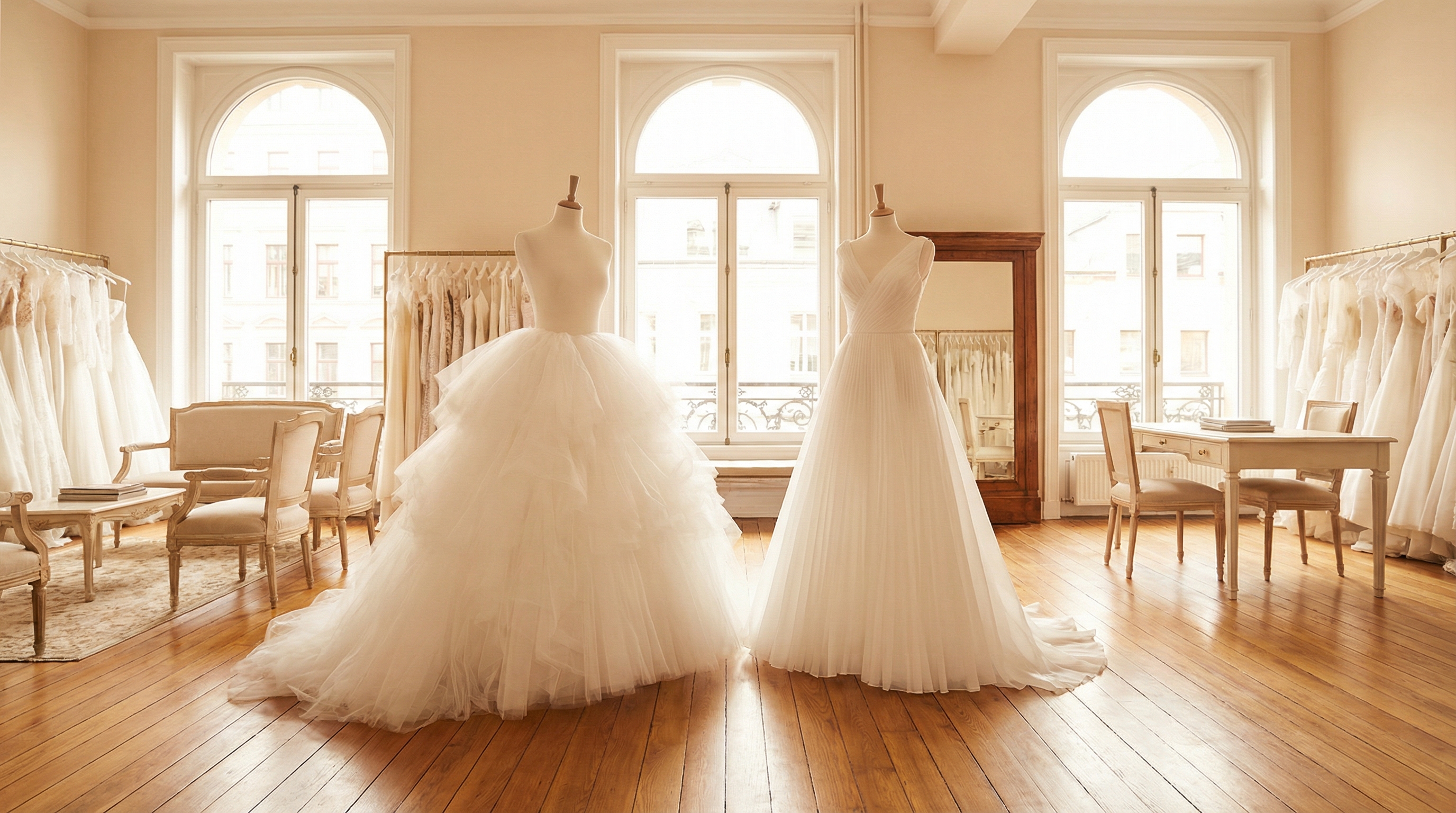
When evaluating organza fabric vs tulle for skirt volume, tulle is the superior choice for lightweight “puff,” while organza excels at creating wide, structural shapes. Designers choose tulle when they want to stack dozens of layers without making the dress too heavy to wear. Organza is used for architectural “waves” or ruffles that need to stand away from the body.
Creating the princess silhouette
The best part? Tulle is the secret ingredient in almost every iconic ballgown you have ever admired. Because it is so light, you can use 50 yards of it to create a massive skirt that still feels like air. It relies on the space between its mesh holes to trap volume and maintain its loft.
- Ideal for “cloud” or “cupcake” skirts.
- Maintains height through multiple layers.
- Hidden “stiff tulle” layers provide foundation.
Achieving architectural drama
But wait, there’s more: organza creates volume through its inherent stiffness rather than sheer density of layers. It doesn’t “fluff” like tulle; instead, it holds crisp folds and wide, dramatic circles. If you want a skirt that looks like a modern art sculpture, organza is your best friend.
Key Takeaway: Tulle creates soft, airy volume through layering, whereas organza creates bold, clean-lined volume through its rigid drape.
| Volume Factor | Tulle Performance | Organza Performance | |
|---|---|---|---|
| Layering | High (50+ layers possible) | Low (Usually 2-4 layers) | |
| Weight | Extremely Light | Moderate | |
| Silhouette | Soft, Round, Fluffy | Sharp, Structured, Wide |
Analysis: Tulle’s ability to layer without bulk makes it the standard for classic ballgowns, while organza’s stiffness supports more avant-garde bridal shapes.
How does organza fabric vs tulle feel on the skin?
In the debate of organza fabric vs tulle , organza typically feels smoother and more like traditional fabric, while tulle can range from silky-soft to slightly abrasive depending on the grade. Quality is the deciding factor for comfort on your wedding day. Cheap nylon mesh can cause redness, whereas premium silk organza feels cool and luxurious against the skin.
Assessing the tactile texture
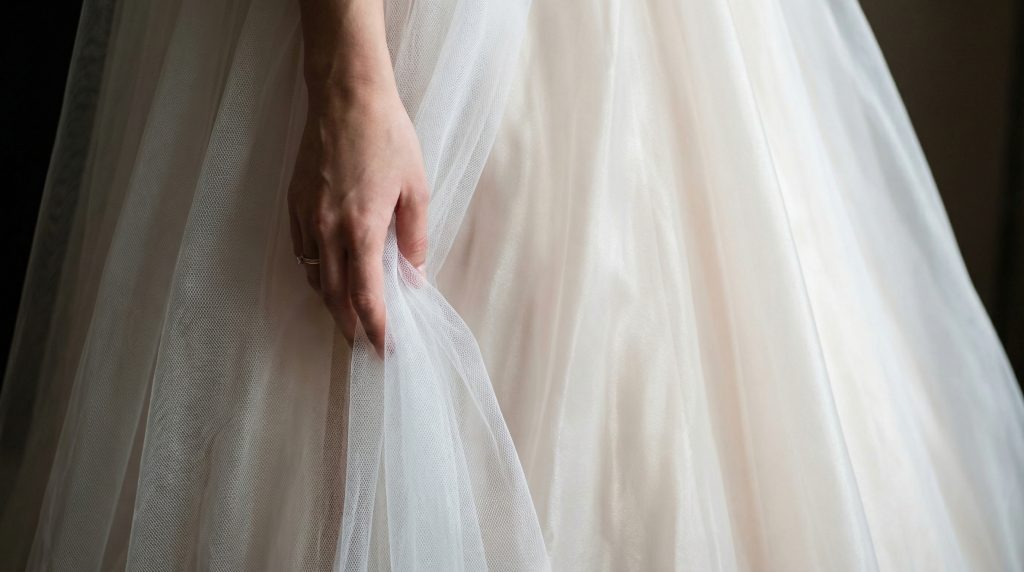
Look at this: your comfort depends entirely on the finish of the fibers used in the weave. Tulle consists of a “net” texture which can sometimes feel “prickly” if the edges of the mesh rub against your arms all day. Soft-finish bridal tulle is specifically engineered to minimize this friction for sensitive brides.
Organza has a much flatter profile. It feels slippery and crisp, similar to a very thin, starched dress shirt.
- Tulle: Texture ranges from “soft-touch” to “scratchy.”
- Organza: Consistently smooth but can be “sharp” at the hems.
- Skin Sensitivity: Soft tulle is better for preventing chafing.
Breathability and temperature control
Believe it or not: the open holes in tulle make it one of the most breathable fabrics in existence. If you are getting married in a humid climate, tulle allows for much better airflow than the tight weave of organza. Organza can occasionally trap heat against the body, especially if it is made from polyester.
Key Takeaway: Organza offers a smoother, more consistent skin feel, but high-quality soft tulle provides superior breathability for long-duration wear.
| Comfort Category | Tulle Experience | Organza Experience | |
|---|---|---|---|
| Hand Feel | Textural / Mesh-like | Smooth / Crisp | |
| Airflow | Excellent (Open holes) | Moderate (Solid weave) | |
| Irritation Risk | Higher in lower grades | Low (unless hemmed poorly) |
Analysis: While organza is naturally smoother to the touch, tulle’s superior ventilation makes it a more comfortable choice for warm-weather celebrations.
Which is better for wedding veils, organza fabric vs tulle?
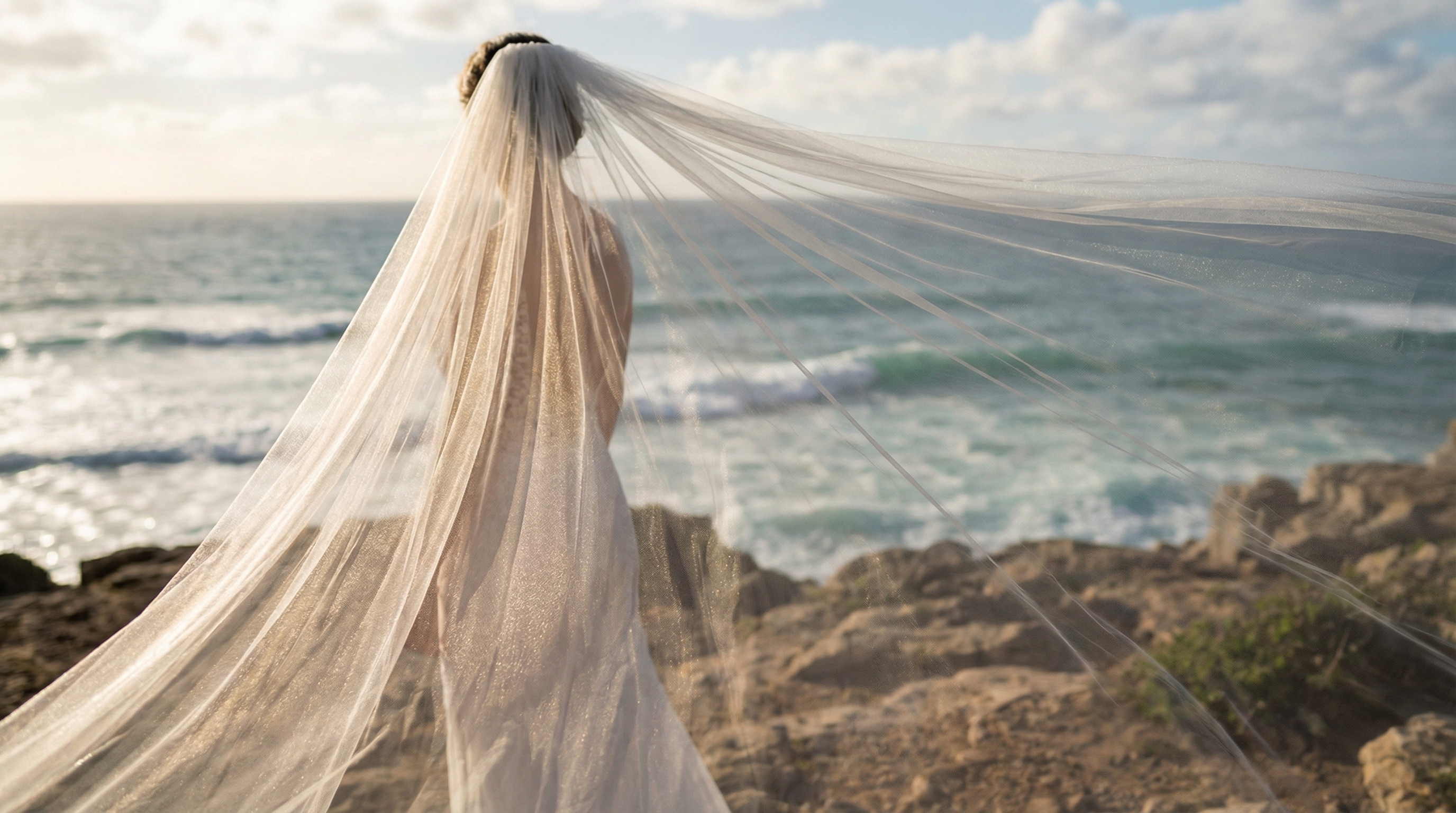
Tulle is the undisputed standard for wedding veils when comparing organza fabric vs tulle because of its transparency and weightless drape. An organza veil is a bold, fashion-forward choice that creates a semi-opaque “halo” effect. Most brides prefer tulle because it allows the intricate details of their hairstyle and dress back to remain visible.
The transparency factor in veils
The kicker is this: you likely want your veil to enhance your look, not hide it. Tulle is so sheer that it acts like a filter, softening your appearance without obscuring your face or gown. It is the perfect canvas for lace appliqués or “floating” crystals.
- Tulle: Crystal clear visibility for the face.
- Organza: Opaque/Frosted visibility.
- Detailing: Supports heavy embroidery well.
Weight and mobility concerns
Here is the deal: a cathedral-length veil can be 10 feet long or more. If you choose organza, that length becomes quite heavy and can pull on your hair or tiara throughout the ceremony. Tulle is so light that even the longest veils catch the wind effortlessly for those stunning outdoor photos.
Key Takeaway: Tulle is the practical and aesthetic favorite for veils due to its transparency and lack of weight.
| Veil Property | Tulle Veil | Organza Veil | |
|---|---|---|---|
| Visibility | High (Clear) | Low (Frosted) | |
| Wind Catch | High (Floats easily) | Low (Heavy/Structured) | |
| Tradition | Classic Bridal | Modern/Editorial |
Analysis: Tulle veils provide the “barely there” look that most brides desire, whereas organza veils serve as a dominant, opaque accessory.
Which gown style suits organza fabric vs tulle more?
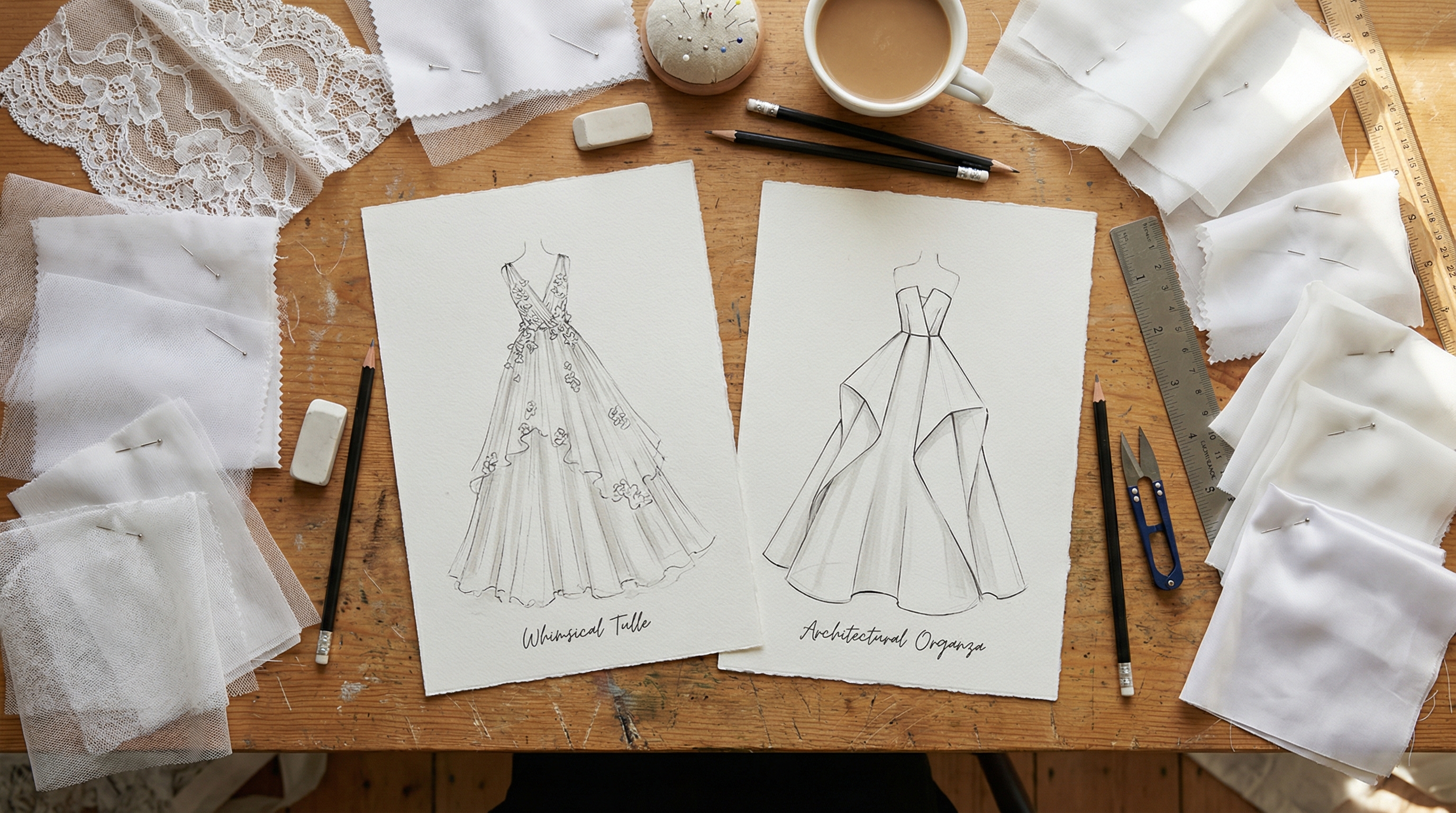
Deciding on organza fabric vs tulle usually comes down to whether you want a “fairytale” or “couture” aesthetic. Tulle is the soul of whimsical, bohemian, and princess-style gowns. Organza is the darling of modern, minimalist, and high-fashion bridal houses that prioritize clean lines and sharp silhouettes.
Defining the romantic vibe
Wait, there’s more: the “soft focus” look of a tulle skirt is what creates that dreamy, romantic aura in photography. If your wedding is in a garden, forest, or historic estate, tulle blends perfectly with the organic surroundings. It feels effortless and youthful.
- Bohemian: Tulle layers with lace.
- Princess: Multi-layered tulle ballgowns.
- Vintage: Soft tulle with “polka dot” flocking.
Defining the modern aesthetic
Now, look at the alternative: organza is for the bride who wants to look “sharp.” Because it holds a crease and a curve so well, it is often used for oversized bows, pleated bodices, and tiered skirts that look like waves. It is a more “formal” and “expensive-looking” fabric choice.
Key Takeaway: Choose tulle for a whimsical, soft-focus romance and organza for a sophisticated, structured, or dramatic fashion statement.
| Wedding Theme | Tulle Compatibility | Organza Compatibility | |
|---|---|---|---|
| Garden/Outdoor | Excellent (Whimsical) | Good | |
| Modern Gallery | Moderate | Excellent (Sculptural) | |
| Classic Ballroom | High | High |
Analysis: Tulle naturally lends itself to softer, ethereal designs, while organza is the preferred medium for creating defined, architectural bridal fashion.
How do you clean organza fabric vs tulle gowns?
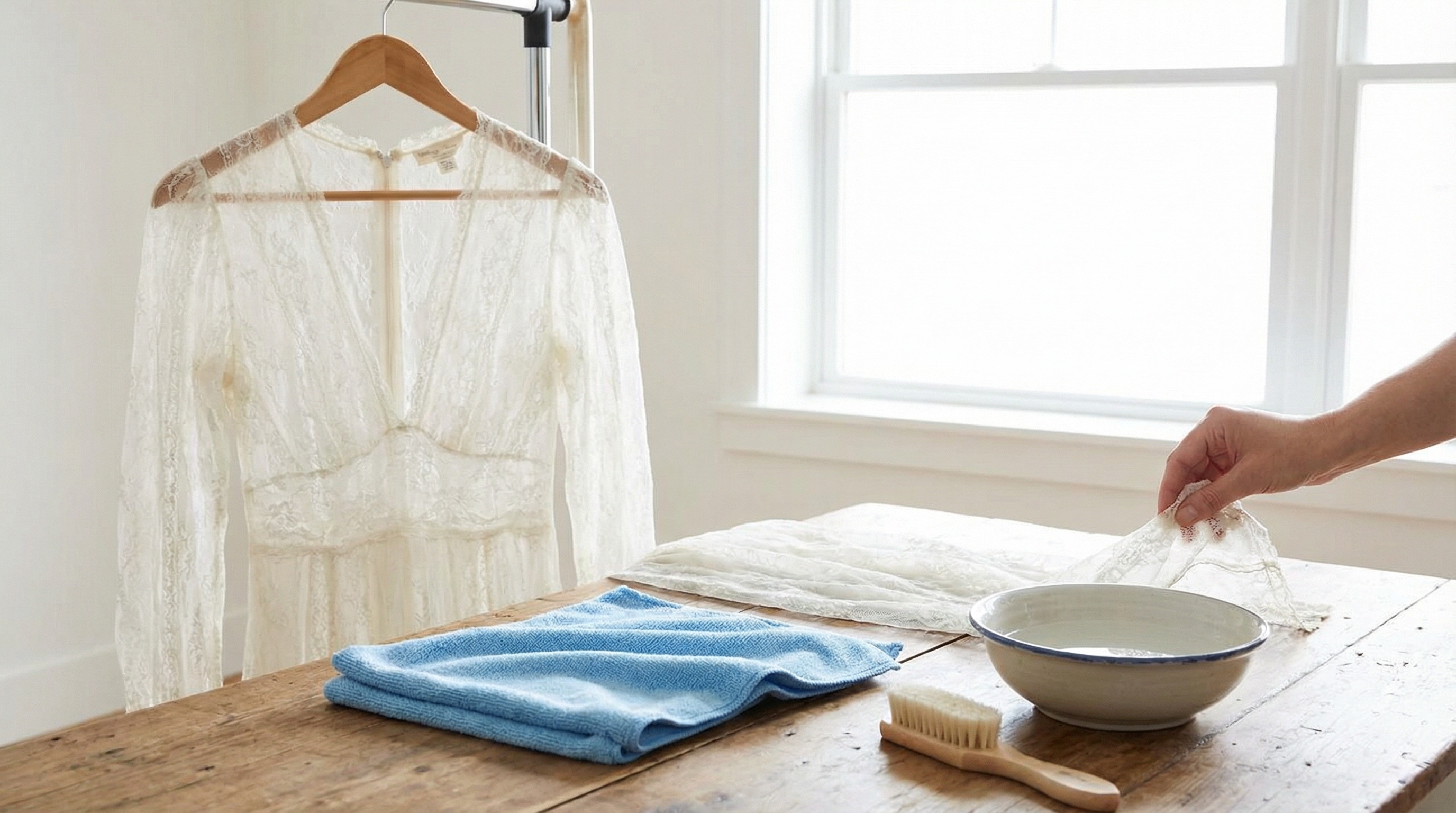
When comparing maintenance for organza fabric vs tulle, organza is easier to wipe down but harder to iron, while tulle is prone to snags but hides wrinkles better. Both fabrics are extremely delicate and should never be tossed in a standard washing machine. Professional dry cleaning is the only safe way to preserve the integrity of these fine materials.
Handling wrinkles and creases
Think about this: on the morning of your wedding, you will likely need to touch up your dress. Tulle responds beautifully to a professional steamer; the wrinkles usually drop out within seconds. However, you must be careful—hot metal from an iron will melt tulle instantly.
Organza is more stubborn. It holds its shape so well that deep creases can be difficult to remove without high heat, which is risky for synthetic fibers.
- Tulle: Steam only; never iron.
- Organza: Very cool iron with a pressing cloth.
- Wrinkle Resistance: Tulle is more “forgiving.”
Dealing with stains and dirt
The kicker is this: tulle is a magnet for outdoor debris. If you walk through grass, the mesh will trap tiny twigs, leaves, and dirt within its holes. Organza’s flat weave allows most dirt to sit on the surface, making it slightly easier to spot-clean with a damp cloth if you have a spill.
Key Takeaway: Organza is more resistant to trapping dirt, but tulle is much easier to de-wrinkle with a simple steamer.
| Care Factor | Tulle Maintenance | Organza Maintenance | |
|---|---|---|---|
| De-wrinkling | Easy (Steam) | Hard (Needs precise heat) | |
| Stain Removal | Hard (Traps particles) | Moderate (Surface-level) | |
| Risk of Melting | Very High | High |
Analysis: Tulle is easier for the “DIY” bride to prep on the wedding morning, but organza stays cleaner during outdoor photo sessions.
Can you layer organza fabric vs tulle for effect?
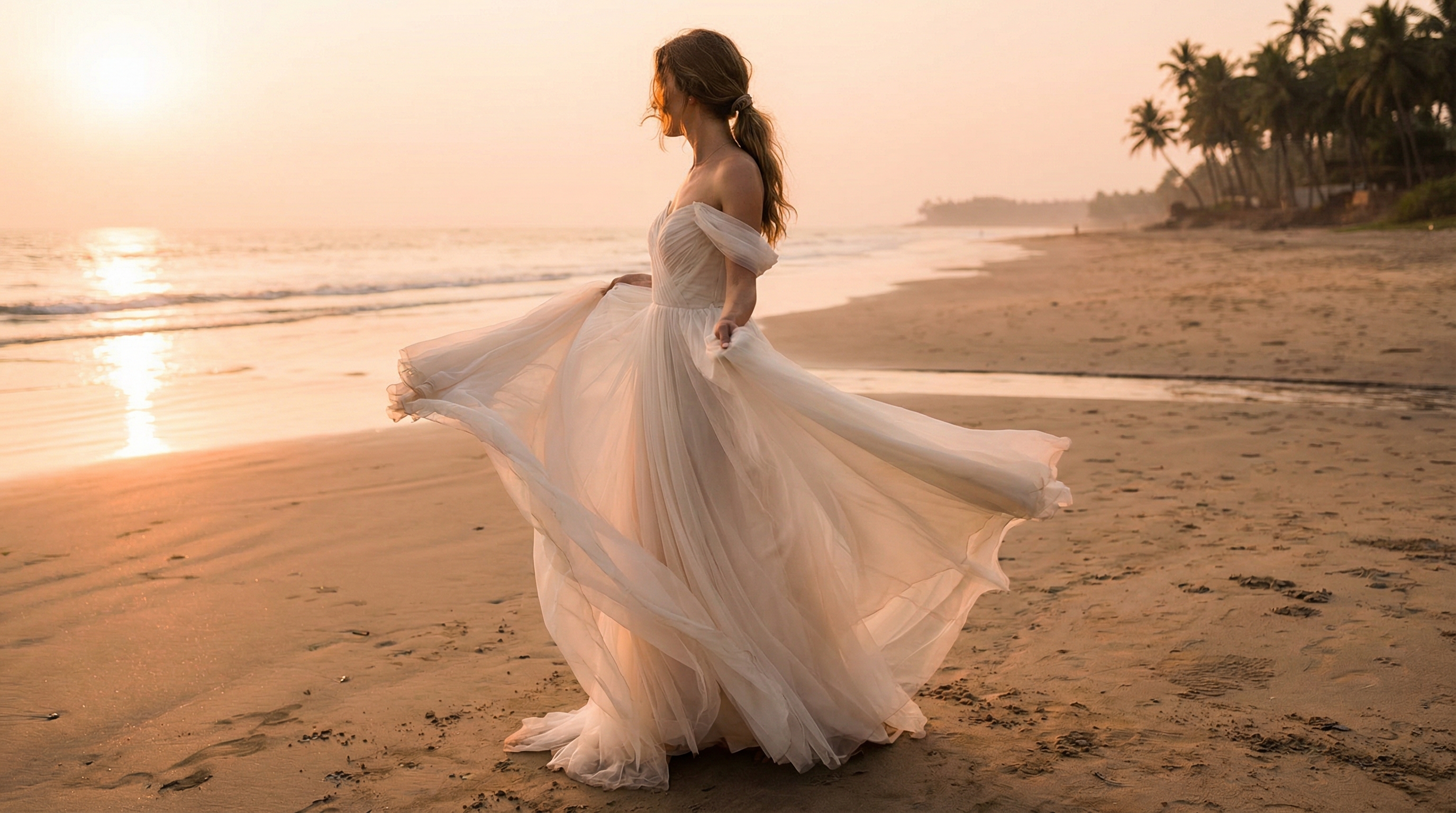
Smart designers often combine organza fabric vs tulle to get the best of both worlds: the massive lift of tulle and the luxurious finish of organza. By placing a single layer of silk organza over multiple layers of tulle, you achieve a skirt that has immense volume but looks like a solid, expensive fabric. This hybrid technique is the secret to many high-end designer gowns.
The secret of the “overlay”
Here is the truth: a pure tulle skirt can sometimes look “costume-like” or too much like a tutu. Adding an organza overlay “blurs” the mesh pattern of the tulle underneath, giving the dress a more sophisticated, matte-glow finish.
- Depth: Creates a multi-dimensional look.
- Cost-Saving: Uses tulle for bulk and organza for the “expensive” top layer.
- Movement: Organza adds a “rustle” sound that tulle lacks.
Weight vs. Volume trade-off
But wait, there’s more: while layering these fabrics looks amazing, it does increase the total weight of the gown. You have to balance your desire for a “big” look with your ability to dance. A tulle base with an organza top is usually lighter than a full organza skirt of the same size.
Key Takeaway: Combining both fabrics allows you to achieve the volume of a ballgown with the high-end, polished surface of a woven textile.
| Layering Technique | Benefit | Resulting Look | |
|---|---|---|---|
| Tulle Base | Maximum lift / low weight | Cloud-like foundation | |
| Organza Overlay | Smooths the texture | Sophisticated polish | |
| Mixed Ruffles | Dynamic movement | Textural interest |
Analysis: Using tulle for internal structure and organza for the visible surface is the most efficient way to design a voluminous, high-fashion wedding dress.
Is organza fabric vs tulle more durable for weddings?
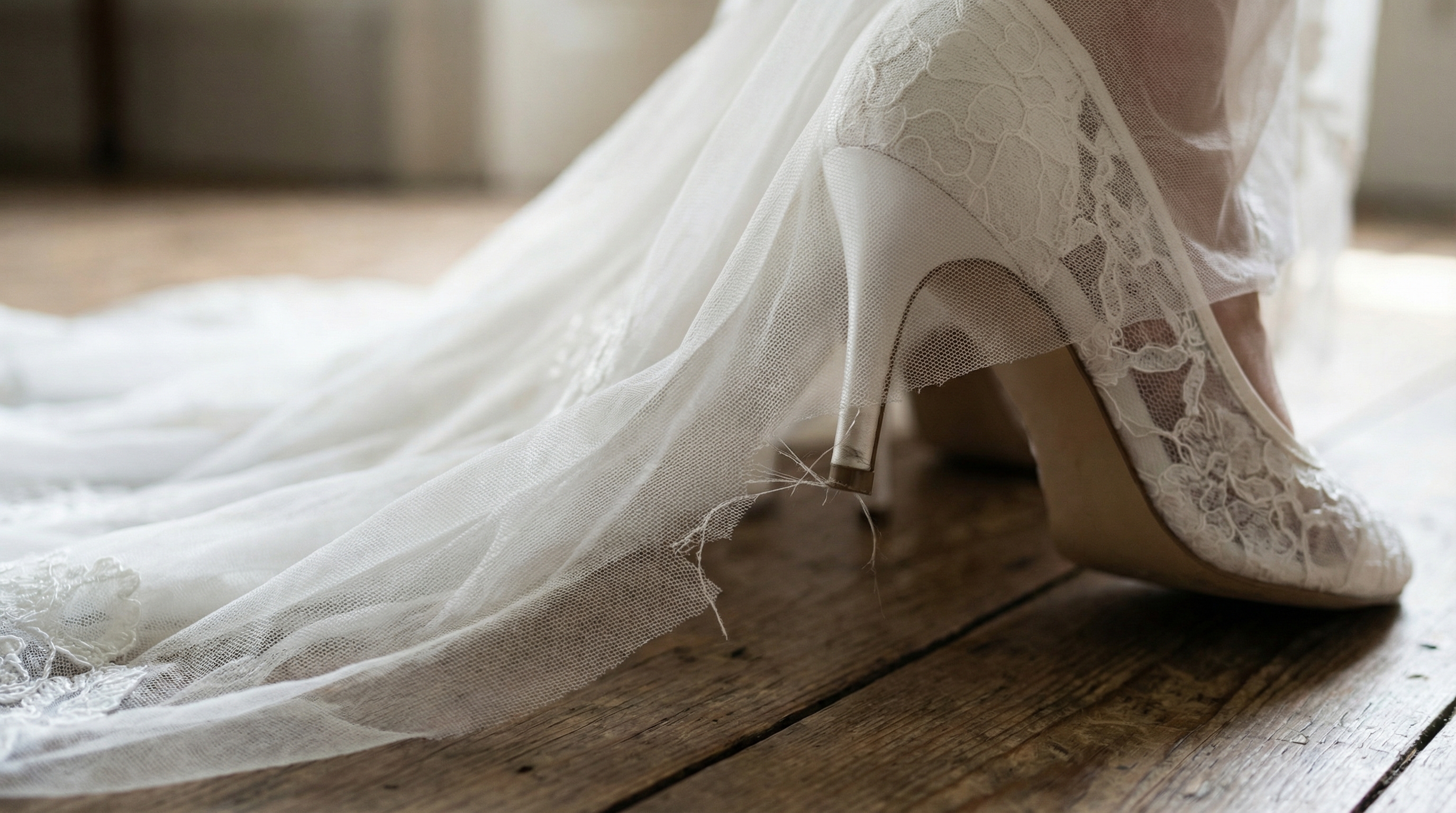
Durability is a major concern when choosing organza fabric vs tulle, as tulle is notorious for snagging on jewelry and heels. If your wedding involves a lot of movement, dancing, or outdoor walking, organza is generally the tougher material. A single snag in tulle can lead to a long tear that is almost impossible to mend invisibly.
The vulnerability of the mesh
Let’s face it: tulle is essentially a spiderweb. If your engagement ring, a guest’s sequined dress, or your own high heels catch a thread, the mesh will pull or rip. Because the pattern is so precise, you cannot simply sew it back together without a visible seam.
- Nylon tulle is stronger than silk tulle.
- More layers help hide small holes.
- Beaded jewelry is the “enemy” of tulle.
The resilience of the weave
Here is the kicker: organza is much more “snag-resistant” because it doesn’t have open holes for objects to get caught in. While it can still “pull” or show a thread shift, it won’t disintegrate as easily as mesh when faced with a sharp object.
Key Takeaway: Organza is significantly more durable against snags and tears, making it a safer choice for active brides.
| Durability Test | Tulle Resilience | Organza Resilience | |
|---|---|---|---|
| Heel Snags | Very High Risk | Moderate Risk | |
| Tear Strength | Low | Medium | |
| Mendability | Poor (Visible) | Moderate (Possible) |
Analysis: While tulle is beautiful, it is a “single-use” fabric in terms of perfection; organza is more likely to survive the reception without a trip to the tailor.
Which costs more, organza fabric vs tulle materials?
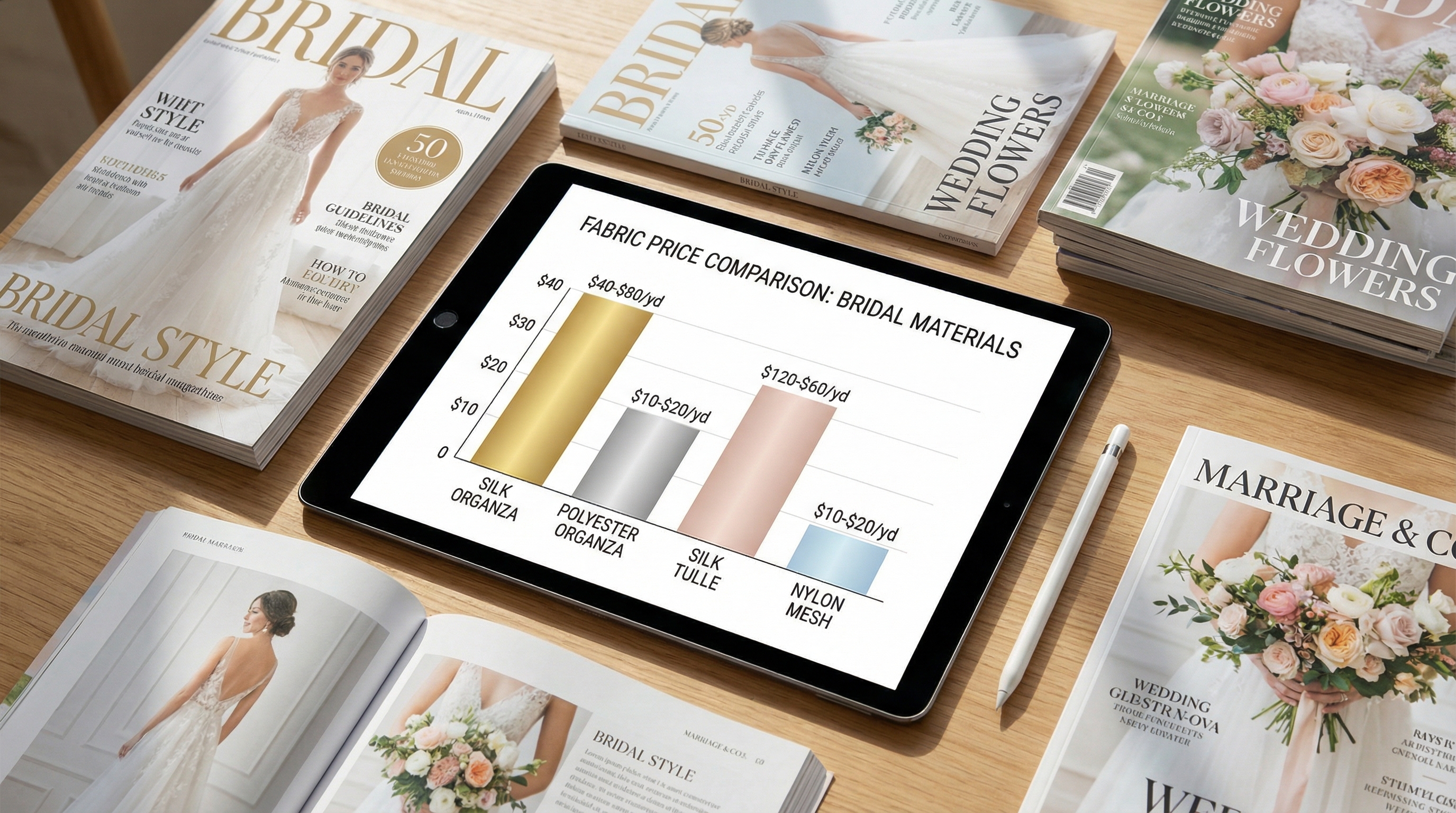
In the pricing battle of organza fabric vs tulle , silk organza is typically much more expensive per yard than standard nylon tulle. However, because a tulle gown requires significantly more yardage to achieve volume, the total labor and material costs can often even out. Budget-conscious brides should look for high-quality polyester versions of both to save money.
Breaking down the yardage
Believe it or not: a simple organza A-line dress might only use 6-8 yards of fabric. A “cloud” tulle skirt can easily require 50 to 100 yards of mesh. Even though tulle is “cheaper,” the sheer volume needed can drive the price up quickly.
- Silk Organza: 40−80 per yard.
- Polyester Organza: 10−20 per yard.
- Nylon Tulle: 2−10 per yard.
Labor and construction costs
Wait, there is more: sewing 100 layers of tulle is a labor-intensive process for a seamstress. You aren’t just paying for the fabric; you are paying for the hours it takes to cut, gather, and sew those infinite layers of mesh. Organza is easier to handle but requires more precise finishing on the hems.
Key Takeaway: Organza has a higher cost per yard, but tulle’s high yardage requirements and labor intensity can make it just as expensive for full skirts.
| Price Factor | Tulle Gown | Organza Gown | |
|---|---|---|---|
| Material Cost | Low per yard | High per yard | |
| Quantity Used | Extreme (Layers) | Moderate (Solids) | |
| Labor Cost | Very High | Moderate |
Analysis: Brides on a strict budget should opt for polyester organza or fewer layers of tulle to keep costs manageable without sacrificing the romantic look.
What are the FAQs on organza fabric vs tulle choice?
Finalizing your decision between organza fabric vs tulle often requires a quick check of real-world scenarios like weather and venue. Most brides find that a combination of the two provides the best results for both photos and comfort. The truth is that there is no “wrong” choice, only the choice that best fits your personal wedding “vibe.”
The humidity and weather check
Why does this matter? If you are having a beach wedding, tulle is your best friend because it won’t get “limp” in the salty air as easily as some silk organzas. It also allows the breeze to pass through, keeping you cool while you say your vows.
- Summer: Tulle is cooler.
- Winter: Organza feels more substantial.
- Photography: Both look stunning in natural light.
The formal venue factor
Look at this: for a grand cathedral or a high-end hotel ballroom, the “stiff” elegance of organza often feels more appropriate. It has a “weight” and a “presence” that commands a room. Tulle feels more at home in whimsical or rustic settings.
Key Takeaway: Your venue and the local climate are just as important as your personal style when making the final fabric selection.
| Best For… | Tulle Recommendation | Organza Recommendation | |
|---|---|---|---|
| Beach Wedding | High (Breathable) | Low (Too stiff) | |
| Grand Ballroom | High (Dramatic Volume) | High (Formal Polish) | |
| Garden Wedding | High (Whimsical) | Medium |
Analysis: Ultimately, the perfect fabric is the one that makes you feel like the best version of yourself as you walk down the aisle.
Selecting the right fabric is the final piece of your bridal puzzle. Whether you choose the ethereal, cloud-like layers of tulle or the crisp, architectural elegance of organza, your decision will define your wedding day’s romantic atmosphere. At Tullemesh, we believe every bride deserves a gown that captures her unique spirit and moves with effortless grace. Ready to find the perfect material for your dream dress? Contact us today to explore our premium collections and let our experts help you resolve your fabric dilemma.
FAQ
Can I wear a tulle dress for a beach wedding?Yes, tulle is actually ideal for beaches because its open mesh structure is highly breathable and it won’t lose its shape in humidity.
What’s the best fabric for a very “puffy” ballgown?Tulle is the best choice because it provides the most volume with the least amount of weight, allowing for dozens of layers.
How do I know if a dress is organza or tulle?Check the texture; if it looks like a fine net or “honeycomb,” it is tulle. If it looks like a solid, sheer, woven fabric with a slight sheen, it is organza.
Can I have an organza skirt with a tulle veil?Absolutely, this is a classic combination that balances the structure of the gown with the ethereal transparency of a traditional veil.
What’s the best way to remove wrinkles from bridal organza?Use a professional steamer on a medium setting; if you must iron, use a very cool setting and a protective pressing cloth to avoid melting the fibers.