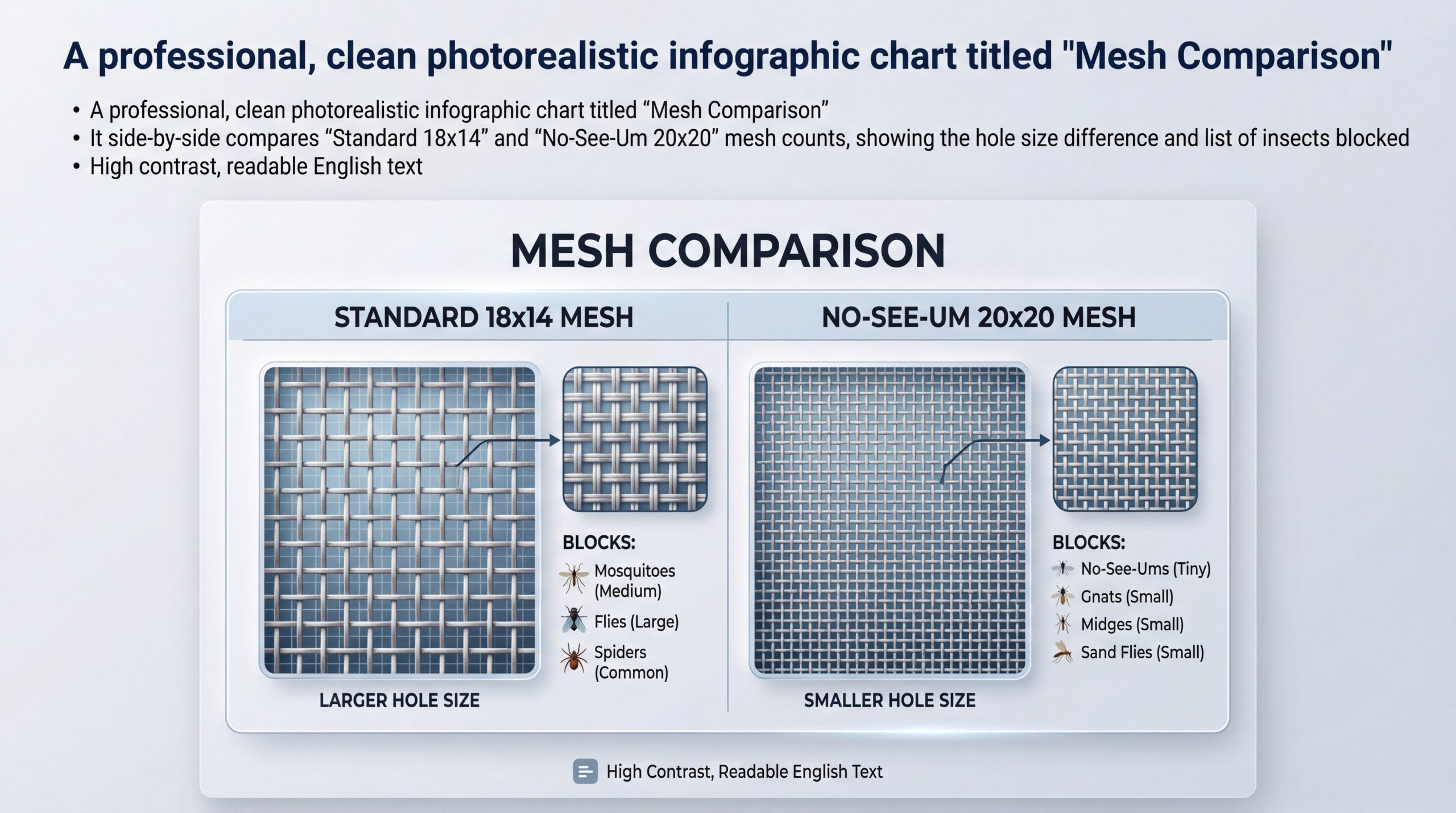
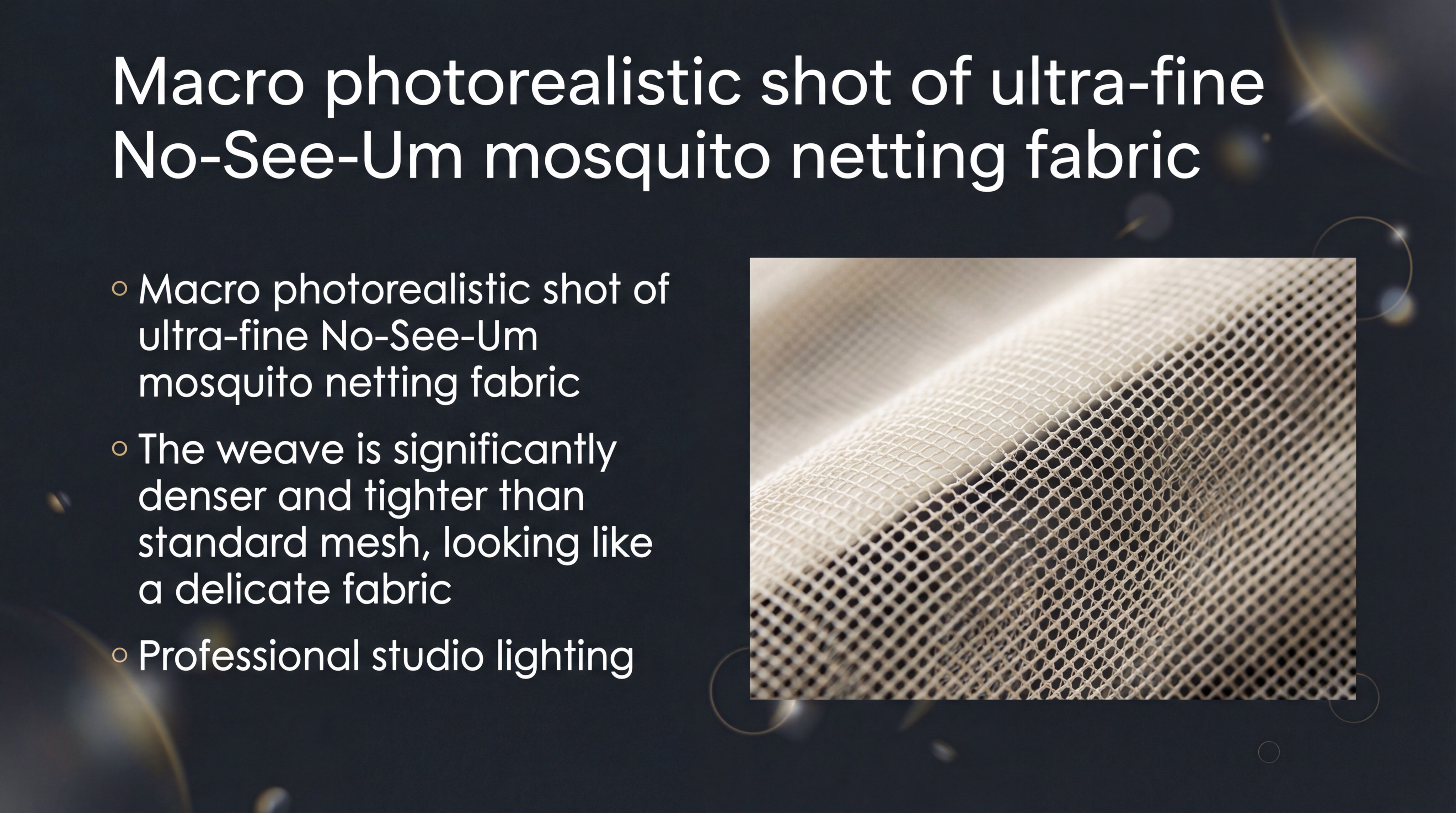
The primary difference between No-See-Um and standard netting is the density of the weave; No-See-Um mesh uses a much tighter pattern to block tiny biting midges that slip through standard holes. Many homeowners install screens only to find themselves covered in itchy welts from invisible invaders. These “no-see-ums” penetrate regular barriers, turning your expensive patio into a source of constant frustration. Investing in the right Mosquito Netting Fabric ensures your outdoor sanctuary remains truly protected from even the smallest pests.
Why choose the right Mosquito Netting Fabric?
Choosing the correct mesh ensures that you strike the perfect balance between insect exclusion and environmental comfort. Selecting a high-quality Mosquito Netting Fabric is the first step in reclaiming your outdoor living space.
Identifying Your Pest Pressure
You need to determine which insects are most prevalent in your specific area before making a purchase. While standard screens stop large flies, they are often useless against microscopic biters found in coastal or marshy climates.
Think about it:
- Are you seeing tiny black specks that bite?
- Do you live near standing water or salt marshes?
- Is your current screen failing to stop itchy welts?
The Goal of Total Protection
Your ultimate goal is to create a barrier that doesn’t just reduce pests but eliminates them from your environment. High-tensile mesh provides a physical wall that stands up to wind and debris while keeping your family safe.
Key Takeaway: Understanding your local environment is essential for selecting a mesh that provides total protection against both large and microscopic insects.
The following table outlines how different pest environments dictate your fabric requirements.
| Environment Type | Primary Pest | Recommended Mesh | |
|---|---|---|---|
| Inland / Suburban | Common Mosquito | Standard 18×14 | |
| Coastal / Marsh | No-See-Ums / Gnats | Fine 20×20 | |
| Wooded / Humid | Midges / Ticks | Ultra-Fine 20×30 |
What defines a standard Mosquito Netting Fabric?
Standard netting is defined by a larger 18×14 mesh weave designed to block common household pests like flies and mosquitoes. This material is the industry baseline for most residential window and door applications.
Standard Mesh Specifications
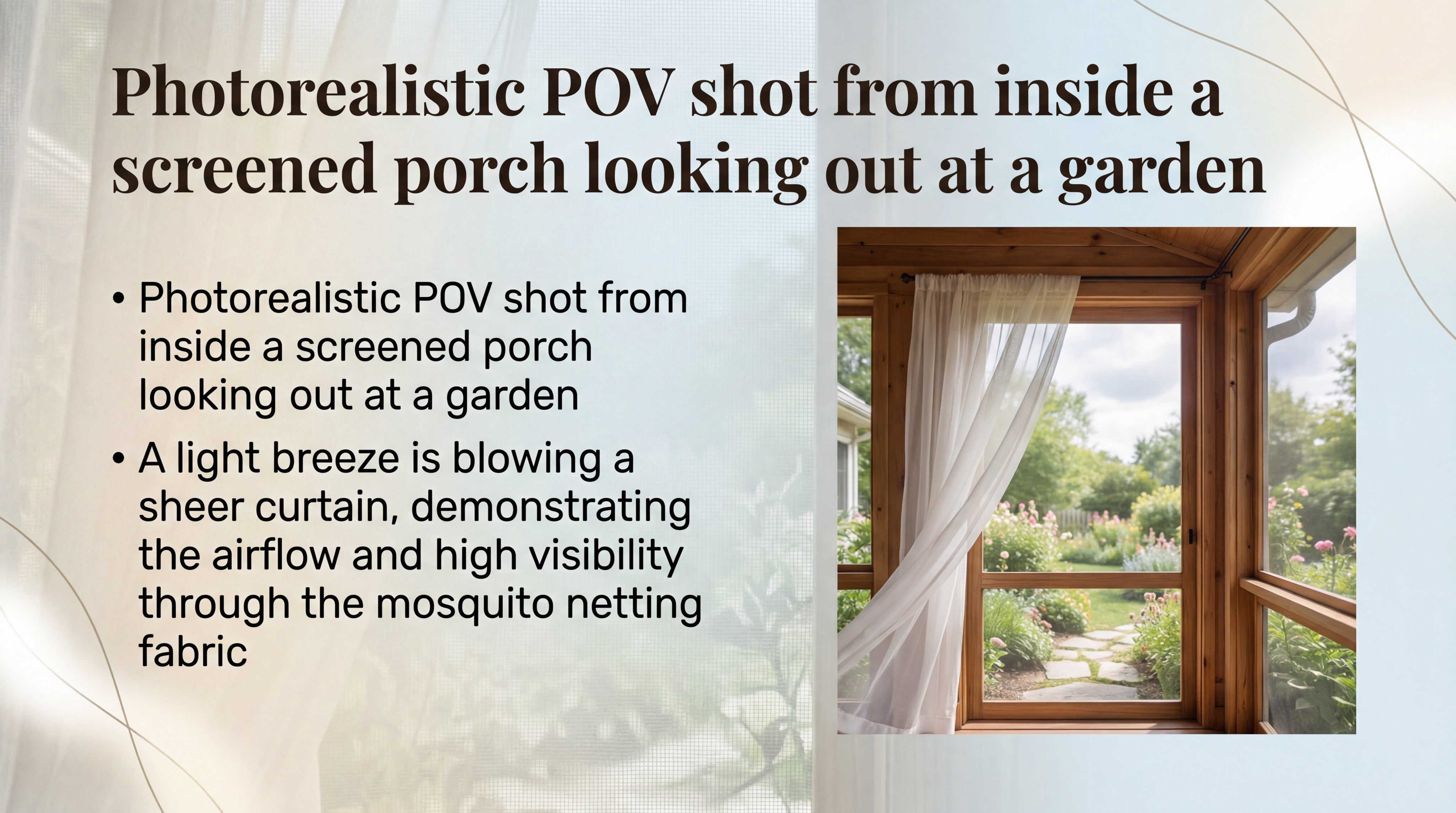
Standard mesh typically features eighteen holes horizontally and fourteen holes vertically per square inch. This creates a balanced opening size that maximizes both airflow and visibility for the average user.
Believe it or not:
- Standard mesh is the most affordable option.
- It is highly resistant to sagging over time.
- Most pre-installed window screens use this specific count.
Common Insects Blocked
This fabric excels at keeping out the “big three” of the insect world: mosquitoes, houseflies, and bees. Because the holes are relatively large, you get a clear view of your garden without feeling enclosed.
Key Takeaway: Standard mesh is the ideal cost-effective solution for regions where tiny biting midges are not a primary concern.
Standard mesh provides a baseline of protection that balances visibility with utility as shown below.
| Feature | Specification | User Benefit | |
|---|---|---|---|
| Mesh Count | 18 x 14 | Maximum Airflow | |
| Primary Material | Fiberglass | High Durability | |
| Visibility | Excellent | Unobstructed Views |
How does no-see-um Mosquito Netting Fabric work?
No-see-um netting works by utilizing a significantly denser 20×20 or 20×30 weave that physically blocks insects smaller than 1.5 millimeters. This specialized Mosquito Netting Fabric is engineered for high-risk zones where standard barriers fail.
The Invisible Enemy: No-See-Ums
These tiny pests, often called biting midges or sand flies, can pass through standard window screens with ease. They are most active during dawn and dusk, which are exactly the times you want to enjoy your patio.
Look at it this way:
- Standard mesh holes are roughly 1.3mm wide.
- No-see-ums are often less than 1.0mm in size.
- A tighter weave is the only physical way to stop them.
Advanced Weave Technology
Modern manufacturing allows for incredibly thin yet strong strands that create a dense grid. This high-density construction prevents even the smallest gnats from finding a way into your screened-in enclosure.
Key Takeaway: No-see-um mesh uses a higher thread count to create smaller apertures, effectively blocking microscopic biting insects that penetrate standard screens.
The technical differences in weave density provide the following protective advantages.
| Mesh Type | Holes Per Inch | Minimum Insect Size Blocked | |
|---|---|---|---|
| Standard | 18 x 14 | > 1.3 mm | |
| No-See-Um | 20 x 20 | > 1.0 mm | |
| Ultra-Fine | 20 x 30 | > 0.6 mm |
What is the mesh count of Mosquito Netting Fabric?
Mesh count refers to the number of strands per linear inch, with standard versions typically using 18×14 and specialized versions using higher counts. This metric is the most important factor in determining the protective capabilities of the fabric.
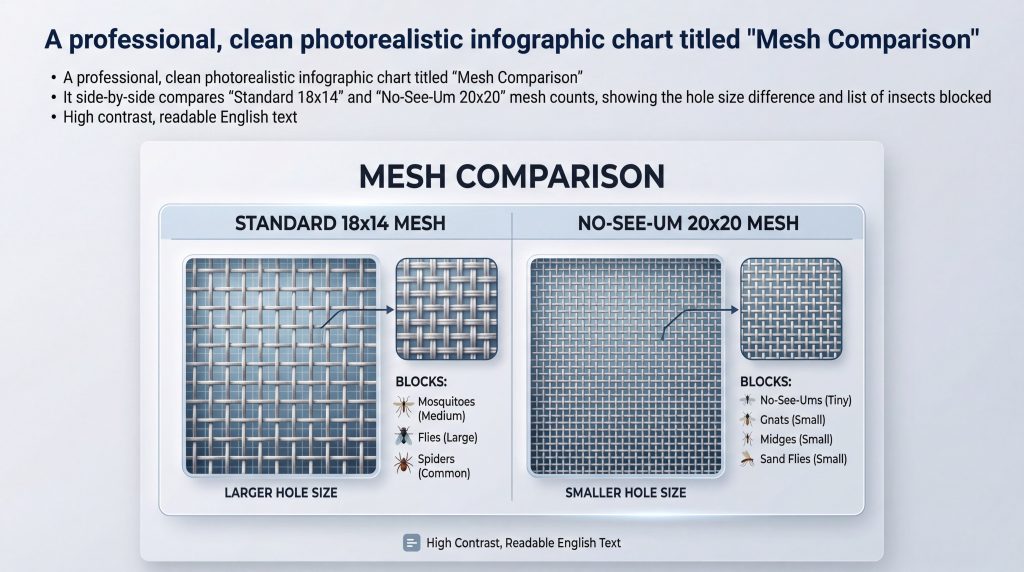
18×14 vs. 20×20 Mesh
The difference between these two counts might seem small, but it represents a massive increase in total threads per square inch. An 18×14 mesh has 252 openings per square inch, while a 20×20 mesh has 400.
Here’s the deal:
- Higher counts equal smaller holes.
- Smaller holes equal better pest exclusion.
- Denser weaves often use finer thread diameters.
Which Hole Size is Best?
You must choose based on the trade-off between protection and environmental factors like wind. In very hot climates, you might prefer a slightly lower count to keep the breeze flowing through your home.
Key Takeaway: Mesh count is a direct indicator of insect exclusion performance; higher counts provide a superior barrier against small pests.
This comparison highlights the geometric differences between common mesh densities.
| Mesh Count | Openings per Sq. Inch | Airflow Rating | |
|---|---|---|---|
| 18 x 14 | 252 | High | |
| 20 x 20 | 400 | Medium | |
| 20 x 30 | 600 | Low-Medium |
Does Mosquito Netting Fabric impact your airflow?
Yes, tighter mesh counts provide more protection but can slightly reduce the volume of air passing through the material compared to wider weaves. Finding a high-performance Mosquito Netting Fabric helps mitigate this reduction through superior design.

Balancing Ventilation and Protection
If you live in a coastal area, you likely deal with high humidity and need constant airflow. While no-see-um mesh is denser, modern thin-strand technology ensures you still feel the afternoon breeze.
But that’s not all:
- Airflow is reduced by roughly 10-15% with fine mesh.
- Tighter weaves can actually help block light rain spray.
- Proper tensioning during installation improves wind passage.
Optical Clarity and Visibility
A common misconception is that denser mesh makes your view darker or “fuzzy.” In reality, black or charcoal-colored fine mesh often becomes nearly invisible to the eye once installed in a frame.
Key Takeaway: While denser mesh does impact airflow slightly, the difference is often negligible compared to the benefit of remaining bite-free.
The impact on airflow and visibility is summarized in the performance metrics below.
| Mesh Type | Airflow Percentage | Visual Clarity | |
|---|---|---|---|
| Standard 18×14 | ~90% | Excellent | |
| Fine 20×20 | ~80% | Very Good | |
| Ultra-Fine 20×30 | ~72% | Good |
Is your Mosquito Netting Fabric durable enough?
Durability is determined by the material composition and weave density, with modern fiberglass and polyester options offering years of resilience. The tighter construction of premium mesh often provides unexpected structural benefits.
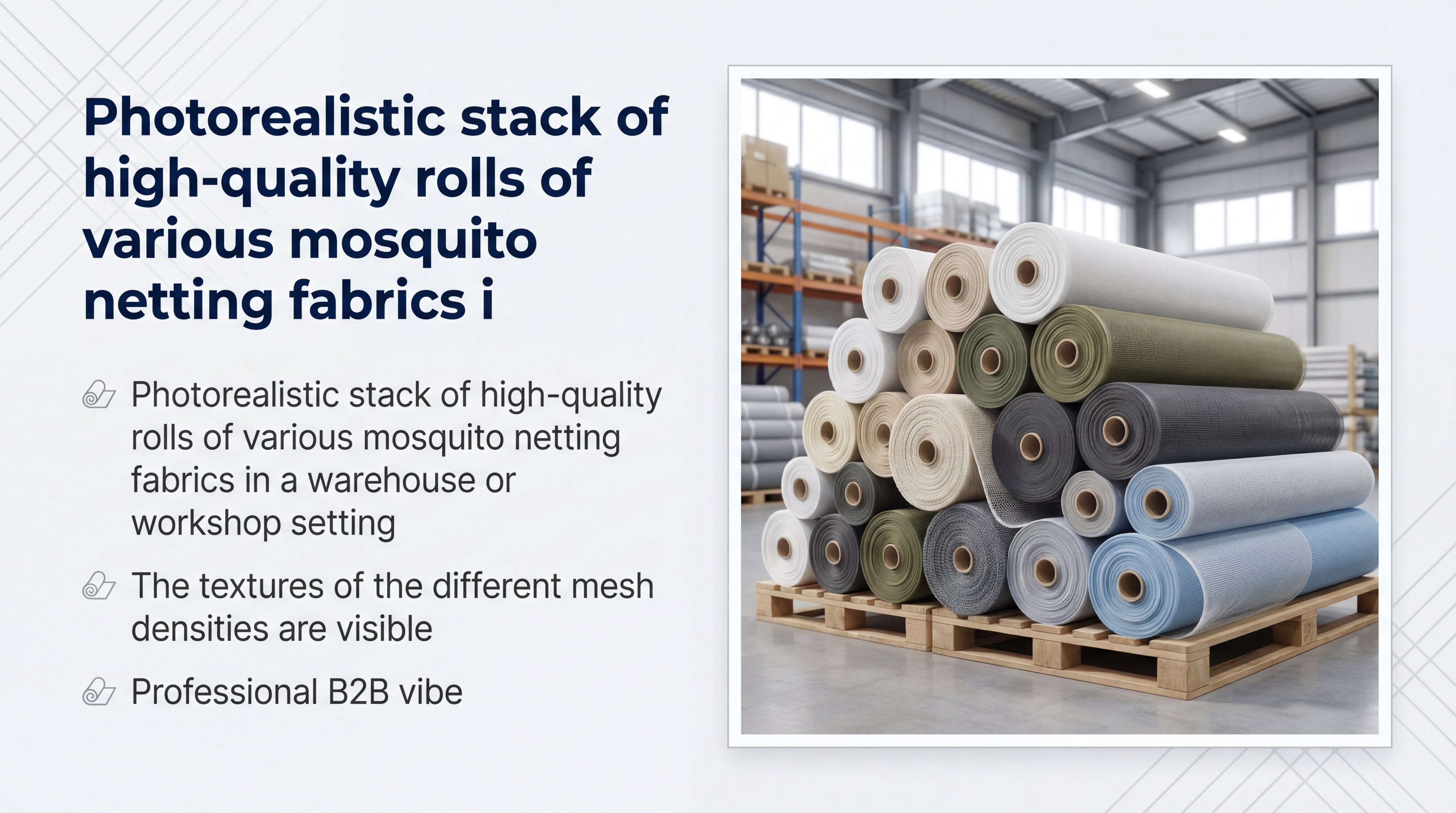
Material Strength and Tearing
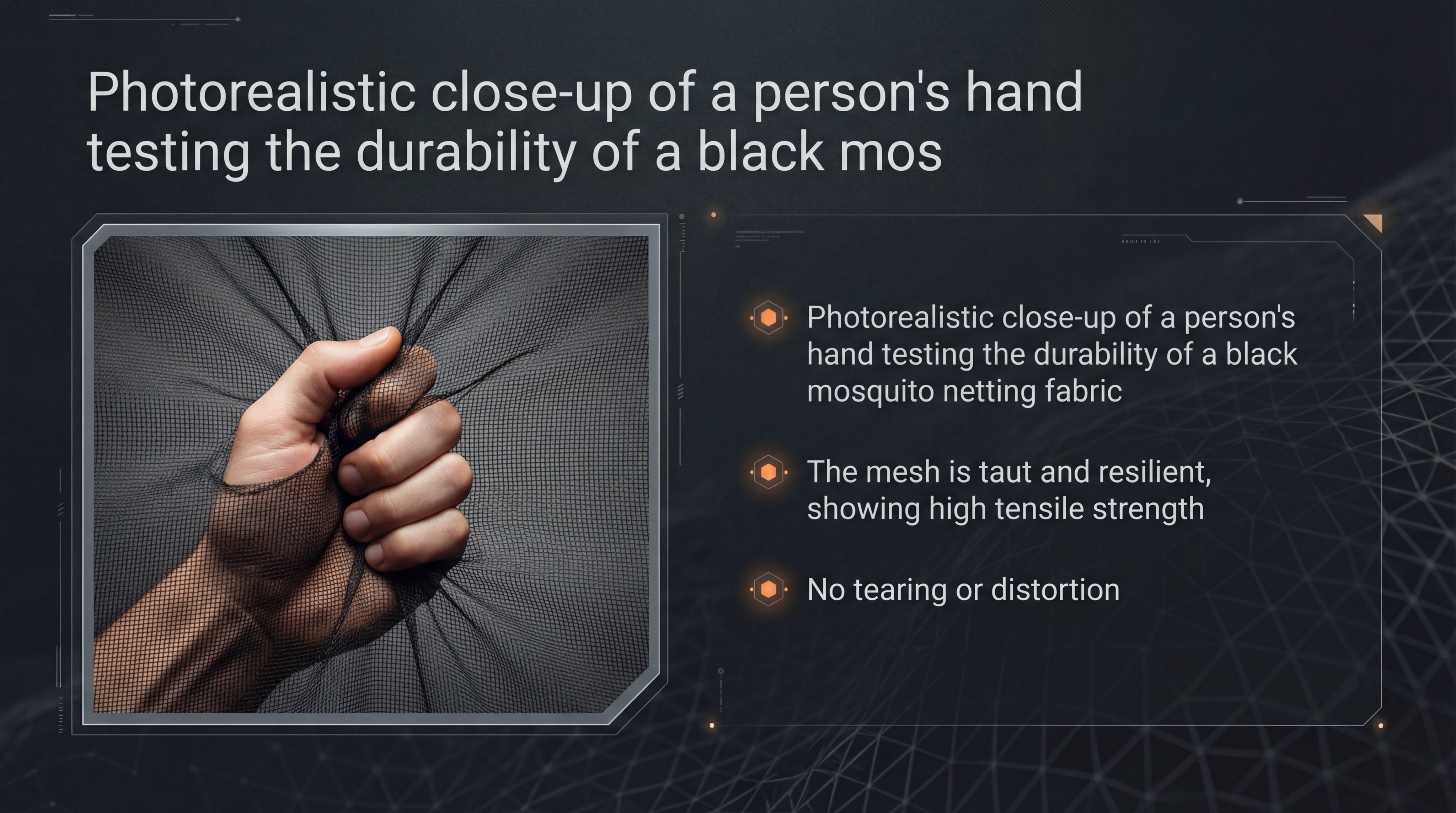
Because no-see-um mesh has more threads per inch, the load is distributed across more material. This makes the fabric highly resistant to puncturing and tearing compared to loose-weave alternatives.
Think about it:
- More threads mean more structural support.
- Modern coatings prevent UV degradation.
- High-quality mesh resists “feathering” at the edges.
Weather Resistance Factors
Outdoor screens must survive intense sun, heavy rain, and fluctuating temperatures. Choosing a vinyl-coated fiberglass or polyester ensures your investment doesn’t become brittle after a single season.
Key Takeaway: Denser mesh counts often translate to higher overall durability and a longer lifespan for your window and porch enclosures.
Durability ratings vary based on the specific material used in the weave.
| Material | UV Resistance | Tensile Strength | Life Expectancy | |
|---|---|---|---|---|
| Standard Fiberglass | Moderate | Medium | 5-7 Years | |
| Coated Polyester | High | Very High | 10+ Years | |
| Stainless Steel | Extreme | Extreme | 20+ Years |
Where should you use Mosquito Netting Fabric?
You should use specific mesh types based on your geographic location, prioritizing dense weaves in coastal or marshy regions. Implementing specialized Mosquito Netting Fabric for interior or furniture needs also adds a layer of safety.
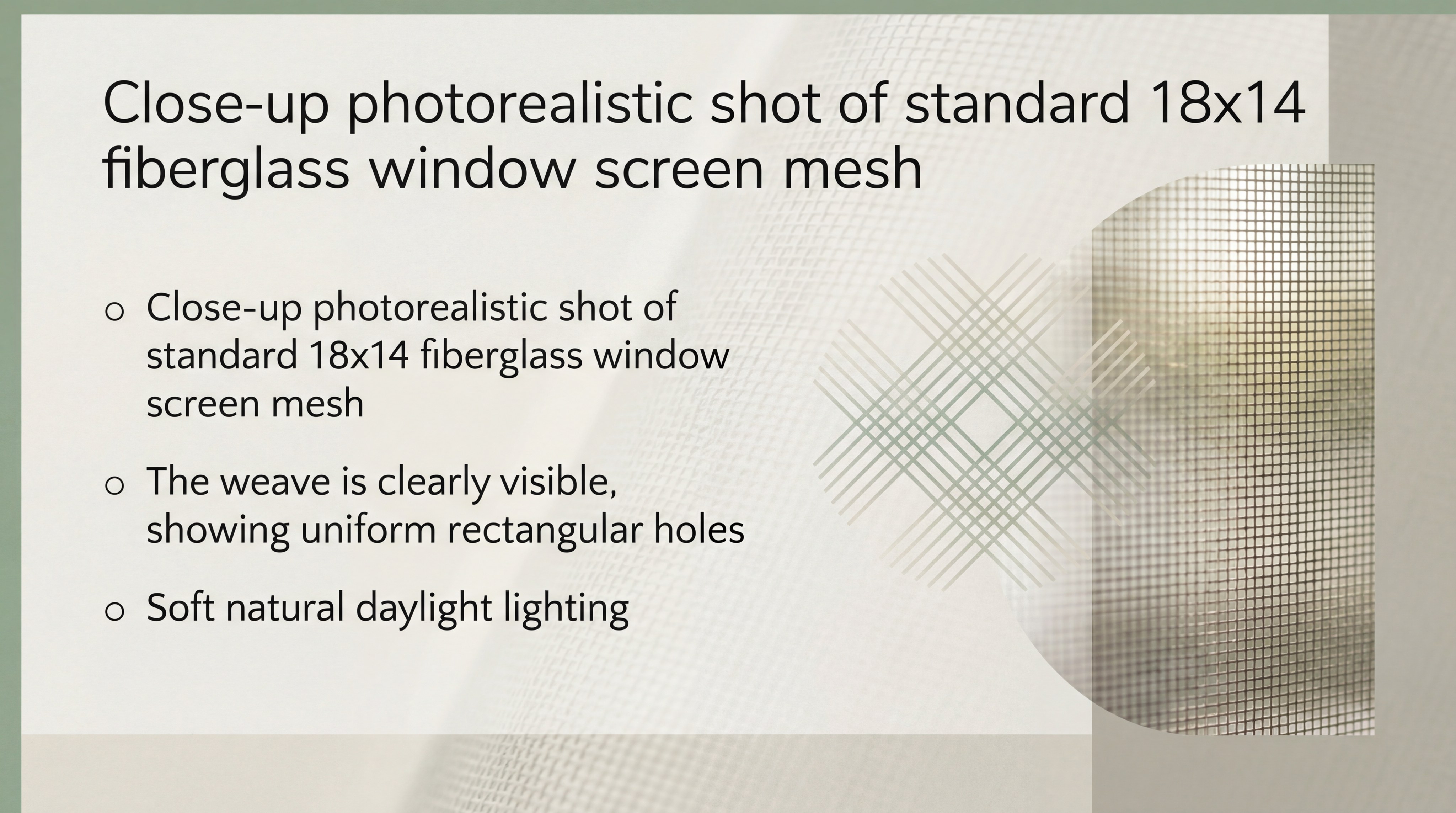
Coastal vs. Inland Needs
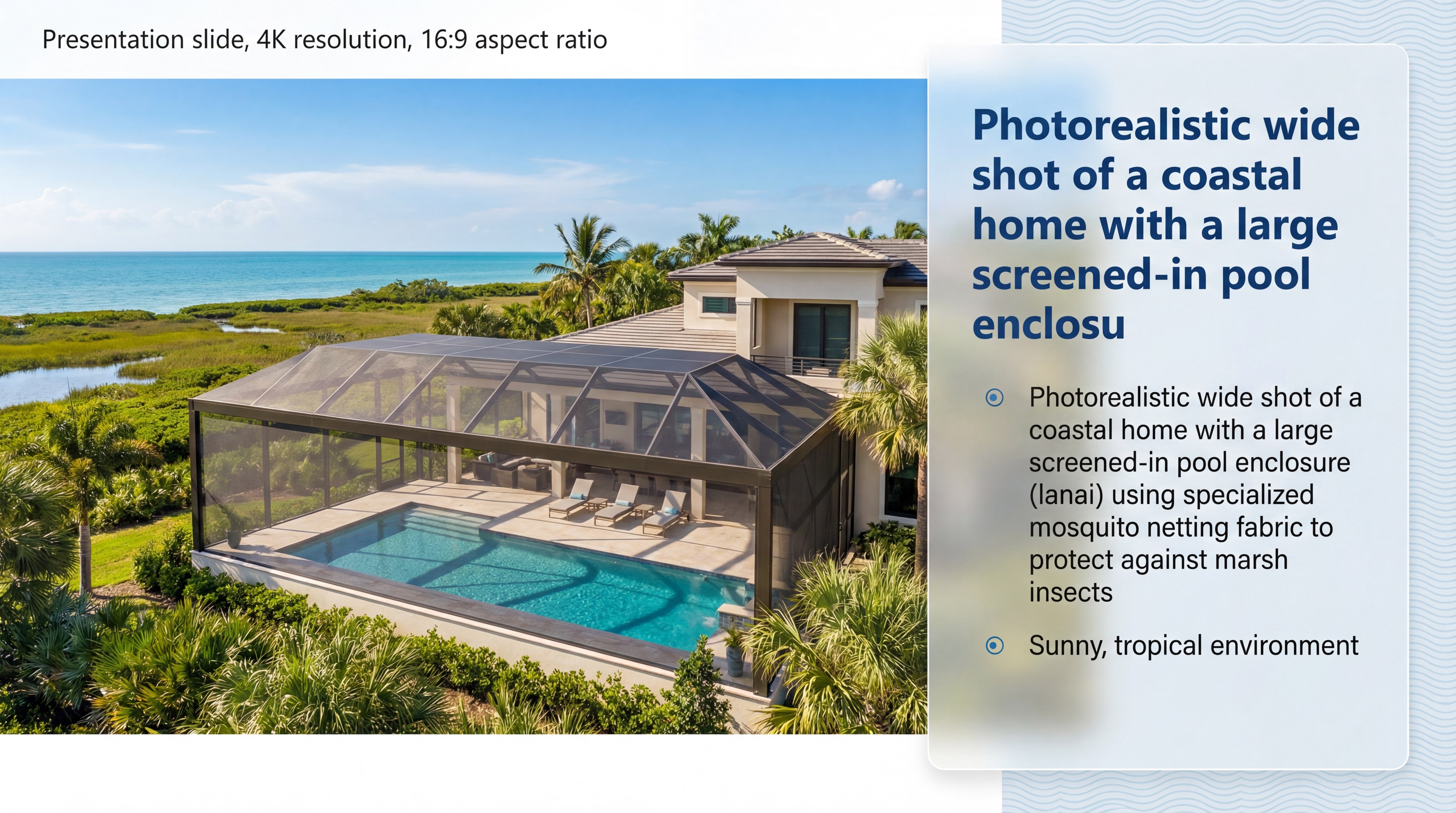
If your property is within five miles of a body of water, you are in the “No-See-Um Zone.” In these areas, standard mesh is rarely sufficient, and upgrading to a tighter weave is highly recommended for all windows.
Believe it or not:
- Inland areas mostly deal with large flies.
- Coastal breezes can carry tiny pests for miles.
- Marshy areas require the tightest 20×30 weave.
Outdoor Furniture Applications
Beyond window frames, mesh can be used to create protective “bubbles” around outdoor dining sets. This allows you to eat outdoors without pests landing on your food or guests.
Key Takeaway: Your geographic location is the primary driver for mesh selection; coastal environments almost always require a no-see-um grade material.
Recommended applications for different mesh types are listed in the table below.
| Application | Recommended Mesh | Reason | |
|---|---|---|---|
| Main Windows | Standard 18×14 | Maximize Airflow | |
| Pool Lanai | No-See-Um 20×20 | Full Enclosure Safety | |
| Coastal Porch | Ultra-Fine 20×30 | Block Micro-Pests |
How do you clean your Mosquito Netting Fabric?
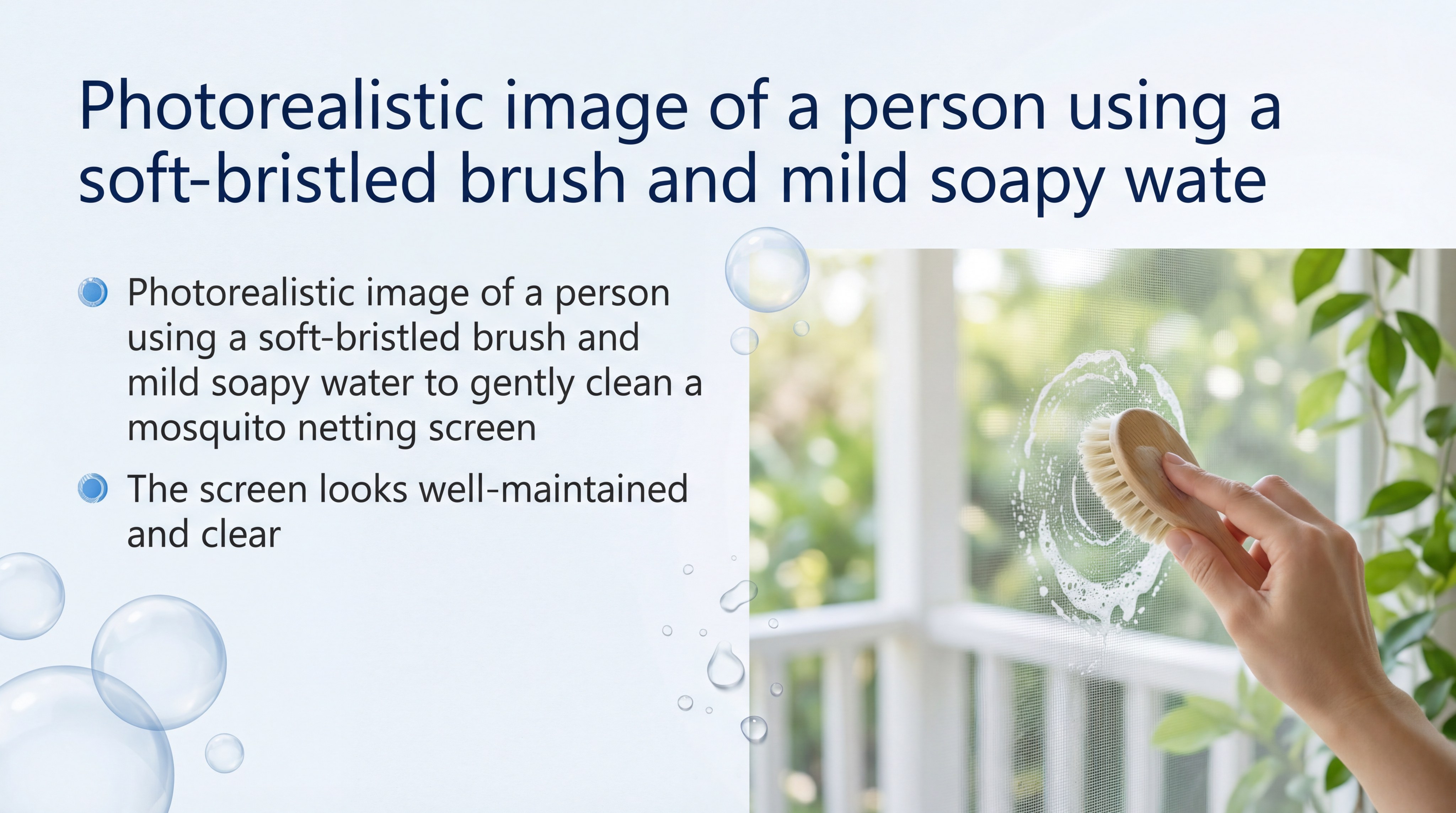
Cleaning involves using a soft-bristled brush and mild soapy water to remove accumulated dust and pollen from the fine mesh holes. Maintaining your screens ensures that airflow remains optimal and visibility stays crystal clear.
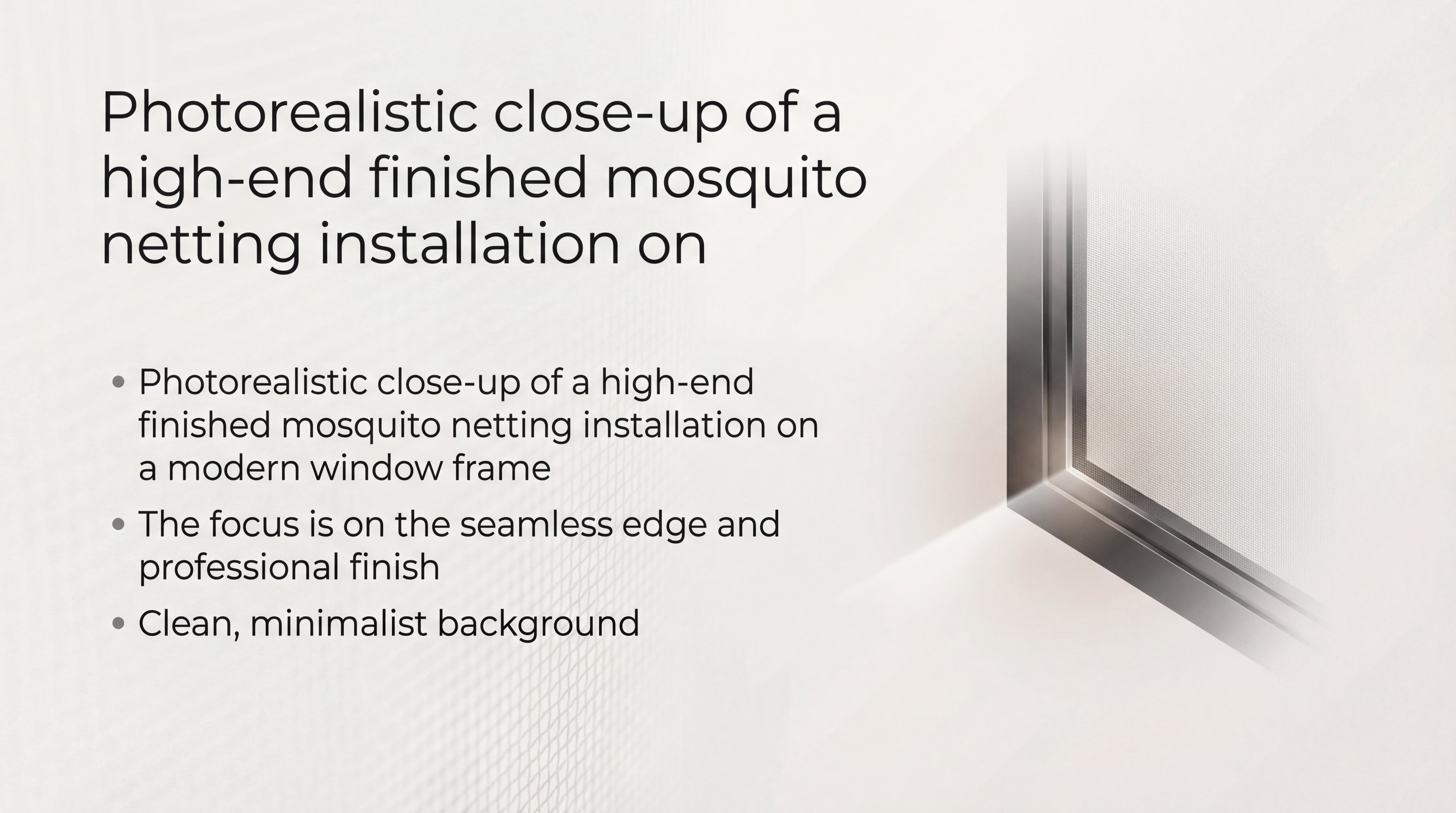
Removing Dust and Pollen
Because the holes in no-see-um mesh are so small, they can trap fine particles more easily than standard screens. You should perform a light cleaning every six months to prevent buildup.
Here’s the deal:
- Pollen buildup can restrict airflow.
- Salt spray in coastal areas can corrode frames.
- Regular rinsing extends the life of the fabric.
Gentle Washing Techniques
Avoid using high-pressure washers, as they can stretch the weave or damage the splines. A simple solution of dish soap and a garden hose is usually all you need.
Key Takeaway: Regular maintenance is more critical for fine mesh than standard mesh because the smaller holes are more susceptible to clogging by dust and pollen.
Follow this cleaning schedule to keep your mesh performing at its peak.
| Task | Frequency | Method | |
|---|---|---|---|
| Light Dusting | Monthly | Soft Brush | |
| Deep Wash | Twice Yearly | Mild Soap & Water | |
| Spline Check | Annually | Visual Inspection |
Is no-see-um Mosquito Netting Fabric worth it?
Investing in No-See-Um mesh is worth the higher initial cost if you live in areas where tiny biting midges are prevalent. For expert advice on your specific project, you can contact us today to find the perfect match.
Initial Cost Comparison
While no-see-um fabric can be 15-25% more expensive than standard fiberglass, the cost is small compared to the utility. Being able to use your patio during “peak bug hours” provides a massive return on investment.
Look at it this way:
- Standard mesh is cheap but fails in coastal zones.
- No-see-um mesh is an investment in comfort.
- Avoiding itchy bites saves money on repellents.
Long-Term Value Assessment
High-quality fine mesh is often built to last longer than budget standard screens. When you factor in the extended lifespan and superior protection, the cost per year is often lower.
Key Takeaway: The added cost of specialized no-see-um mesh is easily justified by the significant increase in outdoor comfort and pest protection.
The value proposition of premium mesh is detailed in the comparison below.
| Value Factor | Standard Mesh | No-See-Um Mesh | |
|---|---|---|---|
| Initial Cost | Lower | Moderate | |
| Protection Level | Basic | Superior | |
| Lifestyle Value | Limited | Maximum |
How to buy the best Mosquito Netting Fabric?
Buying the best material requires evaluating your specific insect environment and selecting a mesh count that provides adequate exclusion without sacrificing visibility. If you have questions about the right specifications for your project, please contact us today for professional guidance.
Frequently Asked Questions
- Can I use no-see-um mesh for a patio enclosure?Yes, it is the preferred choice for large enclosures in humid or coastal climates where small midges are a constant nuisance.
- What’s the best mesh for preventing pet damage?While no-see-um mesh is strong, look for “pet-resistant” versions that combine the tight weave with vinyl-coated polyester for maximum claw resistance.
- Can I install no-see-um mesh into standard window frames?Absolutely, though you may need a slightly thinner spline because the mesh itself can be slightly thicker than standard fiberglass.
- What’s the best mesh for maximizing afternoon breezes?Standard 18×14 mesh offers the highest airflow, so choose it if you don’t have a problem with tiny “invisible” biting insects.
- Can I use this fabric for DIY camping gear?Yes, ultra-lightweight no-see-um mesh is perfect for hammock nets and tent repairs because it blocks all pests while remaining portable.
Key Takeaway: Success in mesh selection comes down to matching the thread count to your local pest challenges while ensuring professional-grade installation.
At our core, we believe that your outdoor experience should never be limited by the environment. By providing high-performance mesh solutions, we empower you to design spaces that are as breathable as they are secure. Our vision is a world where every patio and porch serves as a true sanctuary, free from the intrusion of pests and the frustration of inferior barriers.