You have likely spent hours browsing fabric swatches, feeling the mounting frustration of not knowing which sheer will actually hold its shape. Selecting the wrong material can turn a high-fashion vision into a technical disaster, leaving your garment either too stiff or disappointingly limp. This lack of clarity often leads to wasted budget and ruined designs that simply do not move the way you intended.
Think about the heartbreak of finishing a delicate bridal veil only to realize it lacks the necessary “poof” because the weave was too fluid. Or imagine a summer blouse that clings uncomfortably to the skin because you chose a synthetic mesh instead of a breathable voile. These mistakes are common but entirely avoidable when you understand the mechanical properties of sheer textiles.
The good news is that mastering these differences is easier than it looks. By the end of this guide, you will be able to identify every major sheer fabric by touch and sight alone. Let’s dive into the technical world of professional textiles and solve your fabric selection dilemmas forever.
The Basics of Gossamer Fabric vs Tulle
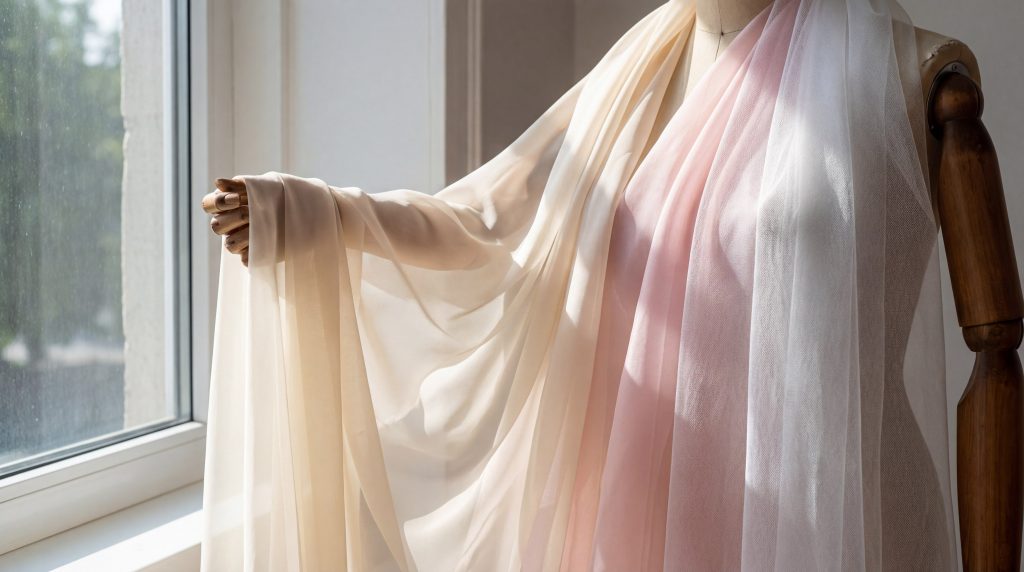
When you begin your journey into lightweight textiles, the primary confusion often centers on the distinction between gossamer fabric vs tulle. Gossamer is a general term used to describe any very thin, filmy, or delicate substance, whereas tulle refers to a specific type of machine-made hexagonal mesh. You will find that while all tulle is technically gossamer in nature, not all gossamer fabrics possess the structured netting that defines a true tulle.
Understanding the weave density and fiber content is the first step toward professional-grade garment construction. Most sheer fabrics are categorized by their “denier,” which measures the linear mass density of the fibers used in the weave. By analyzing these numbers, you can predict how the light will filter through the material and how much weight it can support without tearing.
Key Takeaways: Material Fundamentals
- Gossamer is a descriptive term for transparency, not a specific technical weave.
- Tulle is defined by its knit, hexagonal “cells” that provide mechanical bounce.
- Denier counts dictate the final translucency and tensile strength of the sheet.
- Fiber origin (silk vs. nylon) changes the heat resistance and shimmer of the fabric.
Summary Table: Gossamer and Tulle Basics
| Feature | Gossamer Characteristics | Tulle Characteristics | |
|---|---|---|---|
| Primary Category | Descriptive Terminology | Technical Mesh | |
| Manufacturing | Woven or Knit | Warp-Knit Netting | |
| Standard Fibers | Silk, Cotton, Polyester | Nylon, Polyester, Silk | |
| Structure | Fluid and Filmy | Structured and Springy |
Liquid Movement: Chiffon in the Gossamer Fabric vs Tulle Debate
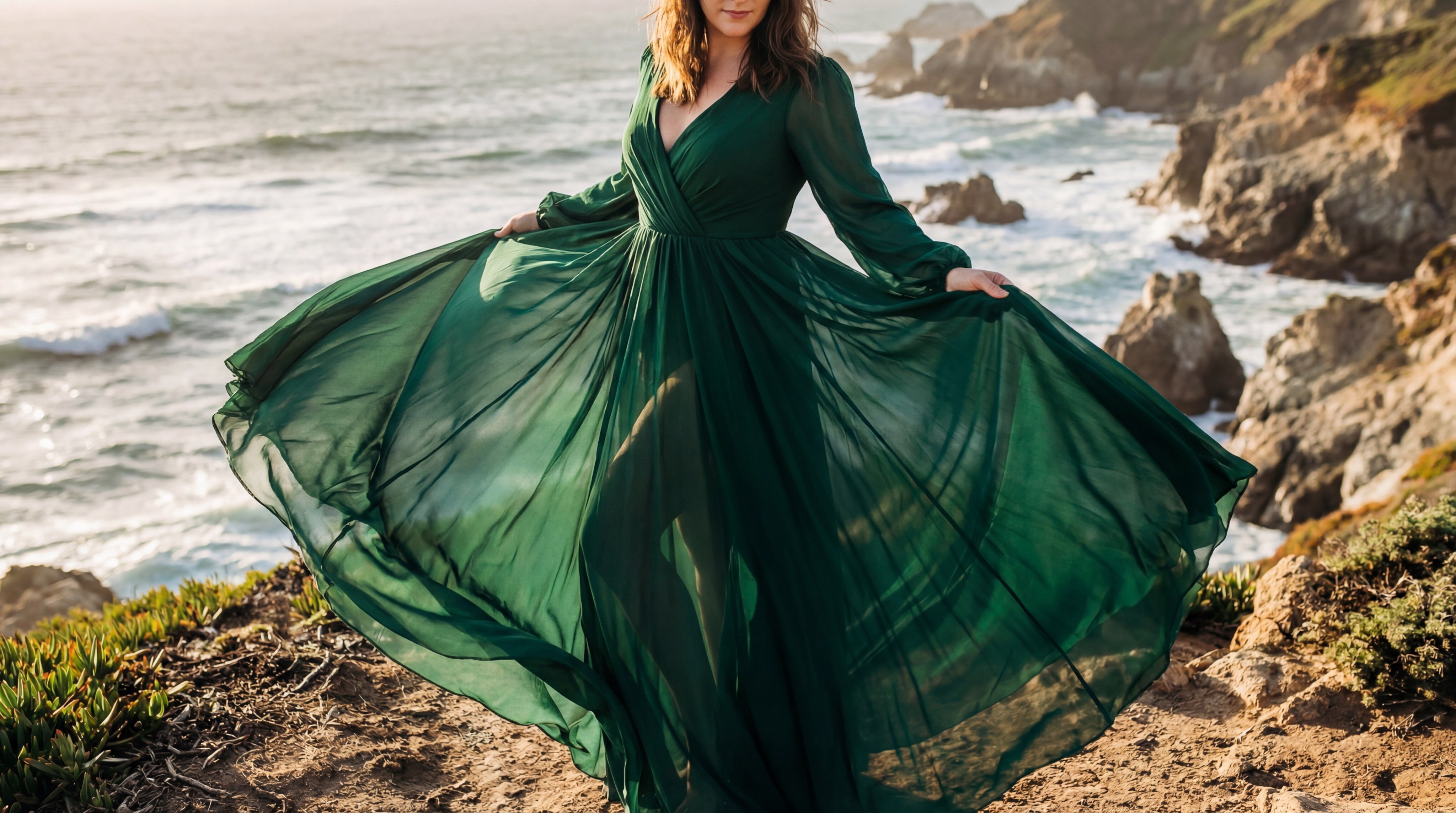
If your project requires a “liquid” drape that catches the wind effortlessly, chiffon is your gold standard. In the comparison of gossamer fabric vs tulle, chiffon represents the extreme end of fluidity because it is woven with highly twisted yarns. These S-twist and Z-twist yarns give the fabric a slightly rough “hand” while allowing it to flow around the body with unmatched grace.
You might be wondering if chiffon can provide any volume, but the answer is generally no. Unlike the springy nature of tulle, chiffon will always collapse under its own weight unless it is heavily layered or gathered. It is the premier choice for evening gowns and scarves where the priority is romantic, ethereal movement rather than structural height.
Key Takeaways: Chiffon Properties
- High-twist yarns create a characteristic “crepe” feel despite the sheer look.
- Chiffon has no “memory,” meaning it will not return to a specific shape if scrunched.
- It is highly susceptible to snagging due to its extremely fine, loose weave.
- Layering chiffon increases opacity without adding significant bulk to the silhouette.
Summary Table: Chiffon Performance Metrics
| Metric | Rating | Designer Notes | |
|---|---|---|---|
| Drape | Exceptional | Best for bias-cut garments | |
| Volume | Very Low | Needs support for structure | |
| Breathability | Medium | Depends heavily on fiber (Silk is best) | |
| Sewing Difficulty | High | Slippery; requires sharp microtex needles |
Structural Integrity: Why Organza Beats Gossamer Fabric vs Tulle for Volume
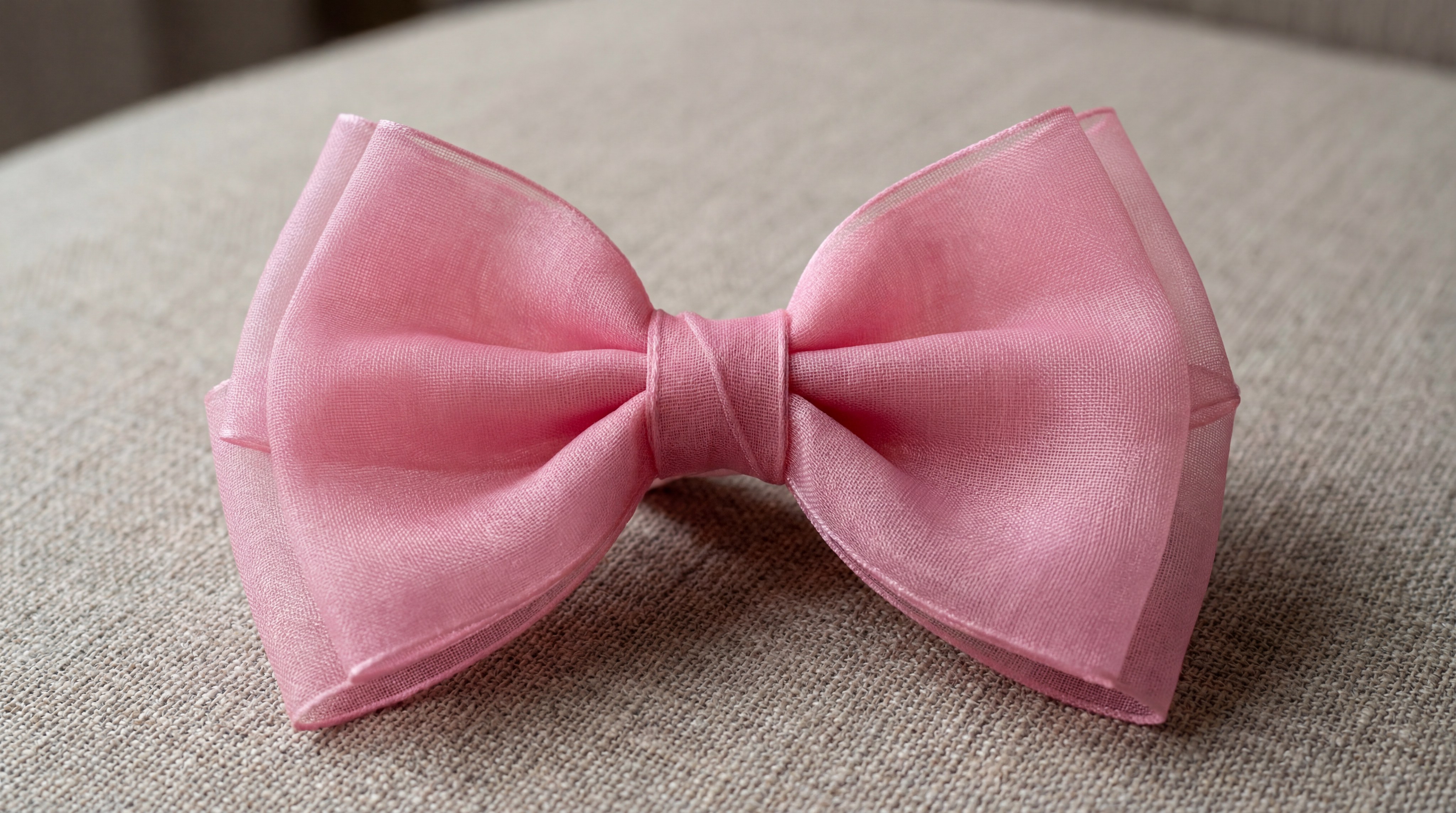
Organza is the secret weapon for any designer who needs a sheer fabric that can stand on its own. When weighing the options of gossamer fabric vs tulle, organza offers a crispness that neither can match because its yarns are treated with acid or naturally stiffened. This allows you to create sharp pleats, architectural bows, and voluminous sleeves that maintain their shape throughout the day.
But here is the kicker: organza is significantly more transparent than chiffon but much stiffer than tulle. Because it is a plain-weave fabric, it lacks the “holes” of a mesh, providing a solid but see-through surface that reflects light beautifully. It is often used as an interfacing or as a top layer for bridal gowns to add a sophisticated shimmer.
Key Takeaways: Organza Applications
- Ideal for structural elements like cuffs, collars, and decorative bows.
- The fabric reflects light with a “mirror” sheen compared to the matte finish of tulle.
- It is prone to permanent creasing, so it must be handled and stored with care.
- Provides a stable base for embroidery and heavy beadwork in formal wear.
Summary Table: Organza vs. Standard Sheers
| Property | Organza | Tulle | Chiffon | |
|---|---|---|---|---|
| Stiffness | High | Medium | Low | |
| Sheen | High/Shiny | Matte/Sparkle | Semi-Matte | |
| Texture | Smooth/Crisp | Net-like | Sandy/Soft | |
| Durability | Moderate | High (Tear-resistant) | Delicate |
Mesh Magic: Understanding Tulle in the Gossamer Fabric vs Tulle Comparison
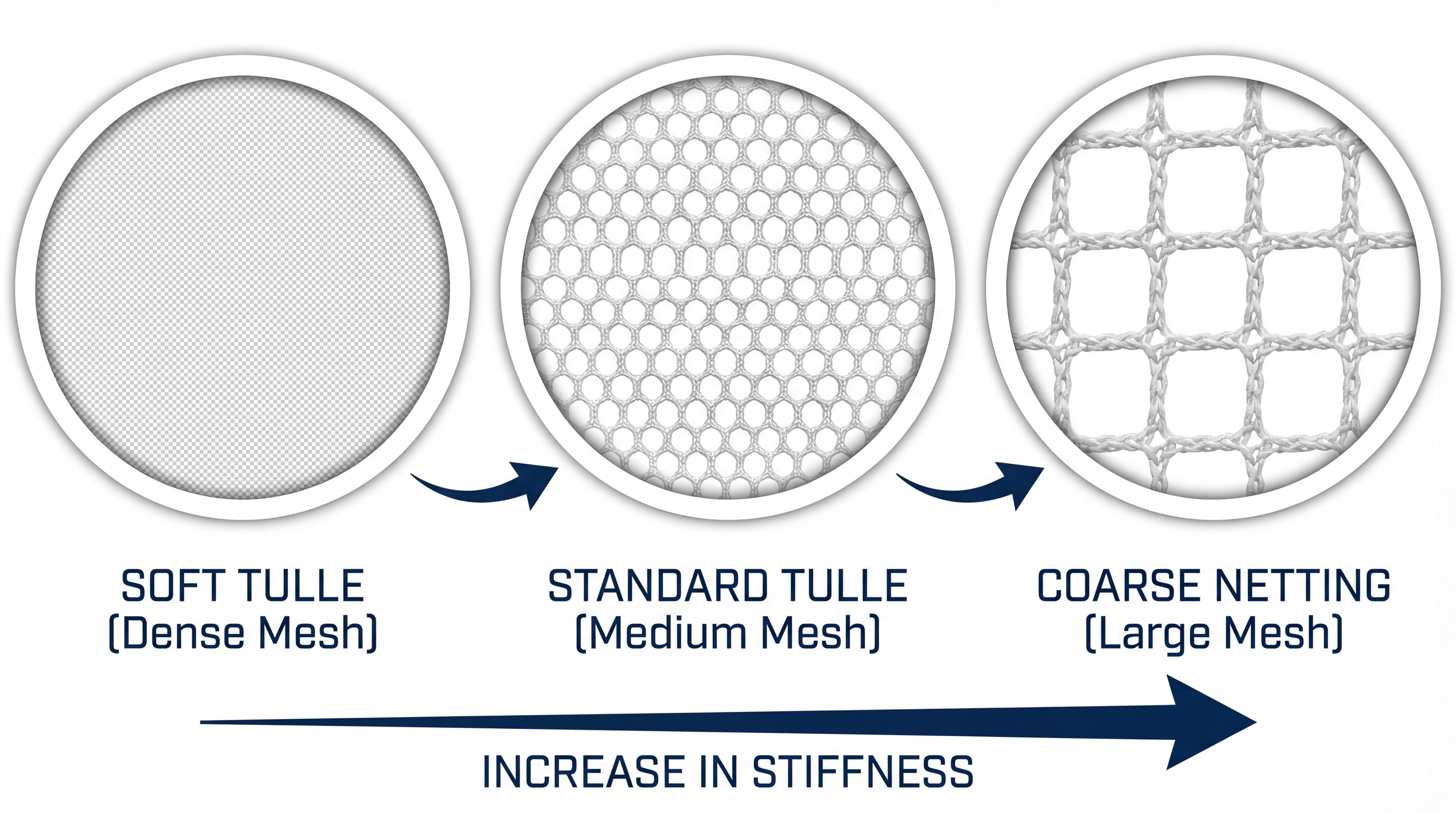
Tulle is uniquely defined by its hexagonal mesh structure, which sets it apart in the gossamer fabric vs tulle hierarchy. This mesh is created through a warp-knitting process, resulting in a fabric that does not fray when cut—a massive advantage for DIY creators. You can find specialized versions like Soft Tulle for intimate apparel or Glitter Tulle for theatrical impact.
Let’s dive in. The stiffness of tulle is determined by the size of the hexagonal holes and the thickness of the fibers used. Large-hole tulle is very stiff and used primarily for petticoats, while fine-mesh tulle is soft enough to be worn directly against the skin. This versatility makes it the most widely used sheer fabric in the wedding and event industry.
Key Takeaways: Tulle Versatility
- Non-fraying edges mean you can leave hems raw for a modern aesthetic.
- Hole size is the primary indicator of the fabric’s final stiffness.
- It provides maximum volume with minimum weight, perfect for ballgowns.
- Soft versions are excellent for “illusion” necklines that disappear against skin.
Summary Table: Tulle Grade Selection
| Tulle Type | Best Use Case | Texture Feel | |
|---|---|---|---|
| Bridal Illusion | Veils and necklines | Silky and soft | |
| Standard Nylon | Party decorations | Medium-crisp | |
| Fine Silk Tulle | High-end couture | Ultra-soft/Drapable | |
| Prom Mesh | Skirt overlays | Durable and bouncy |
Textural Nuance: Georgette’s Role in Gossamer Fabric vs Tulle Selection
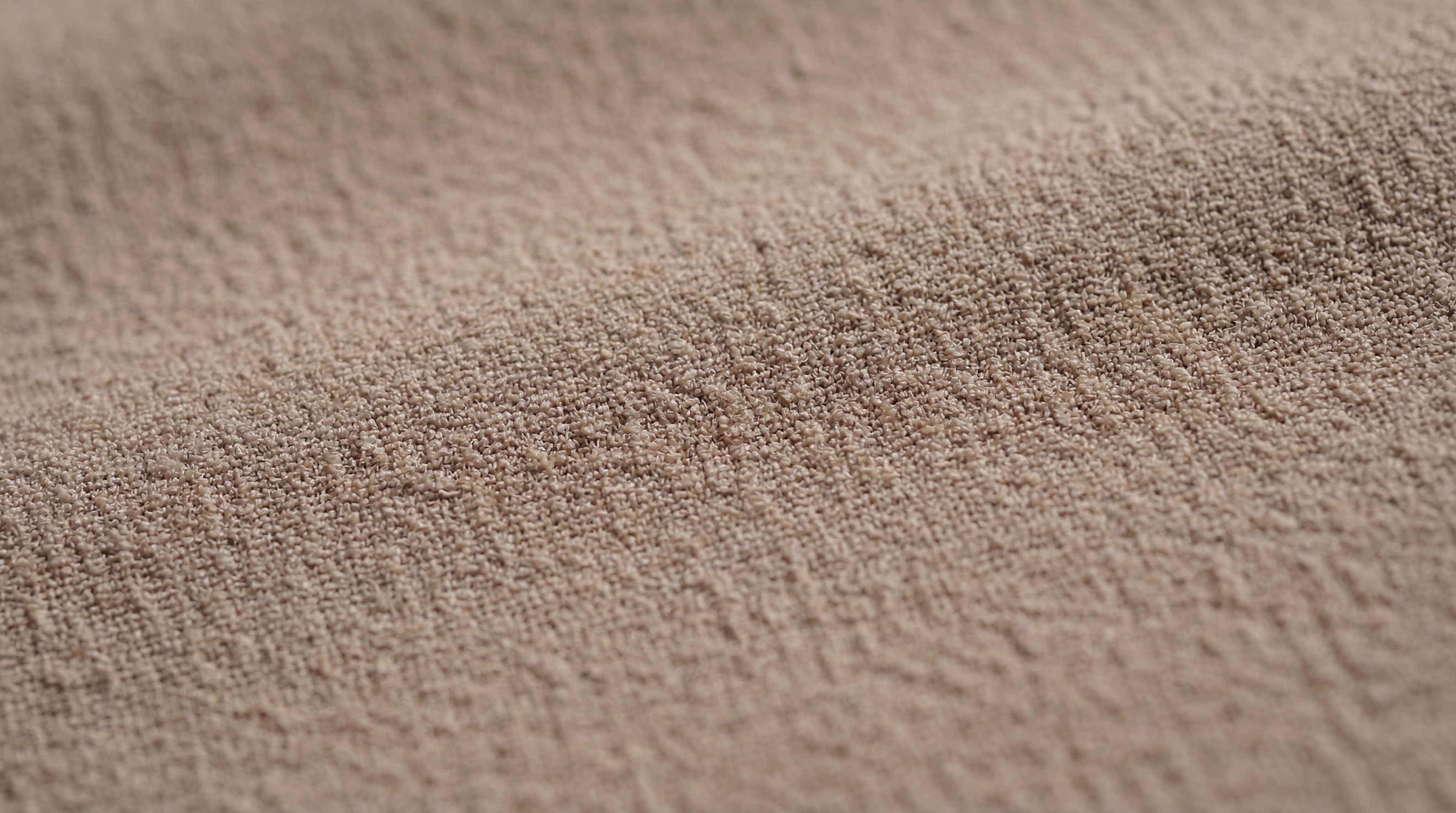
Georgette is often the “forgotten” sheer, yet it provides a sophisticated middle ground in the gossamer fabric vs tulle debate. It is heavier and more opaque than chiffon, featuring a distinctively grainy or “sandy” texture due to the use of crepe yarns. You will find that Georgette has more “bounce” than other sheers, making it much more forgiving to sew and wear.
The bottom line? If you want the look of a sheer fabric but need the durability of a standard textile, Georgette is your answer. It resists wrinkles better than organza and has more substance than gossamer-thin chiffon. This makes it ideal for professional workwear blouses and pleated skirts that need to survive a long day of movement.
Key Takeaways: Georgette Advantages
- Higher opacity allows for single-layer garments in darker colors.
- Crepe yarns provide a mechanical stretch that aids in garment comfort.
- The dull, matte finish offers a more modern look than shiny organza.
- It is significantly more resistant to tearing and snagging than tulle.
Summary Table: Georgette vs. Chiffon
| Feature | Georgette | Chiffon | |
|---|---|---|---|
| Weight | Heavier | Featherweight | |
| Opacity | Semi-Sheer | Highly Transparent | |
| Surface | Grainy Texture | Smooth Surface | |
| Durability | High | Low |
Airy Comfort: Comparing Voile and Gossamer Fabric vs Tulle

When you move into the realm of natural fibers, voile stands out as the ultimate summer sheer. Unlike the synthetic options often found in the gossamer fabric vs tulle category, voile is primarily made of high-twist cotton. This gives it a soft, silky hand and incredible breathability that keeps you cool in humid climates.
You can use voile for everything from casual sun dresses to elegant interior window treatments. Because it is a plain-weave cotton, it lacks the “plastic” feel of nylon tulle and the slippery nature of polyester chiffon. It drapes with a gentle, organic softness that feels luxurious against the skin and filters sunlight into a beautiful, warm glow.
Key Takeaways: Voile Benefits
- Natural cotton fibers offer superior moisture-wicking and airflow.
- The fabric becomes softer with every wash, unlike synthetic sheers.
- It is the easiest sheer for beginners to sew because it doesn’t slip.
- Perfectly suited for children’s clothing and sensitive skin applications.
Summary Table: Voile in Interior and Fashion
| Application | Suitability | Why? | |
|---|---|---|---|
| Summer Dresses | High | Breathable and soft | |
| Sheer Curtains | High | Diffuses light perfectly | |
| Formal Tutus | Low | Lacks the “bounce” of tulle | |
| Lingerie | Medium | Soft but lacks stretch |
Intricate Detail: Lace Overlays vs Gossamer Fabric vs Tulle
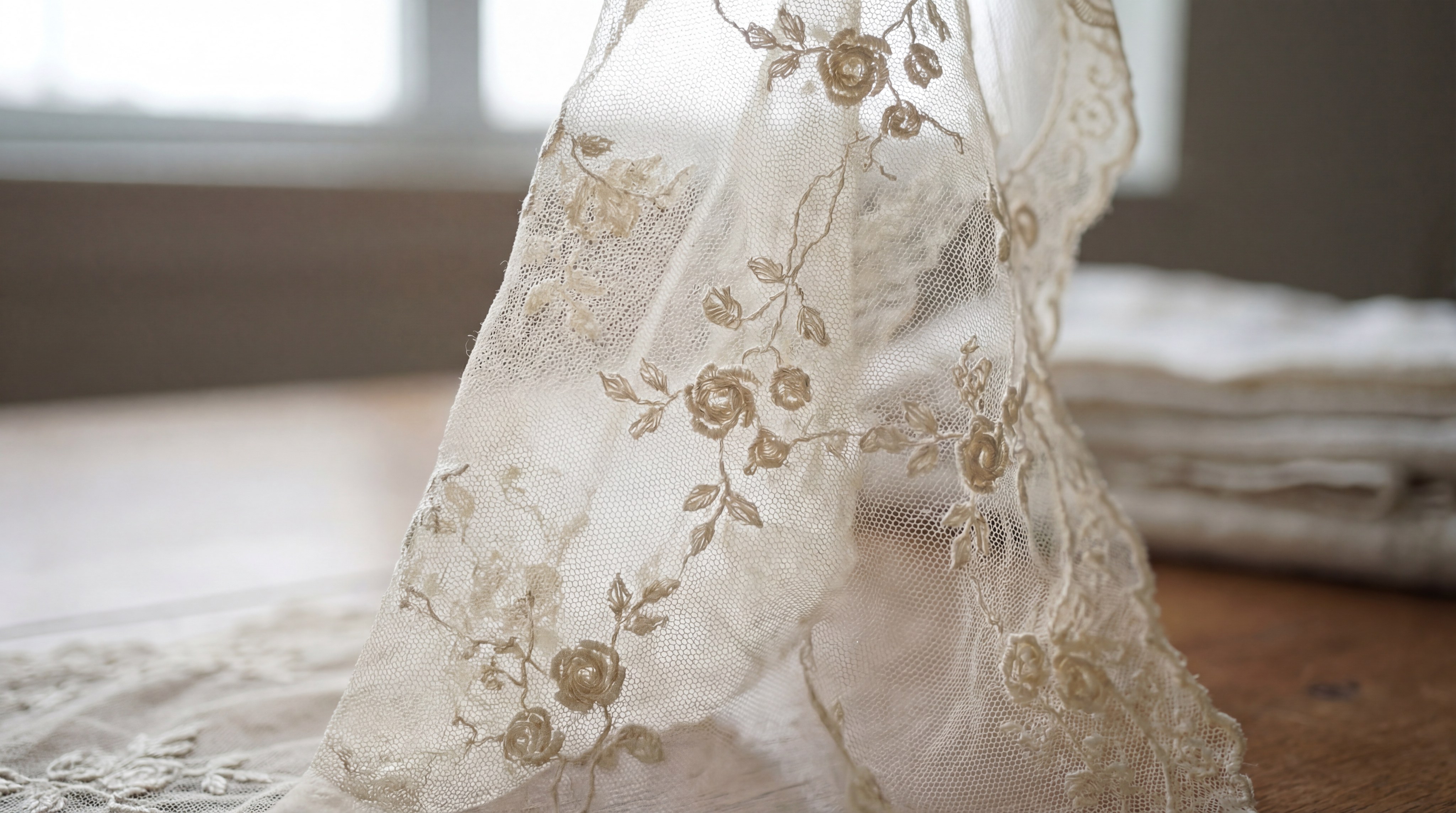
Lace adds a layer of graphic complexity that simple gossamer fabric vs tulle options cannot provide. While tulle is a uniform mesh, lace is an ornamental fabric created by looping or twisting threads into elaborate floral or geometric patterns. You should view lace as a functional art piece, often used as an overlay to add depth and “texture” to a simpler base fabric.
It gets better. Modern lace is often built upon a fine tulle or mesh background, blurring the lines between the two materials. This allows the intricate patterns to “float” on the body, creating the illusion of embroidery directly on the skin. It is the definitive choice for adding a feminine, romantic, or vintage touch to any sheer project.
Key Takeaways: Lace Selection
- Chantilly lace is the finest and most delicate, often used for veils.
- Alençon lace features a corded outline, providing more “pop” and weight.
- Guipure lace has no mesh background, consisting only of connected motifs.
- Lace should be “fussy cut” to preserve the integrity of the floral patterns.
Summary Table: Lace Styles and Transparency
| Lace Type | Transparency | Weight | Aesthetic | |
|---|---|---|---|---|
| Chantilly | High | Very Light | Romantic/Classic | |
| Venice/Guipure | Low | Heavy | Bold/Modern | |
| Embroidered Tulle | Medium | Light | Whimsical | |
| Eyelet | Low | Medium | Casual/Country |
High-Performance Sheers: Power Mesh vs Gossamer Fabric vs Tulle
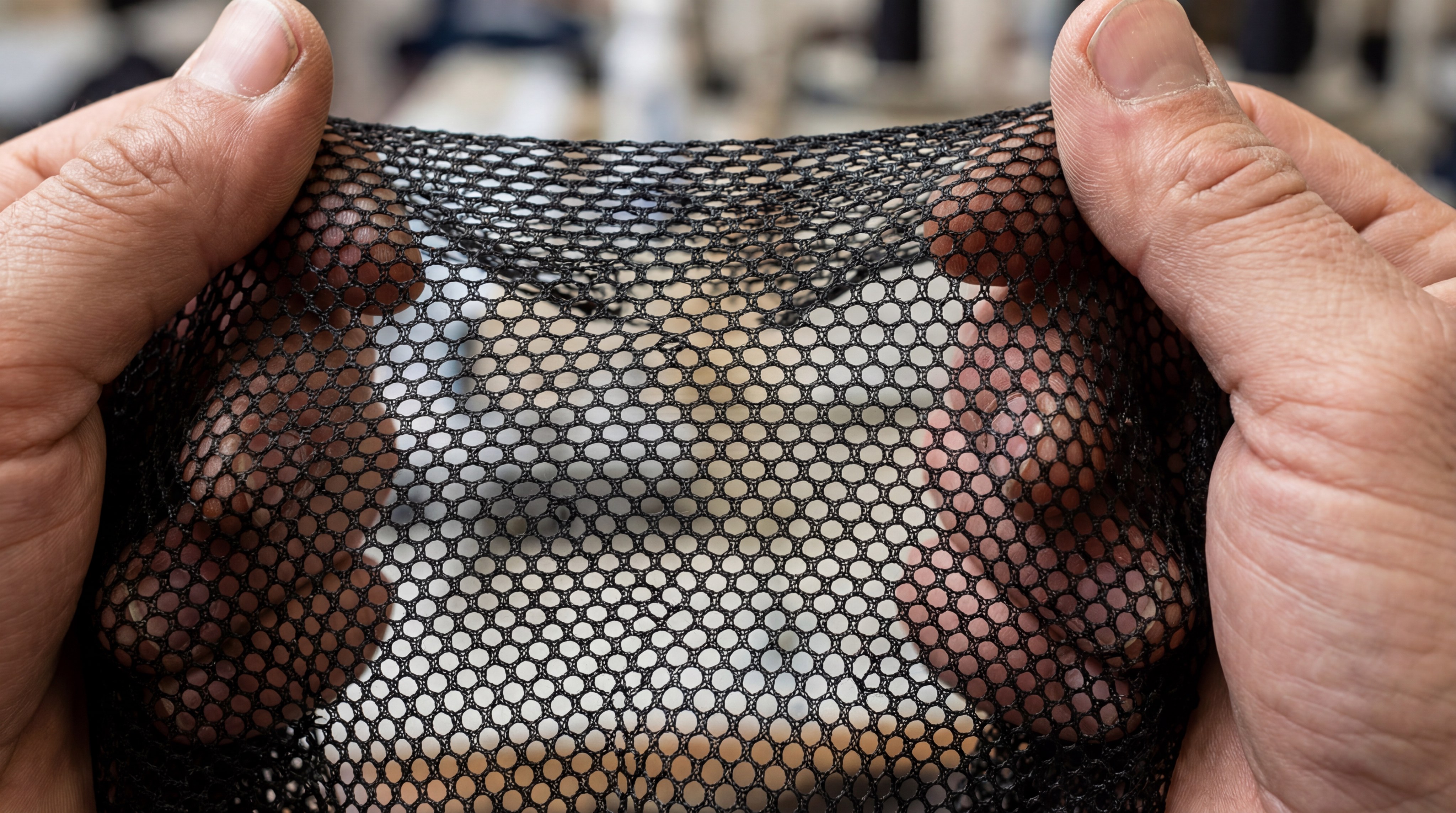
In the world of functional fashion, standard gossamer fabric vs tulle often falls short because it lacks elasticity. This is where Power Mesh becomes essential for your toolkit. Power mesh is an industrial-strength sheer fabric that contains spandex, allowing it to stretch and recover without losing its shape or transparency.
You will find power mesh used in everything from high-performance athletic gear to shapewear and “naked” dresses. It provides the ventilation of a mesh with the support of a compression garment. If your design needs to hug the curves of the body while remaining breathable, there is no substitute for a high-quality stretch mesh.
Key Takeaways: Mesh Performance
- Four-way stretch allows for total freedom of movement in activewear.
- High “recovery” ensures the fabric won’t sag after being stretched.
- It is much more durable than tulle and resistant to tearing under tension.
- Often used as “modesty” panels in garments with deep cut-outs.
Summary Table: Mesh Utility Comparison
| Feature | Power Mesh | Standard Tulle | |
|---|---|---|---|
| Stretch | High (Spandex) | None (Static) | |
| Support | High | None | |
| Common Use | Sportswear/Lingerie | Bridal/Decor | |
| Washability | Machine Washable | Hand Wash Only |
Testing Your Textiles: Identifying Gossamer Fabric vs Tulle Samples
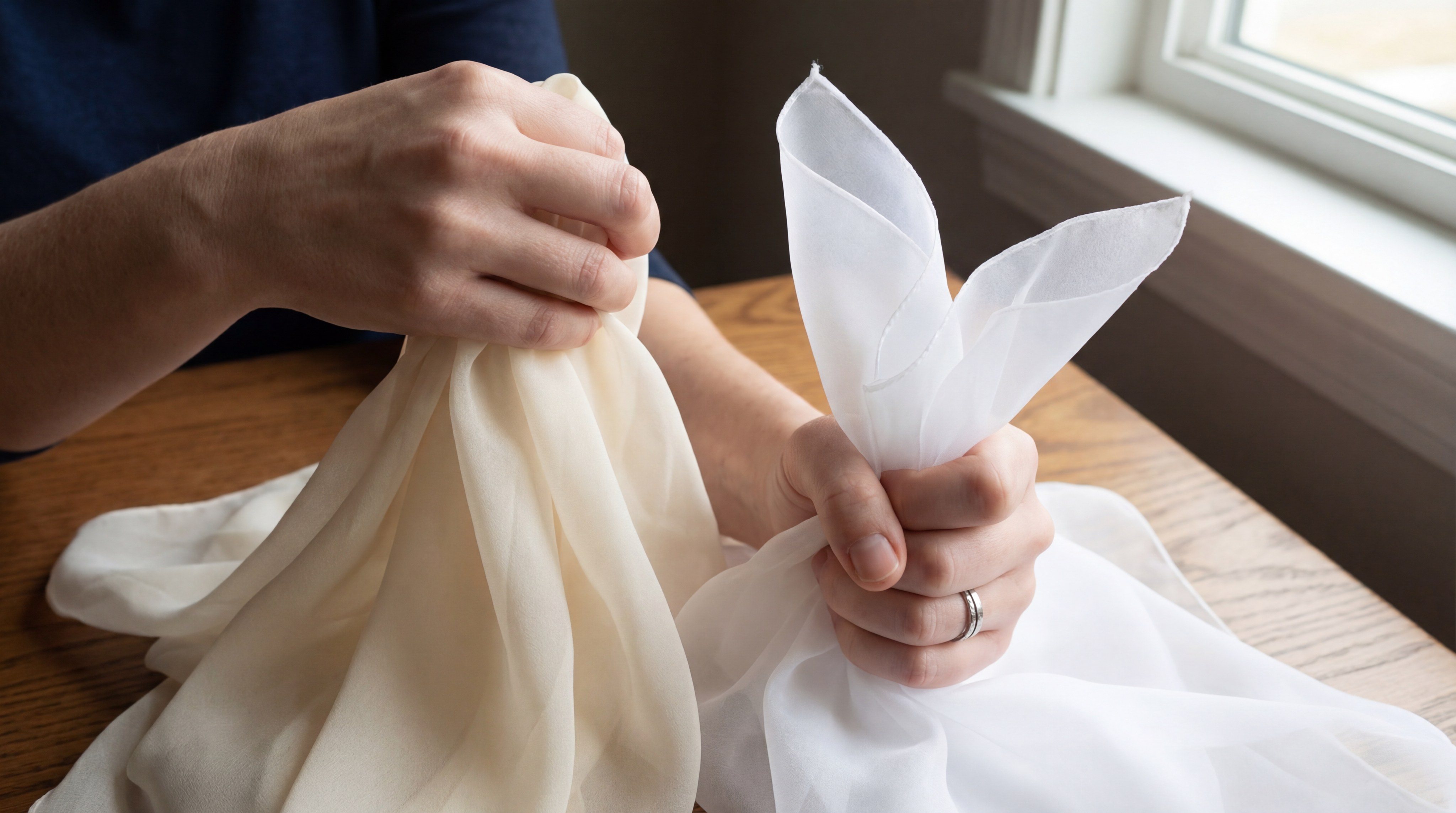
You probably find yourself standing in fabric aisles wondering which sheer is which. To accurately solve the gossamer fabric vs tulle mystery, you must perform a “scrunch test.” Simply squeeze a handful of the fabric tightly in your fist for five seconds and then release it to observe the reaction.
Tulle will instantly “boing” back to its original shape, while organza will hold sharp, paper-like creases. Chiffon will slowly unfurl with soft, wavy wrinkles, and voile will show organic, messy folds. By observing these mechanical reactions, you can identify the fabric’s properties even if the label is missing or incorrect.
Key Takeaways: Identification Tactics
- The “Scrunch Test” reveals the fabric’s memory and stiffness.
- The “Sheen Test” helps differentiate between matte tulle and shiny organza.
- The “Drape Test” involves hanging the fabric over your arm to see the fall.
- Use a magnifying glass to check for the hexagonal knit of a true tulle.
Summary Table: The Identification Cheat Sheet
| Reaction to Scrunch | Likely Fabric | |
|---|---|---|
| Instant Bounce Back | Tulle / Mesh | |
| Sharp, Permanent Crease | Organza | |
| Soft, Fluid Unfolding | Chiffon / Georgette | |
| Limp, Flat Release | Voile / Silk Chiffon |
Project Planning: Choosing Between Gossamer Fabric vs Tulle
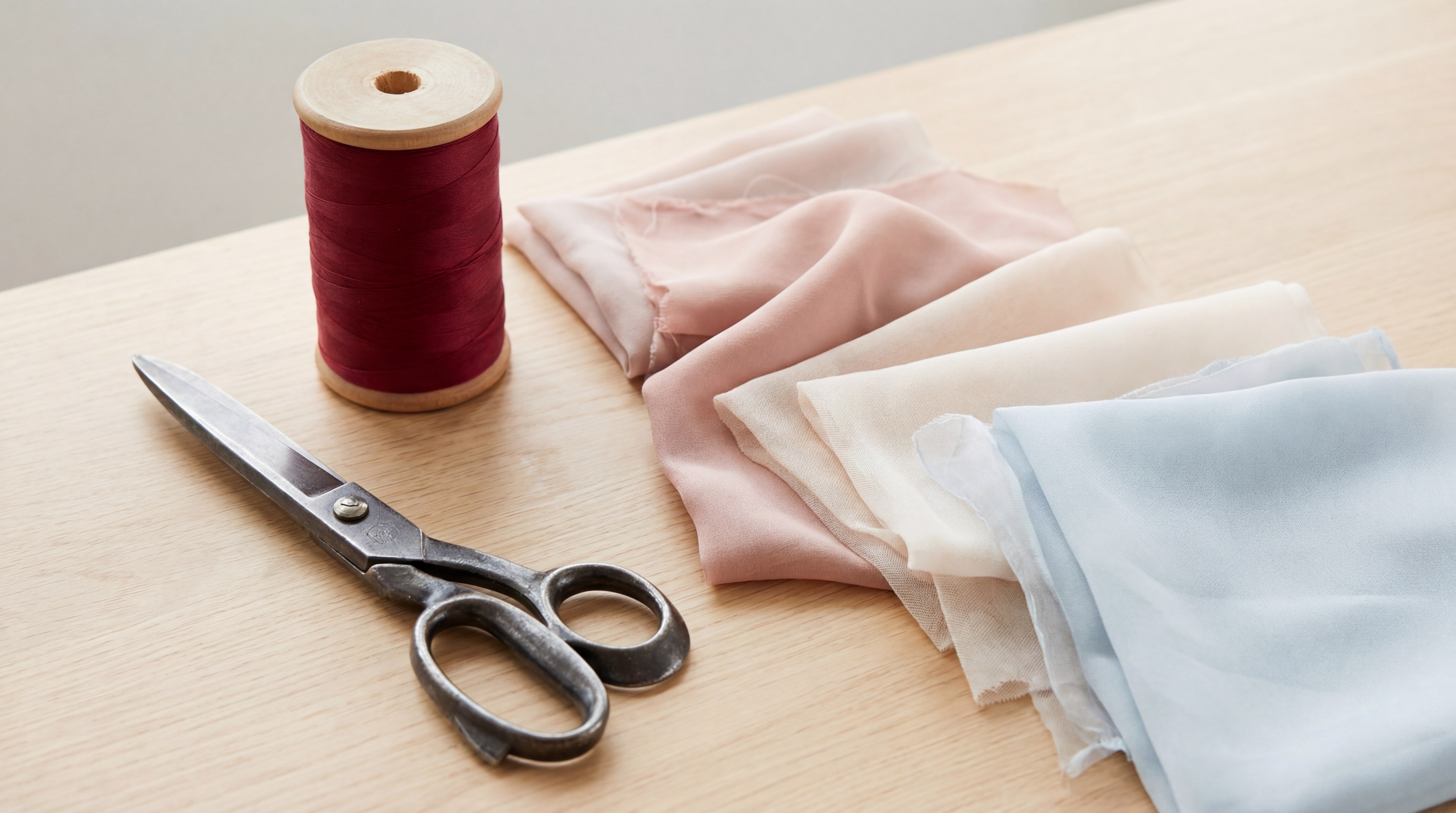
Your final decision in the gossamer fabric vs tulle debate must be dictated by the intended use of the finished piece. If you are building a structured costume that needs to be seen from a stage, you need the volume of organza or standard tulle. If you are crafting a luxury bridal gown for close-up photography, the delicate nature of soft tulle or silk chiffon is more appropriate.
Always remember that these fabrics can be combined to achieve “hybrid” results. You can use organza as a hidden inner layer to support a chiffon skirt, or layer tulle under lace to give the patterns more depth. For high-quality supplies and bulk orders tailored to your specific industrial or creative needs, you should browse our full selection at tullemesh.com .
Key Takeaways: Final Planning
- Match the fabric’s “hand” to the desired movement of the garment.
- Consider the sewing machine settings; sheers require very fine needles.
- Budget for more yardage than usual, as sheers often require layering.
- When in doubt, order a swatch to test the “skin feel” and transparency.
Summary Table: Fabric Selection by Project
| Project Type | Recommended Fabric | |
|---|---|---|
| Bridal Veil | Soft Tulle / Illusion Tulle | |
| Prom Skirt Overlay | Glitter Tulle / Organza | |
| Summer Blouse | Voile / Georgette | |
| Athletic Inserts | Power Mesh |
Frequently Asked Questions
1. Does tulle always have to be scratchy?No, scratchiness is a result of using low-quality nylon or large mesh sizes. High-quality “soft tulle” or silk tulle is incredibly smooth and comfortable against the skin, making it suitable for lingerie and luxury bridal veils.
2. Can I use a regular iron on these sheer fabrics?You must exercise extreme caution as most synthetic sheers like polyester chiffon or nylon tulle will melt instantly. Always use the lowest “silk” or “synthetics” setting and use a pressing cloth between the iron and the fabric.
3. Why is my chiffon seams puckering when I sew?Chiffon is so lightweight that the sewing machine feed dogs can pull it unevenly. To fix this, use a “straight stitch” plate, a brand-new fine needle, and consider placing tissue paper under the fabric while sewing to provide stability.
4. Is organza better than tulle for making a bow?Yes, organza is generally better for structural bows because it holds a crisp, defined fold. Tulle is better for “puffy” or rounded decorative elements where you want a cloud-like, soft appearance rather than sharp edges.
5. How do I stop my sheer fabric from fraying?Tulle and mesh do not fray because they are knit, so you can leave the edges raw. For chiffon, organza, and voile, you must use a rolled hem, a French seam, or pinking shears to prevent the weave from unraveling.
For more information on sourcing these materials for your next project, feel free to contact us .